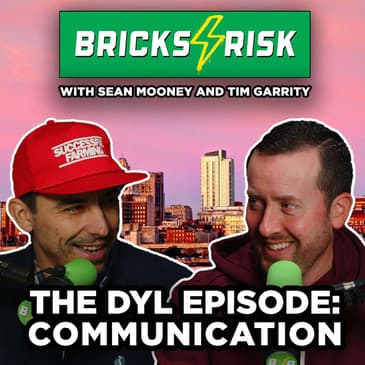
We took a different approach with this episode and asked our producer, Dylan McGonigal, what he would like us to talk about. His answer: communication. Why is communication important in business? How can I communicate better? Can communication make or break a business? Sean & Tim dive deep to answer some of Dyl's tough questions, and then provide perspective from both of their business journeys.
Our goal with Bricks & Risk is that you walk away with 1 or 2 valuable nuggets that help build YOUR business. Our audience grows through word of mouth, so if you would please take a moment of your time and give us a review on the platform you’re on, that would be fantastic!
Please also help spread the B&R word by sharing your favorite episode with a friend. You can find all B&R episodes on Spotify, Apple Music, YouTube, and anywhere else you get your podcast content. We greatly appreciate your time and trust.
Until next time, keep learning and keep growing!
** Episode Shout-Out **
→ La Salle University: https://www.lasalle.edu/
📲 Contact Info 📲
→ Sean Mooney, Mooney Insurance Brokers: www.mooneybrokers.com/
→ Tim Garrity, The Tim Garrity Team: www.timgarrityteam.com/
💥 Watch us on YouTube 💥
→ YouTube, Bricks & Risk Podcast, @bricksandrisk: www.youtube.com/@BricksandRisk/?sub_confirmation=1
💥 Follow us on Social Media 💥
→ Instagram, Bricks & Risk Podcast, @bricksandrisk: https://www.instagram.com/bricksandrisk/
→ Instagram, Sean Mooney, @sean.moonee: https://www.instagram.com/sean.moonee/@sean.moonee
→ Instagram, Tim Garrity, @realestateinphl: https://www.instagram.com/realestateinphl/
→ Facebook: https://www.facebook.com/bricksandrisk
→ LinkedIn: https://www.linkedin.com/company/bricksandrisk
[00:00:00] For an agent who is more introverted, I will call them you're more passive. Like you're a little bit more laid back, you're not into the hand to hand, you're not into the eye contact. They're not flesh pressers. Yeah. Well, dear God. Right? What kind of image I just got in my head after that one? I've never heard that. Did you just make that up or did you hear that sound like? Yeah, like you're out pressing flesh. Yeah, I get it. You never heard that? I've never heard that. Hmm. Hmm. It's a common-
[00:00:29] Guess I'm not reading the right books. Can we get on like an AI image creator and we'll put in a flesh presser and just see what comes up? Dear God, I don't even know what that's going to be like, but again. Welcome to the podcast dedicated to real estate, insurance, and building your business.
[00:00:58] Join us as we take you along our own business building journeys with additional wisdom from our network of local and national experts. Welcome to Bricks and Risk. Hey everyone. Welcome to another episode of Bricks and Risk. I'm Tim Garrity. And I'm Tim's counterpart, Sean Mooney. From Successful Farming, Inc.
[00:01:27] Which is located in the center of the universe, AKA Glenside, Pennsylvania. I like the red color on the hat. It's like, how can someone not see that? Yeah. It's going to catch everyone's attention. You can find me at, at Successful Farming is my handle. Alright. Before we dive into this one, we want to read another listener watcher review.
[00:01:51] This one comes from Beeth111 and it's titled, Love This Show. It says, I'm an investor and I find huge value in Bricks and Risk. Sincerely, Beeth111. Short, sweet, to the point. Thank you. We appreciate it, Beeth111. I think it's short. I think the first name would be Beverly.
[00:02:19] The last name would begin with an E and they're a crypto investor. Maybe. And they're heavy into ETH. Ooh, that's interesting. Just a guess. Well, only a crypto expert would spot that. Alright, let's do this. What are we talking about today? Today, we are welcoming in our critically acclaimed producer, Mr. Dylan McGonigal. Hello, hello.
[00:02:49] Happy to be here. And we are going to bring him in because he brought up a great topic that he suggested to us in terms of incorporating into one of the episodes. And this was a little while back, but brought it up and just kind of makes sense. And it's a good topic for our discussion today for business and communication. Yeah, I think how this one came up is we asked Dill, our boy one time, and said, hey, is there
[00:03:18] anything that you want us to talk about? So we aptly named this episode the Dylan McGonigal episode. Yes. So I'm going to fire it over to Dill. So Dill, why don't you tell us why you were interested in Sean and I kind of like diving deep into like communication? Well, with my job here at the podcast studio, it's very reliant on communication with scheduling,
[00:03:42] with getting edits to clients, with passing off edits to other people as we're growing. So I always have valued people that are clear and effective communicators. OK. And seeing how you guys always harping on how you've built your businesses on relationships. Yeah. And how well you guys communicate with me, you guys being my client. I appreciate that.
[00:04:12] With your intentions to record, with your goal for the show, XYZ. I just felt like there's definitely some valuable things I could learn from you guys, especially as I'm helping to try to grow Young Junk to be the best podcast studio it can be. Fantastic. Very good. We appreciate that, man. Thanks for giving us the topic today. So kind of like the best way I can start this off is like, let's talk about like communication
[00:04:38] in business and how to communicate well, as Dylan just said. So why is communication important to you and everything that you do? Like what's your perspective on that? I just think it's so foundational. It's really the fundamental of the business because every part of your business would have some sort of connection with communication.
[00:05:07] Yeah, I agree. It kind of drives everything that goes on within your business and then everything that's kind of directly related on an outside level. Yeah. I mean, it's a really good way to put it. Um, me being the more simple man, uh, not as well read. Put that Leonard Skinner song. I wasn't an English major. I was a marketing major. Right. At LaSalle University. What's up, explorers?
[00:05:36] Um, the way I kind of broke it up here is that communication can make or break a client relationship, a team, you know, like a real estate team, insurance team, or a business, you know, someone's just selling pizzas. Um, and the reason I put that, the reason I worded it that way is that communication is not just client facing. No. So when we communicate with people to run our businesses, a lot of the time we're communicating
[00:06:06] with the people associated with our business, the people that help our business grow, whether they're employees, whether you're outsourcing. Again, we outsource our podcasting to the deal and Terry at young junk. What's up fellas. And communicating with them properly. Again, it's almost like if we're going from like a relationship perspective, like you had said this before, you want to give 51% or more like that's, you always want to give a little bit more. Yeah.
[00:06:34] So it's almost like it's being like a little bit more thoughtful, being a little bit more tactful with how you approach things rather than us just saying, sending Dill a messy email that says, well, we don't know when we're coming in. We'll be in on Thursday. Like that's not going to do him any good. Yeah. But I also think that people barf it out and Dylan, you can probably talk to it is like people don't have an understanding of who's receiving that message. Yeah. They're just trying to get it out of off of their plate.
[00:07:05] Yeah. And they're not thinking about who's receiving or how they're going to read or interpret it. Yeah. Dill, can you talk a little bit about that? Like someone just, Hey Dill, I need this by tomorrow. But like I've, I've received some, some barf messages before. Um, yeah. Uh, yeah. And you know, reading it back is definitely important. You know, um, recently, uh, we have a new client and the edit is being passed off to a remote editor. Oh.
[00:07:33] Um, so I, I made sure to be as clear and thorough as possible, um, in my directions to them for the edit and I also, uh, made sure I read it through myself to make sure what I'm saying actually makes sense. Yeah. No, thanks for sharing that. I mean, it's, it's just such a good example. We try and bring examples into the show because again, Sean and I are more boots on the ground. We're tactical.
[00:07:59] We want people to understand how we look at things, how we approach things and how we found success on our own. So communication, it is one of the simplest things you can do. Anyone can just talk or text or email or DM, or, you know, you can pick up the phone. You can do it in person. Anyone can do that very easily. But communication, I actually find as simple as it is to do in, in different ways. It's one of the hardest things to do well.
[00:08:30] And it's also hard to do it well consistently. I'll give you an example. Like at Copper Hill, we had employees, you know, we had operations people, we had marketing people, we had administrative people, we had transaction people. And, you know, you can go to websites like, I think it's called Glassdoor where you can, you can write feedback on the company you work for. So it's like the employee is in the driver's seat and says, rate the employer. This place stinks.
[00:08:59] Or I absolutely love you here because of these reasons. And when we looked at communication with our staff, let's say, we always wanted to be clear, concise. But one of the things we always said, like at the end of anything we said, do you have any questions or concerns about what I just reviewed with you? Because again, like you said, if you're just going to go barf it out, you're just thinking
[00:09:25] of you getting an off your plate and then saying, you're my employee, go deal with it. That's what I pay you to do. It's your job to deal with it. Right. But if you communicate well and you do it consistently, what happens is your staff not only emulates that, they'll reciprocate. If you communicate well, chances are they're going to try and communicate well with you. So it's like a respect thing. But it's also going to make your business run smoother, more efficient.
[00:09:55] It provides better culture. It allows people to be heard. It's almost like, you know, you could say it's like a dictatorship versus a democracy. If someone's just pointing their finger and saying, you do this, you do that. You can't ask any questions. Most people don't want to do business that way. If you look at your staff and say, hey, here are some things I want you to do. I want you to complete this task. What questions do you have for me? How can I help you? Like, what do you want to know? Do you want to see an example?
[00:10:21] Like you're leading from more of a helpful nature. Well, it's it's you have to have an understanding of that person and their position and what their their needs are. And if you start with that framework, your communication is going to be so much more effective. And that recipient is going to think that you have buy in as well. Right.
[00:10:48] So if you're speaking and saying, I need this done by Friday, what can I do to help you get this done? Right. Then it becomes more of a team effort and not just dumping on that person as a task that needs to get done. Yeah. I mean, so you have you have two staff. There's you're a team of three. Right. Do you how do you communicate? Is it more like we just communicate with each other on a regular basis? Do you have like formal meetings?
[00:11:18] Like, you know, what are some ways that you communicate with your staff? Yeah. So we try to do it on a on a weekly basis. Nice. Like standing date and time kind of thing. Wednesday, Wednesday afternoon, get together. Nice. And it's not a formal meeting. Right. It's not an agenda driven meeting. Uh, we certainly have, we actually have a whiteboard in our office. And so something will come up and I'm like, put on the board for Wednesday.
[00:11:47] So it allows everyone to just let me put up a point. Yeah. Let me put up three things that I want to talk about. This is, that's a good idea. This is what, this is what I like, would like to discuss. And, and it, two things. Number one, it prevents me getting off kilter during the day. Yep. Because if someone's coming in like, oh, I need to talk about this. Like, okay. Does it need to be done like now? Or can it wait until our weekly meeting? Wait till Wednesday. Yeah. Put it on the board.
[00:12:14] So, so, so number one, it doesn't interrupt my daily day when I'm trying to get things done. And then the second thing is it gives everyone a voice. Right. So that point that someone may want to bring up and discuss, it may not be a big deal for me. Yep. I might not have any real thoughts about it or, you know, it might not be a priority, but
[00:12:43] to that person, it might be huge. It is. Yeah. That's something that's either, you know, it's making their day harder or they see an opportunity for the company and are like, I don't want this thought to leave. But you're kind of like, yeah, as much as that's a great idea. Yeah. Let's wait until we're all sitting down. Like we all have our, let's call our meeting hats on. Yeah. And we know it's all about everyone kind of taking turns communicating, like, you know, solving problems, offering ideas and just helping each other out.
[00:13:10] And so it's a great outlet for us because, you know, some things that we come across or have to deal with are recurring issues. Yep. And so at that time, it allows people to bring it up and then we can discuss, hey, what do you think about this? And kind of round table it for everyone to weigh in and, you know, come to some sort of solution for that problem and finding the best way.
[00:13:40] Cause I would say, oh, this is how I would do it. And then Trudy would be like, well, yeah, but if you are dealing with it every day, like if I'm the person that, and then it's like, okay, since you're the one that has to like, let's find the best way for you to deal with it. Yeah. So that's awesome. That's kind of one thing that we do collectively to get together and hash out different issues, problems, sales strategies, and stuff like that.
[00:14:09] Dude, I love that we're talking about this right now. It's such a great topic, Dil. Thanks for giving it to us. And so now that you kind of went over, okay, we have weekly meetings. This is what we talk about. I can talk about, I can give an example. So at Copper Hill, you know, I'm a little bit more, I like structure. I like tests cause we've talked about, we just, we just went over the marketing idea versus marketing plan that just dropped today. And that was more about, Hey, marketing ideas.
[00:14:39] They're there. They come up every day, every week, every month, you always get ideas. But if you don't have some kind of direction for your business, whether you're an agent, a team, a brokerage, an insurance agent, insurance brokerage, if you don't have like some kind of vision for what you're trying to do, the ideas will just come and go. There's never going to be any consistency. There's always going to be a new idea. So at Copper Hill, I can give the example.
[00:15:03] And the story goes, I was at a, like a street festival in Roxborough and I was hanging out with a couple of buddies, Joe D Candida. What's up my man. And I was also hanging out with Brian Corker Dillis. What's up, Bri? And we're drinking beers. We're hanging out at like Joe's office, like in the courtyard. You know, everyone's like hanging out. It's outdoor. It's summertime. And Brian and I were talking about our businesses. He's talking about design blends and I'm talking about Copper Hill. Yeah. And he says to me, have you ever heard of a book called Traction?
[00:15:32] And I said, no. And I said, just like I've said on the show, I'm not really much of a reader. I know Mooney knows that, but you don't. Uh, and I haven't heard the book. So tell me about it. And I'm also not the type to be like, oh, that sounds great. Like, tell me all. Like, I'm usually like a little skeptical about like, you know, quick fixes and you just do this and you're going to 10 X. Like, I mean, all right, tell me about it. So he starts telling me about it and I'm like, okay, no, that sounds pretty interesting.
[00:16:01] I feel like it's more like an entrepreneur's operating system. It's called EOS. Look up EOS, entrepreneur's operating system. And that's what the book is about. So the structure of Traction is you're meeting weekly, you're meeting quarterly, and you're meeting annually. And that it keeps you on this 90 day cycle. Because if you meet weekly, just like your company, you're going to talk about the stuff that's going on like right now. Yeah. And then you're going to, it is very structured.
[00:16:29] You're like adding things to a to do list or subtracting things. You're like, hey, that's a project which are called rocks. Okay. That's a rock. Let's get that done in Q2. This is Q1 because that can wait six months. So it allowed us to really effectively communicate because we had, you know, there's three of us, three partners, myself, Ryan Garrity and Andrew Janos. And we all operated differently. Like we all had different ideas. Like we all had different thoughts. You know, at times we had different goals.
[00:16:58] So Traction really allowed us to ground all of that communication rather than just like putting out fires or like, oh, that's a great idea. Let's jump on that right now. Go hop in the conference room and stopping what you're doing. Yeah. It allowed us to have specific times and a very organized cadence for what we talked about, when we talked about it and what's the expectation for like getting this done.
[00:17:27] And it really works well. Like if you have never heard of Traction by Gino Wickman, read the book. I have actually read it. So you got any questions, you can hit me up. And that was really more like an organized, proven like roadmap for three young guys who were trying to build a business, scrappy entrepreneurs to really kind of organize.
[00:17:50] And what it does is I think to your point, you have all these different voices with all of these different opinions and all of these different things that they want to get done individually. Yep. And it's kind of, it reminds me of the episode that we did on a CRM system. So that's one of our best videos on YouTube, by the way. Oh, really? Yeah.
[00:18:14] Um, but what it does is it unifies all of those different ideas. Yeah. Right. It kind of like gets a lot of different communication tasks, marketing follow through into one spot. Yeah. It's like those cords on the back of the computer or the TV that, you know, get all these wires, but you have that. You get one of those like little like corkscrew Johns and then you just slide them together and they got, they got five cords and one nice thing, like nice and neat. That's what it does. Right.
[00:18:44] It takes all of this information and unifies it to be able to take that information and digest it cleanly. Yeah. Oh, that's great. I love that. Hey everyone. This is Tim, your favorite bricks and risk cohost, but don't tell Sean. I hope you're enjoying this episode and I'll get right back to it in a moment. Our audience grows through word of mouth. So if you would please take a moment of your time and give us a review on the platform you're
[00:19:14] on, that would be fantastic. Please also help spread the BNR word by sharing your favorite episode with a friend. We greatly appreciate your time and trust. Now back to the show. All right. So here's another thing we can talk about another bullet. Um, so for communication, I asked this question a lot of agents. When I was running Copper Ale, even when I run a team, I asked agents, I call it, are
[00:19:42] you more of an aggressive agent? I don't want that to sound more than it is. Aggressive would be you like going out. You like shaking hands, kissing babies, eye to eye, passing business cards, lunches, dinners, breakfast, all this stuff, drinks, coffee. Like you are more extroverted. If you're more extroverted, I would usually classify an agent. It's like you're a little bit more aggressive. Like you want to market like hand to hand combat.
[00:20:06] And then for an agent who is more introverted, I would call them you're more passive. Like you're a little bit more laid back. You're not into the hand to hand. You're not into the eye contact. You're not into the coffee. Like it's a waste of your time. It's just not one. It just might not be the way you like to communicate with people. But two, it's just your nature. You're like, no, I'm just better. I like spending time by myself. I'm a little bit more strategic with my marketing. Like I like to blog or I like to do video. Just me like not in front of a crowd.
[00:20:36] I don't need to go shake hands and get sick. You know, there's lots of like reasons why people don't want to go out into these crowds and they don't want to shake hands and then go and then go eat triple creme brie. What's up, Dan? I saw that comment, by the way. Mr. Parmesan Reggiano over here. Yeah, they don't like to. They're not flesh pressers. Yeah. Well, you're good. Right. Kind of image. I just got in my head after that one.
[00:21:06] I've never heard that. Just make that up. Or did you hear that? It's like you're out pressing. Yeah, I get it. I get it. You never heard that? I've never heard that. Hmm. Hmm. It's a common. I guess I'm not reading the right books. Yeah. So you have two people that are distinctly different and you have two different approaches about how to transact business. Neither is the right way. No, there is no right way. As we would say. Yeah.
[00:21:34] I think it's harder in your line of business, real estate, it is more face to face type of business. I think you'd be hard pressed to be a person that doesn't like to get out there and meet people, talk to people, and be successful. I mean. All right. So Mr. Flesh Presser over here. Here's a great example.
[00:22:03] Like if you're an agent that, um, can you, um, yeah, can we, uh, can we get on like a, uh, an AI image creator and we'll put in a flash presser and just see what comes up. All right. Dear God. I don't even know what that's going to be like, but again, um, we can do it. All right. So let's, let's go back to six fingers. Let's, let's go back to the introverted extroverted. Um, well, here's a couple of points extroverted.
[00:22:32] You might be better on the phone or in person. Again, it's, you're using your voice, your eye contact, your body language. Like you like human contact. Yeah. So there you like, maybe like shooting from the hip, you're okay on the spot. So you're extroverted. That's probably some of the methods you use. If you're more introverted, you might be more of like an email, a texter, a DMer. You like to type out your things. You like to think about sending things before you say it. You're a little bit more analytical, maybe a little bit more of a thinker.
[00:23:02] Um, yeah. But at some point you have that introverted style. Yeah. But you, you, you can't not be that. We're going back to the real estate example you made. Yeah. All right. Well, here's all right. Let me give you an example of that. Um, there are some agents that I meet in residential real estate that love working with investors, developers. Okay. Okay. So the investment development side of real estate is less emotional.
[00:23:31] It's very financial based accounting basis numbers. It's a numbers game. So he buys a house to rent it and get cash flow. They buy a house to put work into it, flip it. They build a multifamily, buy a multifamily, adaptive reuse, any of this stuff. It's numbers. Like if the numbers don't work, they're not buying it. So if someone's a little bit more introverted, maybe they're a little bit more analytical. Maybe they're better with numbers. They might be more inclined to work with the investor style of client where it's a little
[00:24:01] less in person. Like you're going to do a lot of analysis on things, analysis of rents, of acquisition, of disposition, of neighborhoods, of trends. You know, sometimes there's population, you know, restaurants, lifestyle, like all this stuff plays into why someone would park their cash. Yeah. But at some point you got to get away from the desk and you got to get down to the location and you got to walk Jim around the building and you got to say, what do you like?
[00:24:31] What do you, there, there, there, you can't do that. You should not be in real estate. Yeah. But you could probably do less of that. Yeah. It was probably more of the point I was making. But, um, and then if you were more like the extroverted type, like in person, you thrive in person. Like you're excited to meet people. You want to learn about them. You want firm handshakes. You want to be confident. You want to speak to them with your tonality and your body language. And, and that is what drives you in business.
[00:25:01] And you build your calendar around it. Exactly. How many people can get, I get in front of, how many meetings can I make? How many, um, appointments? Exactly. And you just build and build and build because if that's your strong suit, then work to that. Yep. Awesome. All right. So here's, here's another point we can make. This speaks to the, the Dylan McGonigal episode here is kind of like what he was saying in the beginning was like how to speak to people properly. You know, we're talking about like, that's the difficult part. It is.
[00:25:31] It's like, that's the, that's the hard part. Hard to do it well. Hard to be consistent. Because here's, I'm going to give a line for my dad. What's up dad? John G. Mr. John Garrity. In the house. You know, I, I come home one day is like, he's helping watch Ella like after school or something like that. He was watching Ellen? Ella, my daughter. Yes. Got it. While Ellen was on. Right. Okay. They were watching Ellen together and I would come home. This is like years ago.
[00:25:58] And I'm like, eh, people are crazy on the road. Like drivers are nuts. Like this person did this. He just looks at me. He's just going, everyone's in a rush. I'm like, that's some Johnny G wisdom right there. So thanks for that dad. Um, but it's true. You know, everyone's busy. Everyone is late. Everyone has too much on their plate. Like everyone's days too long. It's like whether you're a stay at home parent or you run a business with, with a hundred
[00:26:27] people, we all have that feeling where it's just like, there's not enough hours in the day. So what, what usually suffers when you're feeling you're working from behind in anything that you're doing. All right, let's, let's get it out. Let's, uh, you know, I get some text messages from people that I can't even read. And I get some text messages that have everything capitalized punctuation spacing. That's how I roll. But some people send me texts.
[00:26:56] I'm like, I don't even know what you're saying because you're just like spitting it out. You're using the voice feature, whatever it is. Just barfing over text. And it doesn't mean that I won't respond to that. It's just, if you're not thinking of the other person sometimes when you communicate, that means you're probably not going to communicate well. It means you're putting a little bit more of the work on the person receiving it. Because they might have asked a question. Oh, what did you say? Now you got to communicate twice or three times. And you know, and then frustration can set in.
[00:27:25] One of the things, one of the points that I made earlier on in a different episode, um, in our office, uh, it was one of those days where it's like everything was going wrong. Everything was turning out bad. And I could tell, um, on the phone that people were, our team were, were irritated, right? Irritated that people were calling and irritated that this person called about this. It's just one of those days. Yep. And I just took a moment to kind of freeze the office.
[00:27:54] And I, uh, you know. Yeah. Like he got present. I do this some from time to time. Oh yeah. My, my Michael Scott's, um, come through. Tell me, tell me how that goes. Like, what do you do? You just say freeze. Yeah. Baiting. Nah, not quite that, but you know. Use any profanity? No, not usually. Okay. Sometimes. Sometimes you'll go Tony Robbins style where you drop an F bomb and just get people's attention. That's what I've heard. Um, Mike Krzyzewski too. Yeah.
[00:28:23] Um, but I brought everybody in. I said, listen, today sucks, right? I said, we need to have a little empathy for the other, for the person on the other side of the phone. Like a reset. I said, let's do this. Let's pretend that that person on the other end of the phone just had a family member die. Yeah. Yeah. We had talked about this on it. Yeah. Oh yeah. This was so good. Go over this again.
[00:28:52] Well, it just frames your mind a little differently. So if you're in that kind of day where everything's going bad and you're the way you convey and communicate over the phone with that person is going, they're going to know, they're going to know this Sean's being short with me on the phone. Sean doesn't want to listen to my problems. Sean doesn't want to do this. Sean doesn't want to help me out. And that's not what you want to do. Yeah.
[00:29:19] So in order to communicate correctly, I said that, made that statement as to just think about the other person. Yeah. Put that extreme example out there. Right. So that you can understand it might not be you. Yeah. It may be them and maybe their day is awful for a reason that you probably won't find out. Right. Nor is that really any of your business. None. But you can maybe think, hey, you know what? Maybe they're just having a rough morning or a rough week or a rough year.
[00:29:49] And it did happen in our office recently within the last few months where Trudy was complaining, oh, this guy, this guy, this guy, and come to find the guy lost his son. Oh, wow. And you get taken aback with his circumstances. That's, wow. Yeah, that's crazy. And it's just a reminder that you never know what that other person is dealing with. Yep.
[00:30:16] And Dylan, when you try to communicate, if you can do your best to try to have that empathy for that person unknowingly, that person might be a jerk. I mean, we don't know. Yeah, plenty of jerks. But if you go in with the thought that this person may be dealing with something that I don't know, it kind of changes the way that you interact. Yeah, totally. Okay. So that brings us to like the last point.
[00:30:45] So again, this is some, this is some advice for all the listeners and watchers as well as Dylan. Um, ask questions. Yes. Like in that example, you're obviously not going to say anything like personal, like, Oh, did some, did you have a family tragedy? You're not going to say that, but you could say, is there anything that I can help you with? Is there anything that I can help with? You know, you have, are you having kind of a tough day and that, you know what? Sometimes people need to hear that. They could say, yes, I am having a tough day. Thanks for asking. And they give you nothing else.
[00:31:14] That's it. Or they can say, I'm having a tough day because of this. Then they get to open up. So now you're, you're creating kind of like a little bit more of a relationship of bond with that client where it could be a cold lead anyone because you're showing concern for them. You're like, you're looking at it like, Hey, it's very easy to just internalize and be like, what did I do? What did I say? Like, do you not like the sound of my voice? Was I rude? You know, did I not say it? That's the easy way to think about it.
[00:31:43] But the hard way is to think about, is everything okay on your end? Is there anything I can help? Do you want to reschedule this call? Yeah. Um, are you busy right now? Are you in the car? Like you can ask questions. I do that too with email. Yeah. Um, so if there's a touchy subject or, or something occurs where it's like, you can feel that there's like sensitivity from the client. I'll have Trudy.
[00:32:10] I, you know, I'll say to Trudy, shoot an email out, but before you send the email, shoot it to me. Right? So then you can kind of look it over and, and make sure it's, it's hitting the right tone with the client. Yeah. It's like, give me a second set of eyes kind of thing. And in that way it's, you know? Yeah. It just, um, because sometimes you just shoot out an email and fired up. Yeah. Or you just want to get it done.
[00:32:39] You're just like, just blah, blah, blah, blah, blah, blah, and send it. And you're like, whoa, yeah, I saw that like easy next time. Yeah. Especially when it's typed, it's there forever. Right. Someone can go analyze that, read it five times and be like, oh. And I'm like, why is this in all capitals? Right. This person is going to think that you're screaming at them. Screaming at them. I haven't seen all caps in a while, but a lot of people used to talk like that. Just don't do them records. Right. Um, alright, so here's another great tip. So this is more like, you know, let's say you're trying to like get to know someone.
[00:33:09] Okay? So you're trying to communicate with someone you don't know very well. You're trying to build rapport. Sure. You're interested in relationship, a new client, you know, um, an existing client you haven't talked to in a while. There's an acronym out there that's called FORD, which is family, occupation, recreation, and dreams. So think about if I'm talking, I'd be like, hey, Sean, what's the family doing? You know, this is assuming I already knew he had a family or it's like, hey, nice to meet you, Sean.
[00:33:38] Um, you have family, you married, any children, you single, you're in a relationship. Like you're just, you're asking a question because you want someone to open up and start to tell you a little bit more about themselves, which is what everyone wants to do. Well, it's relatable too. It's relatable. Yep. It shows care. Hey, I care about getting to know you. Why don't you tell me a little bit about yourself? Sometimes someone will talk for 15 minutes. Ah, so I'm taking my son to the softball game and like, here's, and you're like, okay, yeah, I was looking for like-
[00:34:08] On to the next topic. I was looking for a 30 second, uh, response. Oh. Um. Occupation. But then the occupation. Okay. You know, how's the family? Ah, everyone's great. You know, Billy's in second grade, whatever. Awesome. How's work going? You know, how's money insurance brokers going? Like, you know, going well, you know. I need to correct myself with that. The last Wednesday meeting was really rough. Yeah. Lots of F-bombs. Um, we do have, we do have an F board. We put on the same white board. I said that before. We have an F board. You got a lot of money in that jar?
[00:34:37] Sometimes you just need to like let it rip. Hey! It's called venting? And we were counting who had the most Fs that month. And you won? I did not. Did Trudy win? Trudy won. Yeah! All right, Trud! Way to go. Don't hold back. He lets it fly. I like it. Sometimes. Um, then you have recreation. But I need to go back, uh, occupation. Yeah, go back to occupation. I think you, because right now with insurance being the way it is, it's just terrible. It sucks.
[00:35:05] And I get caught sometimes being, people ask me like, oh hell. Yeah, cause your glass is half empty so you're just gonna crap all over it. Right. I'm like, ah, it's the worst it's been in 20 years. People are like, huh? I'm like, ah, yeah. What does that mean? Yeah. Do you have a couple hours? Right, right. So I think it's, uh... And that's good too. Yeah. Because you want to get that out. If that's how you look at it, you're like, hey, you asked. Yeah, I know. So I'm putting it out there. Yeah, yeah.
[00:35:34] I gotcha. You should have a more positive outlook. Honesty is the best policy. That's the way I look at it. Well, I think it also spurs conversation. Like, oh really? I didn't know that. Why? Well, I like it. Yeah. I like insurance. You're talking to me, I'm like, well, let's look at the bright side, Mr. Mooney. Um, recreation. Yep. Be like, hey, you know. Vacations. Any vacations lately? How's softball with Billy going? You know, I heard your daughter won the swim meet. You know, we all follow each other on social media.
[00:36:04] We're seeing what's going on in people's lives. So you can even... Spelunking. Yeah, you can even say it. I saw you spelunking. Kayaking. Was that fun? Hang gliding. Hang gliding. Do you still have, you know, all your limbs after doing that? Sounds like you do. Yeah. Uh, and then like dreams. This one is a little bit cheesier in my opinion, but you're just being like, you know, you're saying you're talking about your business, you get to recreation and then say like, you
[00:36:29] know, um, what's, what's your plan for insurance? You know, that's more like the dreams approach. It's like, you know, he's running a business and he's, you know, whether he's status quo or in growth mode, you're just like, what can I do to help you out? You know?
[00:36:54] And sticking to Ford, one, it's going to allow people to feel like they're heard because again, if you're asking all the questions, they're, they're the one doing all the talking. Yeah. So that's a good thing. It does build trust. And most importantly, and we've talked about this in podcasting, it's going to improve your conversation skills. Like when we first started podcasting, me and this guy were like in the old studio and
[00:37:22] we didn't, we, I don't even think we really even had any notes. I was really good. And Tim was like, me, Sean stunk. Um, but I stunk too. I was like Phil Donahue. Right. 1987. I was, what was the question? I did watch the Jerry Springer Netflix thing. That was pretty good. Yeah. Um, but again, like we've improved, like you can go back to one of our earlier episodes, the OG apps as we call them.
[00:37:48] If you go to Buzzsprout, you go to YouTube, you go to social media, you look at our old episodes and how we communicate. We're not as good as we are now. It's reps. It's reps. The more you do it, the more comfortable it becomes. A hundred percent. And the better you become at it. Totally. All right, let's shut this one down. So we read a review at the beginning of the show. And if you'd like to be a part of the show, go to Apple, go to Spotify, leave a review, and we'll get them read on air.
[00:38:18] If you want to drop us. Well remember, you can only write reviews on Apple Podcasts. On Spotify, you can only give us stars. And if you do, Cinco would be awesome. Maybe we'll do, uh, you know, Teddy G from Mara Mora left five stars. Yeah. Timmy from Mara Mora. Yeah. Remember that? The bike tour? Um, drop us a line on email, bricksandriskatgmail.com.
[00:38:45] And follow us on socials, YouTube, LinkedIn. We have a good community there. And Instagram and Facebook. Awesome. Well, that's all we have for this one, folks. Thank you for tuning in again to another episode of Bricks and Risk. See you soon. Thank you for joining us on another episode of Bricks and Risk. Our goal is that you walk away with one or two valuable nuggets. And we greatly appreciate you sharing your time with us today.
[00:39:15] You can find all BNR episodes on Spotify, Apple Music, YouTube, and anywhere else you get your podcast content. Until next time, keep learning and keep growing.