
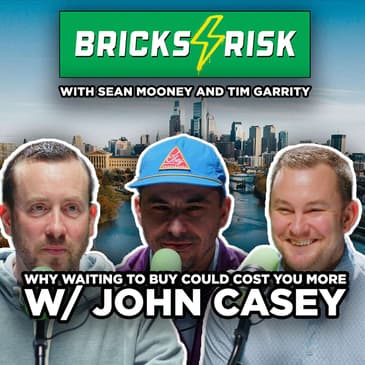

Number one hundred and twenty two. This episode has special meaning to the three of us because it was our Phi Gamma Delta (aka Fiji) chapter number at La Salle University. Queue in John Casey; a good friend, as well as a successful entrepreneur. What started out as a cushy sales job a decade ago turned into John going all-in on himself. 100% commission, no guaranteed deals. Dive right into this B&R business banger as Sean & Tim extract gold from a guy who made a smart bet and won!
Big shout-out to our show's loyal and dedicated sponsor: Property Management Redefined. John Sacks and his property management squad love our show and continue to support our mission of helping people through podcasting!
Our goal with Bricks & Risk is that you walk away with 1 or 2 valuable nuggets that can help build your own business. Our audience grows through word of mouth, so if you would please take a moment of your time and give us a review on the platform you’re on, that would be fantastic!
Please also help spread the B&R word by sharing your favorite episode with a friend. You can find all B&R episodes on Spotify, Apple Music, YouTube, and anywhere else you get your podcast content. We greatly appreciate your time and trust.
Until next week, keep learning and keep growing!
** Episode Shout-Outs **
→ Phi Gamma Delta: https://phigam.org/
→ Episode Sponsor, Property Management Redefined: https://gopmr.com/
📲 Contact Info 📲
→ Sean Mooney, Mooney Insurance Brokers: www.mooneybrokers.com/
→ Tim Garrity, The Tim Garrity Team: www.timgarrityteam.com/
💥 Watch us on YouTube 💥
→ YouTube, Bricks & Risk Podcast, @bricksandrisk: www.youtube.com/@BricksandRisk/?sub_confirmation=1
💥 Follow us on Social Media 💥
→ Instagram, Bricks & Risk Podcast, @bricksandrisk: https://www.instagram.com/bricksandrisk/
→ Instagram, Sean Mooney, @sean.moonee: https://www.instagram.com/sean.moonee/@sean.moonee
→ Instagram, Tim Garrity, @realestateinphl: https://www.instagram.com/realestateinphl/
→ Facebook: https://www.facebook.com/bricksandrisk
→ LinkedIn: https://www.linkedin.com/company/bricksandrisk
[00:00:00] Be confident and bet on yourself. And then you also said like consistency. Why that? Why that for a tip? I mean, I think we talked about the bet on myself. You know, I left a good paying job to start from scratch. I mean, that's why when you have a great opportunity, it may not be the best timing, but better yourself and, and, and, you know, you can be successful.
[00:00:25] Welcome to the podcast dedicated to real estate insurance and building your business. Join us as we take you along our own business building journeys with additional wisdom from our network of local and national experts. Welcome to Bricks & Risk.
[00:00:44] This episode is brought to you by Property Management Redefined. PMR is not just managing properties. They're creating partnerships that build long-term success for property owners. John and his team can be reached at manage at gopmr.com or by phone 267-753-6005. Tim? Yes, Sean? Who's a good client for PMR?
[00:01:12] Property Management Redefined is looking for property owners who value three things. Accountability, reliability, and a results-driven approach. They want to maximize returns, but still provide client and tenant satisfaction. There's a lot of property managers out there. Yes, there are. What does PMR do really well? Biggest thing is they're seamless and they're worry-free.
[00:01:35] So with that approach in mind, it allows the property owner to put their trust in PMR and know that the results will be there. The other thing I think a property owner is really going to value because they do it so well is that they have a local expert team, boots on the ground, managing your properties and your tenants' expectations every day so that you feel good about your investments. We have millions of listeners out there. Tens of millions. If they want more information, how do they find PMR?
[00:02:03] Right here, guys. Reach out to John Sachs and his team at Property Management Redefined. We'll take good care of you. Hey, everyone. Welcome to another episode of Bricks and Risk. I'm Tim Garrity. And I'm Sean Mooney.
[00:02:24] Today, Sean, we have one of our homeboys on, local guy, super successful businessman, John Sachs, Senior Vice President of Mortgage Lending at Guaranteed Rate Affinity. How are you doing today, John? What's up, everybody? Thanks for coming in. Welcome into the show. So, a little background on John. John's a native of Plymouth Meeting, Pennsylvania and started his mortgage career 22 years ago, assisting with real estate and relocation clients.
[00:02:50] He prides himself on providing superior customer service while guiding his clients through the entire loan process. As a 13-time President's Club Award winner, super impressive, his number one goal is making the mortgage process as simple as possible. One of the finest to ever graduate from LaSalle University. Duh. He walked away with a BA in communications. John currently lives in Lafayette Hill with his wife, Kristen, eight-year-old daughter, Liliana, and Greyhound Oliver.
[00:03:21] In his spare time, he enjoys coaching Lil's soccer team and playing golf. He's also a passionate Philadelphia sports fan. All right. I'm going to give you a softball here. Do the Flyers make the playoffs? Yeah. Not that softball. The Flyers are not making the playoffs. Okay. They're going to be a point out. So, I know you can play and you can play well. So, why golf? How did you get into golf? So, I golfed when I was a kid. I gave it up for 10 years.
[00:03:49] You know, when you're in college, you don't have money to play golf. We didn't have money to play golf. We barely put our nickels together to get our booze. You know? Basically. And then after college, I was like, I wanted to be active. I wanted to play sports. But I didn't want to play soccer anymore. Didn't want to play baseball. You can't really get a pickup game of baseball. True. Yep. So, I picked the sticks back up. And it's just something where it's an individual sport. You know, you can go out. And I was like, I'm not going to get hurt by doing this.
[00:04:19] You know, I'm not going to break a leg. You know, fast forward. I mean, I did hurt myself last year. But I'm back out. Wait, where did you play when you were a kid? We played all over. All over. Yeah, I played Westover. The same courses that are around today. Skip back. Westover. Jeffersonville. Yep. Yeah. You know, you played at the old Plymouth Country Club, which is 1912 now. Yep. Yeah, those courses. These courses have been around for 30, 40, 50. You forgot Walnut Lane. Oh. Yeah.
[00:04:50] Shout out to Walnut Lane, Roxborough. Roxborough Country Club. Yep. I love it. 30-pack off. Me and McCann used to play at Walnut Lane. And we would bring a 30-pack. And we would get on the tee at one. And nobody watches you play there. So, we literally would play 18. And then if we had any beer left over, we would just restart at one until the. Shout out to Pete McCann. And then when the 30-pack was gone, then we would stop playing. Like, it's time to go. All right. So, when you're young playing something like that.
[00:05:19] And the reason I ask this question is because, like, you know us. Like, all the boys from college. Like, none of us are really any good. I mean, Mooney's good. But most of us didn't play growing up, which is kind of why I asked. So, when you were playing growing up, like, were you playing with family? Were you playing with friends? Like, what got you into it, like, at such a young age? Yeah. I mean, I guess, you know, I golfed with family. A couple of my buddies golfed. But I think it's a really good discipline for kids these days.
[00:05:46] Like, you know, where it's, again, you're standing on that tee box by yourself. You know? You've got to swing the golf club. You know, you're not help. On a baseball field or soccer field, you're one of nine or one of 11. You know, you're just part of the team. And you're not the focus. With golf, you're the, you know, it's. The all end all. Yeah. You're the only one. And I think, like, you see, like, when you see the Ryder Cup, those guys are playing as a team. They love that because they don't do that. Yeah, that's not their thing. It's not their thing. Yeah. And I just like. That's interesting.
[00:06:16] I just like the discipline of golf and the respect. You get quiet. You know, you mark your ball. There's just certain things that you can teach kids about life on the golf course. Which you can on the baseball field, the soccer field, the football field. The etiquette of golf. You know, the discipline that you have to have. We played everywhere. Like, kind of like you were all over the place. We would play Alvathorpe. Alvathorpe. Oh, yeah. Shout out to Alvathorpe. Abington Township. Where is it? Like, I mean, over my way. And then we would play Woody's.
[00:06:46] Oh, yeah. I was just talking about that. Yeah. Somebody was like, I'm a nurse there at. Oh, Jefferson. Yeah, yeah. You took my golf. You took my childhood away. You know, did the par three. The chip and putt. And then you had the. Yep. The 18 holes in the back. Yep. You would sneak on and play. And, yeah, I mean, if you wanted to spend a full day on the golf course, you could go to Woody's and be there for like about eight or nine hours. Yeah, yeah. Well, golf, too. The other benefit with golf is networking. I mean, like. It's so good for business. It's.
[00:07:16] I mean, there's no other. I mean, how many times have you and I sat in a golf cart and just BS'd for four plus, five plus hours? Yeah. Seriously. Hours. Hours. I mean, you're stuck with whoever you're sitting with on the golf course in that golf cart. You can't get away from them. Yeah. Yeah. You're getting to know each other. You're talking shop, talking about life, you know, whatever it is. Playing with Hill at Commonwealth, watching him throw nine irons at trees. I mean, shout out to Dave Hill. All right. So. Put that in there. All right.
[00:07:45] So here's a good one. So like this is more today. So depending on who you talk to, 2026 is either great time to buy. Yep. Or bad time to buy. Who's saying great time to buy? I mean, there's plenty of people. So, so give me your opinion. So you're, you're looking at it from the mortgage side of things. You know, interest rates have been a big subject of conversation for the last few years, ever since like 22 basis when they started going up. What's, what's your opinion of the market today?
[00:08:13] So I think, I mean, I'm a big proponent of you're going to buy when you're ready, right? Rates are going to be what they are. But here's the thing. Like I'm stressing now, especially our area. Inventory is so tight. Yeah. Rates are still elevated. We had a dip for seven days a couple, a couple weeks ago. Yeah. It's not stopping buyers, right? There's offers going out. There's 10, 12 offers on certain properties. Values in this area. I'm not talking about in general, the whole country.
[00:08:42] I'm talking about specific local to us. Yep. Values aren't going up or values not going down. They're going up. Now, when rates drop, if, if rates get to five, seven, five, five and a half, the market is going to be flooded with the buyers that are at 3% now. They're going to be able to absorb. They can move now. They can move. They can move. They don't want seven. They don't want maybe six and a half. Right. They'll take five and a half. Yeah. Five. Absolutely. Oh yeah. When that happens, what's going to happen?
[00:09:11] You're going to have, prices are going to go up. Competition is going to be stronger. You're going to get back to the waived appraisals. You're going to get back to no inspections. It's going to be like COVID again without COVID, hopefully. So my pitch to buyers like, get in now. Yes. Your rates can be elevated, but no, a year, two, three down the line, we're going to refi. And you have that equity and that house you just paid $7.54 is now going to be worth $8.50.
[00:09:39] What's interesting about now, it's like, I don't know the exact stat, but resale inventory is like in an all time low. Meaning the home that someone's lived in for 25 years, 50 years, 100 years, people aren't selling those right now. Mostly because they're owned maybe by like baby boomers, probably a majority of them. Maybe the mortgage is paid off or they have a two and a half, three and a half percent interest rate.
[00:10:05] So it's interesting that you talk about like what would happen if rates go down low. Because if rates do go down lower and that person with the three and a half interest rate is like, I'll go buy something else because I can stomach it now. There's so many buyers just waiting for that baby boomer resale house in the neighborhoods that we live in. We live in established neighborhoods. So like they're not really building a lot of new construction because there's nowhere to build. There's no land. So the homes that exist are the homes that have been there for like 50 years, 75 years.
[00:10:34] And that's what these buyers are waiting for. So I find it interesting you make that point. You're like, that's going to make things go up even more. I mean, I can tell you my neighborhood, they're buying houses for six, 700,000 to bulldoze them. Yeah. I know. It's crazy. Crazy. And they're, and they're building like a million and a half, $2 million homes. Correct. And the one thing I see the most in the last 12 months, guess who a lot of the sellers are on a lot of my deals? States. Oh. People are dying in the houses. Yeah. Yeah.
[00:11:04] That's when they finally go to market. Yeah. Wow. Wild. Yeah. Yeah. It's completely wild. That's that end of the market. They're just, they're at that age. And that's the only way the house comes on the market. When you talk to somebody who's like 65 or 70 years old that, you know, they have been in their house for 30 years. It's like, well, where am I going? Yeah. If I'm going to Florida, yeah. If they go to Florida, great. Around here, it's not. It's not as common as people think. It took my mom, I took my mom, you know, 10 years to be like, all right, I know where I want to be now. And I found a house. Like it was like right before COVID.
[00:11:34] And I was like, you know, her household in a day because, you know, it was that, but it was like, I didn't know. So she didn't know where she wanted to go. So she stayed in a 3,000 square foot home with her dog for 15 years longer than she should have. So is that mentality killing it? Like if there's the person that's sitting here that we want to buy or we're thinking of buying and, oh, we're going to wait for rates to come down or we're going to wait for this.
[00:12:00] Like that's the worst mindset you can have right now. Exactly. Because you wait and that house that you saw for 500,000 at a 6.5% interest rate now goes for 650 and your rate's 5.75. The payment's probably the same if not more. You're not gaining any ground. No, you're getting, that's why I'm like, get in now and build your equity. Build your worth from now.
[00:12:28] I mean, the best time to buy a house a lot of times is in chaos. In times where it's not great, you know. Yeah. Yeah. It was great to buy a house when, where rates were 3% and, you know, values were just skyrocketing. Yeah. Do yourself a favor. Like, like I was kind of in that we were, I was looking for like what, three years or something. Easily. Yeah. And so like, I was like seven and I just blacked out for the first four. I was like, we'll wait, we'll wait.
[00:12:55] And then it came to a point where I was like, I'm waiting for something that's not coming. Correct. Yes. Correct. You were like waiting for a crash and everybody's like, crash is coming. Crash is coming. Or you're waiting. You're like, when's that one deal going to pop up? That's perfect for me. That just happens to be priced right. It doesn't exist. Or, or they say like, oh, I'm waiting for the correction. The correction. Around here. Or I'm waiting for the deal. Yeah. Waiting for a deal. You're, you're, what you're losing. And I gave you that example of we bought in November. It's, it's March.
[00:13:23] They just sold up the street and it's like higher and it's going to go higher. It's like, you know, it's this thing where people kind of psychologically think they're like waiting for the better deal, but they, they should be deciding just to make the move and do it today. And you seem okay. Right. You did it. You're good. You're living. I don't know if he's okay. I mean, define that. Yeah. It depends. I feel guilty every day trying to help him out.
[00:13:53] Um, all right. Well, that what's interesting about that too, is that like, so again, as important as interest rates are, I feel like the interest rates right now are more important for unlocking the inventory. Because again, if someone's like, Hey, I've been renting since I was like 22 years old and I'm 35 and maybe I have a significant other. Maybe I have children. Maybe I have three dogs. It doesn't matter. Maybe I'm single, but the fact that you've been renting for like 13 years, you have to
[00:14:21] start to wonder, okay, if I'm paying 2000, 2,500 a month in rent, and I just keep doing that year after year. Like I have a need, like I want to go plant my feet somewhere. And as long as you're going to plant your feet, my general agent advice, if you want to call it, is like, if you're going to stay somewhere for seven to 10 years, you kind of can't lose for the most part. Few reasons. Potential appreciation, paying down your principal, tax benefits.
[00:14:48] It's, you know, maybe you had some savings over your rent or even if you didn't, it doesn't matter if it's the same. And when you do those things over a seven to 10 year period, you're going to build equity. So even after seven years, like I need to get out of here. Why did I buy this house? Even if you, let's say the market completely crashed or whatever that happened in 2008, 2009. Even if that happens, you can still rent your house. Like, or you can refire your mortgage if rates have come down.
[00:15:15] Like you are in control when you buy a house. So if you know you want to own and you've been renting for five years, 10 years, 15 years, like the best time to buy was yesterday. Because if you do that, you're finally committing to the number one way to build wealth in the U.S., which is owning real estate. And that year after year, it always happens because it is. You make money lots of different ways.
[00:15:40] I mean, to that point, I think over the last hundred years, I think seven of those years, there was a decrease in value. Yeah. And it hasn't been, there's been one in like the past, like 25, even through the, even through the crash, like. Yeah. So 93 years, you're on the plus. I mean, think of it this way. If you're paying $2,500 in rent over a three year period, you're paying your landlord almost a hundred, a hundred thousand bucks. Yeah. It's crazy. It's crazy. You're making renters. You get zero benefit.
[00:16:08] Landlords make, or renters make landlords rich. Yes. So shout out to the landlords out there that are making their money. Hell yeah. Great business model. All right. So this kind of plays into like our theme. I mean, we're like a small business entrepreneurship show. So as a mortgage originator, I would assume you're a hundred percent commission, right? Correct. Okay. Okay. You've been doing this over 20 years. Over 20 years. Yep. All right. So, and we like to get a little tactical.
[00:16:36] So like for you building your business over, you know, 20, 20 plus year period, what are some of the things that you do that help you stay in the business that long and continue to, you know, part of the president's club? Like you've had a lot of success in the mortgage business. Like what are some of the things that you do to build your business? So my story is a little bit different. I've been in the business for 22 years, but not all in the same, like I've been originator for 22 years, but for the first, what is it?
[00:17:05] 14 years, I was in a call center. That's right. Yeah. So I worked at a call center and I had, the leads came to me. Inbound. Inbound calls. Yep. You're just, you're servicing the top of funnel stuff. Yeah. So just, you know, I called it making shoes in a factory. We just worked and just kept grinding and just, and just, and work. So it wasn't like a real relationship business. It was just like, it was more of like a numbers game. Okay. But then I was like, you know, I need a new challenge. You know, I was, I was, I quite frankly, I was bored.
[00:17:33] I didn't want to just drive to an office and sit there and just, you know, I could have done it the rest of my life. I had a good living, whatever. But I wanted to bet on myself and take a challenge. Like I wanted to go out in the field and, and, and do it on my own. So I got a good opportunity. I mean, a great opportunity. My wife's pregnant. I was like, I knew what I was going to, what I was getting into. You're going out. I literally left in 2017. I had not one agent referral. I didn't, I didn't know when I started. Yeah.
[00:18:04] Nothing. I built it from the ground up all the way. I love it. So wait a minute, wait a minute, wait a minute. All right. So back the horse up a little bit. Yeah. What? Like. Yeah. So yourself. Yeah. Yeah. Here we go folks. Well, you know, I know the move. I know like, you know, but now we're getting granular on what this was. What was so great about the opera. So, so you're making X. Yeah. Making a good steady living. Okay.
[00:18:33] Show up and grind. So now, and you got to talk me through the math on this, but like, this is, I know what I'm making and like year after year, you can kind of pencil in what you're going to just be by the way of the loans. Yeah. I mean, I mean. Within a range. Yeah. I mean, I was, I was inside. You had a very small base salary to keep the lights on and then everything else. Yeah. So, so to leave that where you're going to be like, Hey, now you're going to go start
[00:19:00] as an originator and it's all dependent upon relationships. With zero leads. Right. Zero leads, zero referrals. Right. Zero agents. Zero agents. So that decision, like how did you make that decision and what was so much better about the, was it the up, the potential upside on that versus what you were doing previously? So it's kind of twofold.
[00:19:26] Cause some of, some people, some of our listeners out there would call you crazy. And watchers. Yeah. I mean, it was a, I mean, and think of it, my wife was pregnant and she wasn't working. That's not, that's not good. So, so, um, yeah, I mean, I got the opportunity, but I was like, listen, I could stay in my job and just be not happy and be stuck to a desk and, and, and needed to be in an office. You know, the opportunity I was going to have was going to be, it was going to be a lot more
[00:19:56] freedom to do, you know, what I wanted to do, not need to be in a certain location, you know, from this to this. Um, but at the time I was working for PHH and guaranteed rate affinity was acquiring PHH. Yeah. Um, so I knew that guaranteed rate affinity, the name guaranteed rate, you know, the, the, the whole company is huge in Philadelphia. And I was going to get an opportunity to have that name back to me.
[00:20:25] And I knew a lot of the agents that didn't support PHH, that was going to go away. Yeah. And all the problems of why you didn't want to use PHH. Really good point. I was like, well, that's going to disappear in three months. So the baggage that I got in six months before the merger or the acquisition, not the merger. And I built those relationships. And the only, like, if I had took an agent to lunch and the only thing they said, well, I hate the appraisal department at PHH. Well, perfect. It's going away in three months. Give me an opportunity.
[00:20:56] So for six months, I took agents to lunch. I sat in their office. I learned their kids' names. I learned their wife's names. I learned, I learned what they liked. Right? And what's big in this business is, yeah, we're talking mortgage. We're talking real estate. But, like, I try to not talk a lot of shop. You know? I try to talk about, like, hey, you want to go golfing? Or you want to, you know, how's... Connect on a personal level. How's Cindy? How's this? Or how was your kid's basketball game? Like, you know, you scroll through Facebook and you see, like, oh, there was a basketball
[00:21:26] game this weekend. Like, so that's what I did for, like, the first few months. And just, you know, I negotiated with PHH, like, hey, I got it. You got to give me a little bit so I can build. Because, like, I'm like, I'm not going to sit here and not make any money for six months. So, you know, so we did. And we just, we built it. And I did events. And we did, you know, it was, it was started from the bottom. And we just, we just kept growing it. Yeah. Talk about, all right. So it started out like you're in your first year. This is 2014. This is 12 years ago. No, 2017.
[00:21:55] 2017. I'm sorry. So less than 10 years. And you're getting started. You're going, you're going one to one. You're going belly to belly. You're trying to meet people, get to know them, develop a real, true, genuine relationship with them. With the hope that, hey, maybe they'll consider me for their clients' mortgage options in the event, you know, someone's buying a house, let's call it. Let's fast forward to, like, today. So, like, let's take events, for example.
[00:22:23] Like, when you're doing an event, it's not one to one. You might have 10 people in a room, you might have 100 people in a room. What kind of things are you doing for, like, events that help to, obviously, strengthen what you have, but also keep the lead gen flowing moving forward? So, I mean, with events, I like to keep them. I don't like the 100 people events. Yeah. I like the, you know, 5 to 15 to 20. Nice. Because, you know, I like to invite people that, number one, I do business with. Yep.
[00:22:52] Keep that, you know, keep those relationships. Bring on people that I want to do business with. Yeah, invite, like, two or three in that you're, like, hoping to build. And I like, I say, you know, to some of my top agents, like, hey, bring a friend. Like, bring somebody that we don't do business with. Great idea. You know? And then it's more, you know, it's more personable. You know, you have 100-person events. Great. You're not going to talk to 100 people. No. You won't even get to, like, 80% of the room. You know, and if you invite, like, like, I'm a big proponent of, like, don't invite just, like, like, a whole office of people.
[00:23:22] Like, you know, be selective on who you're targeting, you know? And, you know, events work better that way. Yeah. At least in my opinion. Yeah. I mean, we talked about it, too, is your preference, my preference. I don't like the big event types. It's just you get lost in it. You can't really find your way.
[00:23:47] You're talking to someone, but you see all these people, so now you're just trying to get to that next person where it's like, if there's 15 people, you can touch 15 people. Oh, totally. And that person you've invited that's one of 15 feels more important than one of 100. Correct. Yeah. It means a little bit more. Yeah. I can go either way. I probably prefer small because I'd rather, like, both of you, I'd rather, like, get to know people rather than just go shake, you know, 20 hands, get 20 business cards and go home and put them in my contacts.
[00:24:17] But I do like, I like big events in the sense that I'm just so curious about people in general that, like, if I go to a big event, I might really meet five super random people that I would never meet. And, you know, me too. I'm just, I just think I'm, I'm used to that. I used to do a lot of stuff like that. When I first got into real estate, I was going to these, like, 100, 200 person networking events. And I kind of enjoyed it.
[00:24:45] I don't know if I enjoyed it from the sense, just like the energy in the room, because it's like, it's kind of cool. You know, maybe it's like an MC or like a, you know, a buffet or like you just bump it, you turn around, you bump into someone new. So I did like it from that. But now, you know, almost 47 years old, I'd say I prefer it that way. 10 people, 15 people. And the people that you either already do business with or the people that you know really well and you're like, I would love to like do business with you. So I think that's super powerful.
[00:25:17] Also, here's another one for you. So one thing you said that you love to do is help good people get financing for the American dream, which is home ownership. So doing this over 20 years, you know, talk about why that has become one of the things that you love most about business. Yeah. I mean, at the end of the day, I sell, you know, interest rates for a living, you know, but it's more of like, hey, I sell John Casey for a living, right? It's more of like, hey, I put my arms around you.
[00:25:45] You know, you're making a huge financial transaction. You got to feel comfortable. And at the end of the day, when you sit at a closing table with somebody and they're crying and they're hugging their parents the first time, you know, like it makes you feel good. You know, you help somebody achieve their dream, you know, and I think we take that for granted a lot of times, you know, because for us, it's like, all right, well, it's on to the next one. It's on to the next one. You know, you're, you're only as good as your last deal. Right.
[00:26:10] But it's just, it's to see that, you know, at the end of the, at the end of the process of people being happy, you know, and it, you know, I find that to be good. It feels good. Hey everyone. This is Tim, your favorite bricks and risk co-host, but don't tell Sean. I hope you're enjoying this episode and I'll get right back to it in a moment. Our audience grows through word of mouth. So if you would please take a moment of your time and give us a review on the platform you're
[00:26:38] on, that would be fantastic. Please also help spread the BNR word by sharing your favorite episode with a friend. We greatly appreciate your time and trust. Now back to the show. We said in the, in the one episode we talked about was being, uh, a chapter in someone's book and, and how powerful that can be.
[00:27:04] And this is like the biggest moment of their life for a lot of these people, first time home buyer, like especially. And for you to be able to orchestrate and make it happen. And I'm sure there's been scenarios where stuff could have fallen through, right? Or, oh, is this going to deal going to get done? Or this thing came up. I don't even know if we'll be able to close and you to be able to like come in and ensure that happens.
[00:27:33] That's like such a pivotal role in that moment that it gives a little bit more meaning and definition. Yeah. And especially as the, like the ones that are like the buyers that can maybe, you know, they come to me and say, Hey, I was declined from another lender. Oh yeah. And you're like, all right, well, let's figure this out. You know, you got a 583 credit score. You're going to have to go FHA. You're going to have to manually be underwritten said, but we'll make it work.
[00:28:00] And when you go to the closing table with people like that, that's impactful because they were told no. And you got them a house and they're going to give you a hug and they're going to, you know what? They're not going to, you know, call you to refi. They're going to call you. They're going to tell every person that they know in their sphere of influence, Hey, call this guy because he got, he got it done for me when people told me no. Yeah. You know, I always say any Joe Schmo mortgage lender can do a 20% down conventional loan with their eyes closed. And trust me, I love doing 20% down conventional loans.
[00:28:30] You know, I could do them in five days, a lot less headaches out there. Yeah. At John Casey. But it's the ones that come to me and they have the mediocre to poor credit and they're getting their next paycheck to get enough money in the bank to make the financing work and their dreams work. Those are the ones that are more impactful in my eyes. Totally. You know, they're like, you know, you introduce them to like PHFA or you start telling them
[00:28:56] about grants or you start telling them about, you know, 6% seller assist on like FHA and these people thinking, you know, maybe I need 30,000, 50,000 to buy a house that need like 20, you know, 15 depending. And that's huge, man. So what is it? Can you talk a little bit about, because obviously the guaranteed name is big, big around here, but specifically with you, yours is a little different with Affinity.
[00:29:25] Can you talk to us about that in terms of the relationship between, what's the difference? Sure. So in 17, we were, so we've had a joint venture with Anywhere Real Estate since 2004. Anywhere was just purchased by Compass Holdings. So now Compass, essentially. When was that? It was happening three or four months ago. Yeah. I didn't even think of that. So now, so when, since 2004, PHH had a relationship with Anywhere.
[00:29:55] PHH had sold to guarantee rate of money. So 2017, think of it this way, guarantee rate of Finney is 51% owner. Anywhere is 49%. Yep. So it's a joint venture with Anywhere. Okay. Which now is Compass. Right. So when I do well and I do, you know, well for the offices, you know, they're compensated. You know, they, they, they make the profits of what we do. You add to the bottom line. We add to the bottom line.
[00:30:21] Which is huge in this market now because, you know, with agent splits and, you know, how, you know, tight everything is like, you know, you're making money off your answer early services, you know? So that's really the biggest difference. I mean, it's the same technology. It's the same, you know, you know, underwriting system. It's the same, you know, we, we work off of the same, you know, system. It's just that my company has a relationship with now it's Compass. Yeah.
[00:30:48] Have you seen anything change over the last three, four months with that acquisition or is it everything? What's the vibe been like? I mean, for us, it's not, I mean. Business as usual. Business as usual. Yep. You know, like right now I have access to a couple of banker offices. I have a couple of, one in Conchie, one in Old City. You know, will I have access to the, you know, an office and, you know, say a Compass in Chestnut Hill that may come down to Pike. I don't know. So, um, it's still new. Yeah.
[00:31:15] Um, but for us, I mean, I think, you know, when you're adding more agents to the, you know, to the family, so to say. Yep. I don't think that's a bad thing. More opportunities. More opportunities. Yeah. Um, all right. So here's a question. So you had like a JV with Anywhere. Anywhere is now part of Compass. Do you think that like was, was the JV across like the country with Anywhere? Yeah. So there was guaranteed rate of finish like all over the U.S.? Yeah.
[00:31:44] So there, there's, there's, it was back when the NRT was formed in 2004. Yeah. So like there's, there, it's not, it's not like in South Dakota. Right. Right. Yeah. So it's like, it's like part, it's like, you know, Amy Stockburger. There you go. You know, Chicago, Philly, you know, they pick where they want to be. Major metrics. You're up, up in the Boston. You're down all the way down to Florida into Miami. You're in Texas, you know, you're in, you know, uh, Missouri. You're out in California. So like, yeah, I mean, we're, we're, we're nationwide.
[00:32:14] Yeah. But the presence is, is a lot bigger in certain, certain markets for sure. What's your opinion? Do you think the guaranteed rate affinity JV that Anywhere had? Cause Anywhere had a lot of debt. And I remember a lot of industry people were saying like when Compass acquired, uh, anywhere, they were adding like a ton, couple billion worth of debt to their balance sheet, but they're still getting, they're getting tons of agents, tons of market share.
[00:32:43] Do you think the guaranteed rate affinity thing was attractive to them when they were doing that? Because Compass didn't really have any kind of in-house financing before that. So what's ironic, what's ironic is they, Compass actually had a, uh, joint venture with Origin Point, which is another, another wing of guarantee rate. No way. Which is, I didn't even know that. Yeah. So like, yeah, exactly. You don't know that because there's, there's not a presence here. There's a presence like out in California and like a little bit in Chicago.
[00:33:11] Like more of like a smaller, uh, JV than like what would. Correct. And I, and I think, you know, this is my own personal opinion that like Robert Refkin saw that and saw like the value in, in us. Oh, that's awesome. So, you know, which is a lot bigger than Origin Point. And then there's title that goes along with that as well. Yeah. So, you know, I think a lot of the, you know, yes, the agents and acquiring the, you know, couple banker in century 21 and, you know, better homes, like was great, but he saw,
[00:33:39] he sees value in, in, in definitely mortgage for sure. Yeah. Awesome, man. Hmm. We'll see how it plays out. Very cool. Yeah. All right. So the three of us have known each other for like over 25 years, which is, which is crazy. Wild. And I didn't even ask you this yet. This is almost back to the golf question. Like, how did you even get into mortgages? Like over 20 years ago? Like what, what brought you in? So newspaper ad? No. Okay. So, uh, Craigslist. So as my bio said, I was going to go to be communications.
[00:34:09] And quite frankly, I wanted to like be in like sports journalism and sports guy. Yeah. Big sports guy. So talk to Cush. You should have. Well, maybe I just watched Cush. Shout out to Andy Cushman. Didn't he write for like the Trenton Carrier Times or something? He did. He did some good write-ups. He wrote about my brother Pat's band back in the day. Back up. Shout out to Pat Garrity. So I kind of, so I pivoted. Right.
[00:34:39] So we were doing, my uncle worked for the title company and I was like, can you get me an internship? You want to get an internship at the mortgage company? So I was like, yeah, great. I was like making like, I don't know, 15 or $18 an hour. More than what I could be making. Like. So it started out as like internship. You're like, oh, this is some serious money. So like young. So it was 2001 and I'm interning and I'm sitting there in the summertime and I'm talking to these guys and they're like sitting there and they're just like, you know, coming and going and they're like, you know, we're making a lot of money and you know, yada, yada, yada. So I was like, all right.
[00:35:09] So I continued the internship. Like I literally worked there the entire time I was at LaSalle because it was like, it was beer money. Yeah. You know, but I was like learning. That's good beer money. It's good beer money. But I was like learning the system. I would ask a lot of questions. So I was kind of teaching myself and you know, I graduated, you know, I did the four and a half year plan. I stayed on the extra semester. Were you similar cum laude? I was not. No. So January rolls around and I'm like, well, what am I going to do? And I get a phone call and they're like, do you want to, do you want to start a training
[00:35:37] program to be an originator? It was January. And I'm like, well, I got nothing else to do. Sure. You're going to pay me. Know what you're doing. Yeah. You're going to pay me 40 grand to sit in a training class for four months. Sure. Okay. So I sat in a training class for four months. They taught me how to sell mortgages. They taught me the ropes. And literally somebody posted something on Facebook the other day and I was like, damn, I was like, it's my anniversary too. I said, I hit the sales floor April 1st, 2005. Wow.
[00:36:08] So 21 years is actually being an originator. So it was like, and then I just hit the ground running and I'm like, all right. I linked up with a couple of guys and like, you know, and that was back in the day when you're doing like stated income loans and state asset. And I was like, what, whoa, whoa, what are we getting into? Yeah. And like, we never did like the, the, the countrywide of the world. The CISAs and the NINAs. Yeah. Yeah. So, but yeah, I mean, that's, that's how it kind of started and that's, you know, and now I'm like 20 years later, they're like, people like, do you like it?
[00:36:37] I'm like, you know, this is my career. I'm not getting out of it. Yeah. You know, I'm not starting another business. I'm not. You're not going back to sports journalism. I'm not going back to sports journalism. I'm not becoming a professional golfer on the corn fairy tour. Nope. Yeah. I mean, this is it, but here's the thing. And I, and this is, this is a part that I, that I would love to hear you guys feedback. Like, so I'm 43 years old or soon to be 44. Yeah. I go on these president's club trips. Yeah. Right.
[00:37:04] I'm still like the fourth youngest originator at these trips. No way. Okay. They're national. National trip. Yeah. We usually have about 150 people with spouses. So yeah. So you talk one out of 150 nationally is pretty, pretty frigging good. So, you know, let's just say there's five guys that are younger than me. Damn. And they're like in their thirties. I'm like, so you don't go to, you don't go to, you don't go to LaSalle. You don't go to temple. You don't, you don't go to these schools and be like, you know what? I want to be a loan officer. Yeah. Right. Not typically. Not typically.
[00:37:33] You don't take classes other than, you know, persuasion. Yeah. You take no loan officer. There's no mortgage major in college. You don't, yeah. You don't take them. So like, it's not like we're a dying breed, but we're an older breed. Right. There's so many guys I know that are in their sixties originating loans. You know, they can't wait to get out. I would, I would love to mentor like a young kid coming out of college or somebody that's young and teach them the ropes. Cause you don't, there's no four, four month training class anymore. You know, you just kind of have to hit the ground, but like, it's not a lot of
[00:38:03] It's one thing that I've been the last 12 months. I'm like, listen, I need to find somebody that's younger that wants to do like TikTok videos, you know, that wants to run the open houses, you know, this stuff that I can't, you know, I don't have the bandwidth to do. Yeah. You know, love to find that person. Well, do you know what's cool about that? So I recently started connecting with the new Dean of the business school at LaSalle. Good dudes from New Orleans and, uh, connected with him and talk to him about some of the business majors.
[00:38:31] He's really looking for like alumni to come in, like in my field in real estate. I'm sure he'd be very interested in mortgage because again, they don't, they don't offer that at the school, but they're very viable careers. They're very entrepreneurial careers. They're sales driven. They're marketing driven. They can be management driven depending on how, how big you get. And let's be frank, they can be very lucrative. Super lucrative. And I think it's good to, uh, yeah, I think that would be a good connection. Yeah, absolutely. Oh, I'll, I'll, but the other thing too is what you had mentioned was you don't go into
[00:39:00] school to become a loan officer, right? No. We're an insurance agent. Right. But it really is just what you're exposed to. Like you, I got exposed to it. You got exposed to it and it became a career. As did I. So I guess it's just the thinking of if you can get someone young and get them exposed to it, it may or may not, it might turn into a career.
[00:39:30] It might not, but there's an incredible opportunity, especially with all of these older people bailing out in the next 10 years, just think of the opportunity that's going to be in front of people. Correct. In your state insurance. Same thing. In your field. Yeah. In my field. And so like, what a great time for a young person to come in, get started, learn the
[00:39:54] business and have this amazing road in front of them with all like, what's the number of insurance, uh, real estate agents that are over 60. It's like, yeah. I mean, it's like 55 plus something like that. Yeah. You know, it's probably the same. It is. It's statistical numbers in your field. Same as mine. It's like, if you can just get the exposure and maybe it's, maybe it is like an internship. Hey. Yeah.
[00:40:24] Give me 10 hours a week, run some social, learn the business a little bit. And then they, and they like it. Then it turns into something. Good stuff. Um, so one thing we also like to talk about is biggest struggle. You said your biggest struggle was time management distractions. So why that? What, what about like time management or like getting distracted from, from keeping control of your time as, has been such a struggle for you? It's not so much.
[00:40:50] I mean, the, the, the distractions are you go sit in an office, right? You have a real estate agent that wants to come in and talk for 45 minutes. Yeah. And I got 15 deals I got to deal with and they're working on one. Right. And you can't sit there and say, Hey, you know, I got to get back to my day job here because you want to, you want to talk and you want to, you know, that's more of the distractions like getting pulled to lunches, things like that, where it's just like, Hey. Inner office distractions. Inner office distractions. You know, even like, you know, just, just get distracted by, you know, uh, you know,
[00:41:19] a negative email that comes in and you're got to just jump on that and you get just, you know, you, you, you gotta put a fire out, you know, things like that. Like, you know, I, I should do a better time of, of like blocking certain times out where I'm like, all right, listen, I'm, I'm going to focus on this or I'm going to focus on that. I just more willy nilly it where I'm just like, all right, you need this, you need this, you need this. And I'll just get it done. Yeah. It's a lot of stories of like, all right, if that phone call comes in at nine 30, it
[00:41:47] can wait till the morning, you know, um, or that email that comes in at 10 o'clock. But I think just, you know, that's what I meant by distraction. Just like, you know, getting pulled. Yeah. It's like, uh, even if you had something on your calendar and said, I should be doing this right now, let's say it was some kind of marketing activity. And then you're like, but I always have deals going on. There's always agents flowing through the office. Like there's always like water cooler conversations to be had.
[00:42:12] So it sounds like your, your setup to also plays into the distraction of, of your day where it's like, you're in an office with like multiple people. You're, you're a relationship guy. You're obviously catching up with everyone. Like, how you doing? How was your weekend? Or, you know, the weather, whatever it is. And it's not, it's not a big, it's not a big thing. It isn't, but it is. So it is, it is a tremendous difficulty. And I, I probably share a lot of the same things that you have is like, I mean, you
[00:42:42] get a text, you get an email, the phones ring it like, like given your day, there's so many, uh, landmines. There's so many, um, activities that are occurring at one time. And it's like trying to, to manage and trying to prioritize like, okay, these three emails come in like, okay, okay. I got to get this one. I'll push these two. Like, it's a constant, right? Like, like I was coming in here today and I'm on my phone with my assistant and I'm like, can you say this pre-approval?
[00:43:12] I'm texting a guy that, you know, he didn't see a $5,000 lender credit on his CD, initial CD. I'm like, it'll be on the final six. I did like five things in like 30 seconds right before I walked in here. You know, that's why I mean, that's why I won't buy an Apple watch. Oh, because I'm like, my phone dings enough. My computer dings enough. I'm like, I need, I don't have, there's too many dinging. I'm like, yeah, you never, I mean, never say never, but. I mean, here's the thing. Everyone's got their struggle. That is not a struggle of mine personally. It's just not, it's not how I'm wired. I'm more, I'm more.
[00:43:41] You don't have as many friends as we do. That's true. I'm more of a loser. But I know, I know that. Cause every time I talk to you or you would do a lunch, the guy puts it on my calendar, like in two seconds, like to me, I'm like, oh damn, pups got it. Real well today. You know, no, it's like, you know, you struggle with something like that. And my struggle is different. You know, it's like, we all have our struggles. Um, all right, here's, here's another good one.
[00:44:05] Your tip for listeners and watchers, the bricks and riskers, be confident and bet on yourself. And then you also said like consistency. Why that? Why that for a tip? I mean, I think, I think we talked about the bet on myself. You know, I left a good paying job to start from scratch. I mean, that's why just, just remember in life, there's no, when you have a great opportunity, it may not be the best timing, but bet on yourself and, and, and, you know, you can be successful.
[00:44:35] Here's a good question. Yeah. Knowing that you were in the industry for a while, you had the internship at LaSalle. Then you were working, you know, inside sales, basically like lead gen, old lead gen. How hard do you think it would have been to hop into the guarantee rate affinity opportunity if you didn't have all that previously? Do you think your mindset would have been a little bit different? Just you personally.
[00:44:59] I mean, the knowledge I had when I left, cause like when you're working in, you know, when you're working inside, like I talked to thousands of people and saw thousands. A lot of reps. A lot of reps. You got, you're like, it's like, you know, you're, you're taking batting practice at baseball. Like you're just getting all those reps and you're seeing all those things. And I always say like, man, I thought I saw everything until this one that I, you know, but I saw all that. So like when you're doing, you know, in 2012, I closed 512 deals. Oh my God. 512. Yeah. Right.
[00:45:29] Yeah. There's only 365 days in a year. Correct. Yeah. So like when you scale it back and like, I don't, I certainly don't do 512 deals, but like, I feel like, like my bandwidth, like that's where I've been driven from. Like I have the bandwidth to do a couple hundred deals where like, I don't need to hire somebody else. Like I can, I have the ability to do it.
[00:45:54] But I think if I didn't have, you know, that opportunity before the guarantee rate, you know, not seeing those, you know, not seeing those deals or how that something structured. Like, yeah, that to me is like the stuff, the second nature now. Like, it's like, all right, as soon as I talk to somebody, it's like, all right, we need to go this way, this way, or this way. Like my brain just does it. Yeah. Um, you know, which was helpful. And there's less and less of those. I've never seen this one before.
[00:46:23] Oh, you never know. You never know. All right. Your quote is awesome. It's a little lengthy. So give me a minute. Nothing in this. You're going to say it. No, I'm not saying it. Okay. He's got it written down. All right. Even though I don't need it. Nothing in this world can take the place of persistence. Talent will not. Nothing is more common than unsuccessful people with talent. Genius will not. Unrewarded genius is almost a proverb. Education will not. The world is full of educated derelicts.
[00:46:53] Persistence and determination alone are omnipotent. The slogan press on has solved and always will solve the problems of the human race by our good friend, Calvin Coolidge. Now, without the audience really knowing why that was your quote, why was that your quote? So, Mooney's wearing purple today. Yep. This is episode 122. For all of our listeners and watchers out there. That has meaning. So, 122. Should I explain the meaning? Sure. Yep.
[00:47:21] So, we're at a fraternity called Phi Gamma Delta or Fiji. Fiji. Tim was my pledge educator. We're coming up on 25 years this week of getting into fraternity, which is crazy in itself. Episode 122 was special to me because that was our chapter number at Nationals was 122. So, I saw Moon like last week or two weeks ago and I was like, can we make this happen? Out with another Fiji. Doug Robinson. Shout out to Fresh. We're having dinner tonight, Fresh.
[00:47:51] Ale House. Yep. Ale House. That's right. Reservation at 530. Booth. Not bar time. But that slogan is the Fiji mantra. Yeah. You know, that was instilled in us in college and it still lives in my brain every day. You know, you got to be persistent in life. You got to be persistent in this business, you know, because listen, I get to know a lot. You know, we all get to know a lot.
[00:48:19] You know, I found a better rate or I found cheaper insurance or I have a- Their fee was $100 cheaper. Yeah. I have a realtor that's going to do it for 2%. Well, great. Yeah. You know, are you going to get that service? Right. You know, so persistence, you know, you got to stay after it. You know, the world is full of educated derelicts. You know, we know that. Yeah. Shout out to Mooney. Shout out Mooney. Shout out to Sean P. Mooney. But yeah, it's a great quote to live by. And I think the three of us at this table, you know, to an extent still live by it. Oh, yeah, man.
[00:48:48] It was interesting, too, seeing Kelsey post that up when he did that. Yeah. Which was interesting because I'm like, I had to take a double take there. Shout out to Jason Kelsey. Good job, Jason. Dude, awesome conversation. Loved every minute of it. So before we shut this one down, why don't you let our listeners and watchers know more about you, where they can find you and everything you got going on. And if you brought anything with you that you'd like to share with Tim and I. Oh, yeah, yeah. Oh, we got goodies? We got goodies. Yeah.
[00:49:19] We got hoagies? You always got to be branded in this world. So I brought you guys a couple things. This one's for Tim. Yeah. Yeah. Sizes can be exchanged out. All right. It's a ticket to Pine Valley. This is that wiener bikini I've been waiting for. I brought this from Moody. Oh, God. Yes. All right. A little bag there. Cool. A little lunchtime suds. Nice dog. But yeah, you always got to be branded. You can see my cell phone, 610-505-0769.
[00:49:49] You can find john.casey at grarate.com. You can find me on Instagram at johncaseyiv and johncasey on Facebook. What's your NMLS number? So that is my license number. What is it? It's 5219. Oh, that was a quiz. So to that point, so 5219. Yeah. So right now, I believe they're in the 2 million to 3 million numbers. Oh, damn.
[00:50:18] So you can tell how long and how ancient I am. I was one of the first 5,300 people to be licensed. Wow. It was in the great state of Florida. How about that? So Florida was because of the meltdown. Yeah, because licensure only started. The licensure started. When was that? 2008? 2009. Yeah. So I had to go get tested. I sat in this room for Florida, and I was like, there was questions, and I was like, what in God's name is this? And when they were like, you passed. I was like, perfect. Yes.
[00:50:45] And then every state was like, all right, you got to get licensed. You got to license. So yeah. So that's the... I laugh, and some of my agents will be like, look at his MLS number compared to somebody you're talking to. It's kind of like putting me as an OG. Very similarly, there's Pennsylvania insurance licensing, and you get your Pennsylvania license, and then there's a national license number that you carry, and it's for different things. But recently, someone was like, yo, that's not your license number. I'm number one.
[00:51:14] The format, like, so mine's like a four-digit number, and now they're like six or seven-digit numbers, and they're like, no, that can't be right. I'm like, that's right. That's right. We're old. We're old. That's me. All right. That's all we have for this one, folks. Thanks for tuning in again to another episode of Bricks and Risk. See you next week. Thank you for joining us on another episode of Bricks and Risk. Our goal is that you walk away with one or two valuable nuggets, and we greatly appreciate
[00:51:43] you sharing your time with us today. You can find all BNR episodes on Spotify, Apple Music, YouTube, and anywhere else you get your podcast content. Until next time, keep learning and keep growing. And we'll see you next week.