
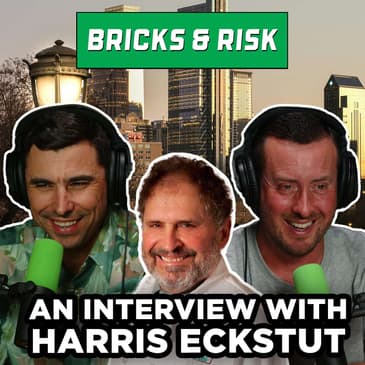
Harris & Tim have been working together on the brokerage side for years. Tim has always been focused on residential real estate, while Harris has been focused on commercial real estate; more specifically, restaurants. Sean & Tim dive into a deep discussion with Harris, not only on the super-high-risk restaurant industry, but on entrepreneurship, life, travels, and the City of Philadelphia. Harris is a wealth of knowledge and wisdom, please enjoy!
Our goal with Bricks & Risk is that you walk away with 1 or 2 valuable nuggets that help build YOUR business. Our audience grows through word of mouth, so if you would please take a moment of your time and give us a review on the platform you’re on, that would be fantastic!
Please also help spread the B&R word by sharing your favorite episode with a friend. You can find all B&R episodes on Spotify, Apple Music, YouTube, and anywhere else you get your podcast content. We greatly appreciate your time and trust.
Until next time, keep learning + keep growing!
📲 Contact Info 📲
→ Sean Mooney, Mooney Insurance Brokers: www.mooneybrokers.com/
→ Tim Garrity, The Tim Garrity Team: www.timgarrityteam.com/
💥 Watch us on YouTube 💥
→ YouTube, Bricks & Risk Podcast, @bricksandrisk: www.youtube.com/@BricksandRisk/?sub_confirmation=1
💥 Follow us on Social Media 💥
→ Instagram, Bricks & Risk Podcast, @bricksandrisk: https://www.instagram.com/bricksandrisk/
→ Instagram, Sean Mooney, @sean.moonee: https://www.instagram.com/sean.moonee/@sean.moonee
→ Instagram, Tim Garrity, @realestateinphl: https://www.instagram.com/realestateinphl/
→ Facebook: https://www.facebook.com/bricksandrisk
→ LinkedIn: https://www.linkedin.com/company/bricksandrisk
[00:00:00] Harris, I gotta ask you, you're a restaurant guy that's been around the block for years and years. What's the best meal you've ever eaten?
[00:00:10] Whoa, good question.
[00:00:11] Good question.
[00:00:13] Like in some little like Scandinavian mountain resort where you were-
[00:00:19] Well, close. I think the, I mean, and of course, memory makes things more beautiful.
[00:00:25] Sure, yeah. The atmosphere and, you know, everything that goes along with it.
[00:00:29] First of all, to me, if you're a fisherman and you fish that trout out of a stream-
[00:00:34] Tastes so much better.
[00:00:36] You gut it and put it in olive oil right there at the stream. That's the greatest thing in the world.
[00:00:46] Welcome to the podcast dedicated to real estate, insurance, and building your business.
[00:00:52] Join us as we take you along our own business building journeys
[00:00:56] with additional wisdom from our network of local and national experts.
[00:01:01] Welcome to Bricks and Risk.
[00:01:07] Hey everyone.
[00:01:09] Welcome to another episode of Bricks and Risk.
[00:01:12] I'm Tim Garrity.
[00:01:14] And I'm Sean Mooney.
[00:01:15] Today, Sean, we have a great guest, friend of mine.
[00:01:19] We have Harris Eckstatt. He is the principal of Eckstatt Consulting.
[00:01:25] How are you doing today, Harris?
[00:01:26] I'm great.
[00:01:28] Great.
[00:01:28] Thanks.
[00:01:28] Absolutely great.
[00:01:29] Thanks for being with us. So a little bit about Harris. So Harris's career spans more than 40 years
[00:01:33] and is filled with success stories within the restaurant industry.
[00:01:37] For 25 years, he owned and operated the award-winning and landmark restaurant Montserrat
[00:01:42] on Philadelphia's famed South Street.
[00:01:45] If you didn't know that already, Sean.
[00:01:46] Harris was instrumental in the commercial development of South Street in Philadelphia
[00:01:50] as the founding chair of one of the first small business improvement districts in the country.
[00:01:56] It was called the South Street Head House Bid.
[00:01:59] As a longtime restaurant veteran, Harris is an expert with food and beverage businesses
[00:02:04] and his consulting specialties include real estate, buying and leasing, financing, budgeting,
[00:02:09] management, marketing, and community government relations.
[00:02:13] He's used his decades of experience to advise and coach on independently owned and successful restaurants,
[00:02:19] such as Vernick Food and Drink. Great spot.
[00:02:22] Chicala's at the Divine Lorraine.
[00:02:24] And Sang-Kee, which is one of my favorites. I've been the one more on the main line.
[00:02:29] Also about Harris. Born and raised in Philly. What's up?
[00:02:33] Went to Central High School. Go Lancers.
[00:02:37] They were the mirrors back then.
[00:02:38] Really?
[00:02:39] Oh!
[00:02:40] Yeah, we changed the name.
[00:02:42] The mirrors?
[00:02:43] The Central High School mirrors.
[00:02:45] That's it.
[00:02:45] What?
[00:02:45] I love that.
[00:02:46] That's a question.
[00:02:48] I'll be around that one by Chuck D.
[00:02:49] Yeah, what number are you in class?
[00:02:53] 223.
[00:02:53] 223.
[00:02:54] I was the last January class to graduate.
[00:02:56] Awesome.
[00:02:57] Chuck was 256.
[00:02:58] All right.
[00:02:59] Oh, he's a kid.
[00:03:00] Yeah, he is.
[00:03:00] We all are.
[00:03:02] I'll talk to him about that.
[00:03:03] Yeah.
[00:03:03] You're also a Villanova University grad.
[00:03:06] You had a bachelor's in philosophy, history, and theater.
[00:03:09] And some of your interests are urban planning, design, restaurants, food, and wine.
[00:03:15] You have three grown kids, four grandkids.
[00:03:17] You live in New York.
[00:03:19] We were talking about up in the Hudson Valley.
[00:03:20] And fun fact about my boy H here, you were at Franklin Field in the 60s Eagles championship game
[00:03:29] versus Lombardi and the Packers.
[00:03:33] Correct?
[00:03:34] That's correct.
[00:03:36] That championship season.
[00:03:37] That's cool.
[00:03:38] I can still see in my mind's eye on the five yard line right in front of Chuck Benner,
[00:03:42] sitting on Jim Taylor and the clock, which was a rotary clock back then.
[00:03:47] Yeah.
[00:03:47] Not the digits.
[00:03:48] And it went up to 12 and we won.
[00:03:52] And then that place just went berserk?
[00:03:55] Yeah.
[00:03:56] And then 50 years later, we won again.
[00:03:58] Yeah, yeah.
[00:03:59] Well, it's funny because in the 60s, well, 1960, it was called the championship game.
[00:04:05] Yeah.
[00:04:05] It wasn't until 67 that we started Super Bowl.
[00:04:08] Yeah.
[00:04:08] Well, there wasn't an AFL, right?
[00:04:10] Right.
[00:04:10] Exactly.
[00:04:11] Right.
[00:04:12] Awesome.
[00:04:12] It was Concrete Charlie, wasn't it?
[00:04:14] Yep.
[00:04:15] Number 60.
[00:04:16] Yep.
[00:04:16] Last guy to play two ways.
[00:04:18] He played center and linebacker.
[00:04:19] That's awesome.
[00:04:20] He also, the story is that he, you never made enough money.
[00:04:24] So he was, you know, a laborer.
[00:04:28] None of them did.
[00:04:29] Yeah.
[00:04:30] When I was 16 years old, I worked in the grocery store and I delivered produce to a bar called Cranes in Germantown.
[00:04:38] Oh, yeah.
[00:04:39] And the bartender was the starting defensive tackle for the Eagles, Jesse Richardson.
[00:04:43] He wasn't the owner.
[00:04:44] He was the bartender.
[00:04:45] Yeah.
[00:04:45] Wow.
[00:04:46] That's funny.
[00:04:47] Different world.
[00:04:48] Yeah.
[00:04:48] Yeah.
[00:04:48] They missed out.
[00:04:49] They should have been born 50 years later.
[00:04:52] Yeah.
[00:04:53] All right.
[00:04:53] So, so here's one for you.
[00:04:55] So you're such a restaurant guy, you know, you love it.
[00:04:58] It's one of your passions in life.
[00:04:59] You've owned one, you've managed one, and now you consult them.
[00:05:02] So at what point in your life did you know that you liked restaurants?
[00:05:10] Well, when I found out I could make money and still stay in theater, I guess.
[00:05:16] Oh, that's cool.
[00:05:17] Oh, that's cool.
[00:05:17] Because even though theater, I didn't live my dream, you know, I was theater foremost.
[00:05:23] Yeah.
[00:05:24] So I guess that's when I realized that if I want to live the dream, that's what I got to like.
[00:05:30] And, you know, and it's episode and restaurants and theater, you know, waiter, waiter, actor, you know, we're married at the hip.
[00:05:41] So we're, we're the same people, you know, how many times you go to New York city and your waiter is, uh, you know, has a after card and this, you know, uh, a dreaming actor that gets a bit on law and order once in a while and makes a living, uh, slinging hash.
[00:05:59] So what, um, so what age were you?
[00:06:01] And were you kind of like, were you a waiter, bartender, everything?
[00:06:05] No, I was a cook.
[00:06:06] Oh, nice.
[00:06:08] What, what age was that?
[00:06:09] I'm not that great with people.
[00:06:11] Uh, yeah.
[00:06:12] Well, I started with my senior year in college, but after I got out of active duty.
[00:06:17] Okay.
[00:06:17] When it really started.
[00:06:18] Gotcha.
[00:06:19] And, and that was actually down in Atlantic city at the Trey Moore hotel.
[00:06:24] Wow.
[00:06:24] But I was a cook.
[00:06:26] I hung with the cooks.
[00:06:28] What year was that?
[00:06:29] Atlantic city back then wasn't even Atlantic city.
[00:06:32] Was it like.
[00:06:33] Well, yeah, it was before gambling.
[00:06:36] Cause I remember that was like, I got out October 20, no, August 26,
[00:06:42] 1970s.
[00:06:43] The day I got out of the active duty arm.
[00:06:45] Yeah.
[00:06:45] Wow.
[00:06:45] So I went down there and started working in Trey Moore hotel and the president hotel.
[00:06:50] So 1971.
[00:06:52] Yeah.
[00:06:52] So it was 21, 22 years old.
[00:06:54] What kind of food were you slinging?
[00:06:56] Was it just American food?
[00:06:57] Was it Italian?
[00:06:59] Actually, uh, breakfast, uh, with the Trey Moore hotel, we didn't have a grill tops.
[00:07:04] We had like 50 saute pans and we were doing 500 breakfast at time.
[00:07:09] So, you know, I'd, I'd go out all night cause it just got out of the army and, um, you know,
[00:07:13] five o'clock in the morning, I was trekked over, uh, to the Trey Moore and started burning
[00:07:19] bacon in the, in the ovens.
[00:07:21] And then late night at the Irish pub, you know?
[00:07:23] Well, yeah.
[00:07:24] Oh, well actually we would, the best place of all, I was a gray boy, a club Harlem.
[00:07:30] So three o'clock in the morning.
[00:07:32] Cause they didn't have, there's no closing time in certain areas.
[00:07:35] Actually I just saw, um, what was the, um, is it good dog?
[00:07:39] I think good dog opened, um, in Atlantic city.
[00:07:43] Like in a, in a casino or on its own somewhere.
[00:07:46] So funny story there.
[00:07:47] Uh, it was a, um, swingers club.
[00:07:51] Oh.
[00:07:51] In Atlantic city.
[00:07:52] So you were familiar.
[00:07:53] Uh, very familiar.
[00:07:54] Um, and they, uh, it had been dormant for a couple of years.
[00:07:58] Yeah.
[00:07:59] Um, so they took it over recently and then just flamed out.
[00:08:04] It was, um, I think they were there maybe a year or two.
[00:08:07] Oh.
[00:08:08] Most of the clubs were on South Carolina Avenue where the, the famous, uh, 500, you know,
[00:08:14] uh, was, but also, also the clubs for the, us young folks was on South, South Carolina.
[00:08:20] I think all of those now are like, uh, the, the outlet stores.
[00:08:24] Oh yeah.
[00:08:25] Like right when you come in.
[00:08:27] Yeah.
[00:08:27] Yeah.
[00:08:28] Trust me.
[00:08:29] Society Hill.
[00:08:30] You wouldn't walk the streets at night.
[00:08:31] Yeah.
[00:08:32] 1971.
[00:08:33] Totally different.
[00:08:34] All right.
[00:08:34] So things change.
[00:08:35] So this is a good segue.
[00:08:37] All right.
[00:08:37] So you got some great knowledge of the city of Philadelphia.
[00:08:40] Obviously you're born and raised here and you started a restaurant.
[00:08:44] So both from a business standpoint and a political standpoint, I mean, you and I have,
[00:08:49] have just chatted for hours about your knowledge of, of the city.
[00:08:53] What was it like to run a business in Philadelphia in the 1980s?
[00:09:00] The restaurant business.
[00:09:02] It was like all businesses.
[00:09:04] It was challenges and everyone presents its unique challenges.
[00:09:08] Uh, and, and so, uh, you know, it's, it's my own restaurant business.
[00:09:12] There are challenges.
[00:09:14] Uh, we're the van, by the way, from 1980 to this current, the current mayor, every previous
[00:09:21] merit mayor came to my restaurant one time.
[00:09:23] I was just going to ask, I was going to ask.
[00:09:26] Michael Nutter, Michael Nutter met his wife there.
[00:09:28] Oh, wow.
[00:09:29] They met there.
[00:09:30] Yeah.
[00:09:31] Wow.
[00:09:31] That's fantastic.
[00:09:33] He, he, he was a council, chief of staff for, forget the councilman's name.
[00:09:37] Yeah.
[00:09:38] Uh, but Ed Rendell lived around the corner.
[00:09:41] He came.
[00:09:42] Wow.
[00:09:42] I don't want to go past there.
[00:09:45] Fast, heady.
[00:09:47] I thought he lived in East Falls.
[00:09:48] Is that a different location?
[00:09:49] No, it was later.
[00:09:50] He lived in Santa City.
[00:09:51] Oh yeah.
[00:09:51] Oh yeah.
[00:09:52] Yeah.
[00:09:52] I was going to ask.
[00:09:54] Swim, the Lombard street swim club.
[00:09:56] Yeah.
[00:09:56] Oh, my brother's a member there.
[00:09:58] Yeah.
[00:09:58] So was he?
[00:09:59] Yeah.
[00:10:00] Um, tell me your best Frank Rizzo story.
[00:10:06] If you have a good one.
[00:10:08] I don't have a good one.
[00:10:10] I feel like I will, I will tell you a story though about it.
[00:10:13] And what do you see?
[00:10:14] Then, then, then, then we know who the person really was.
[00:10:17] So I really can't say on there.
[00:10:19] Yeah.
[00:10:19] We'll do it.
[00:10:20] We'll do it after we, uh,
[00:10:22] so it's, so it was involved.
[00:10:23] Of the Spivak brothers, uh, the electric factory concerts.
[00:10:27] Oh yeah.
[00:10:28] Yeah.
[00:10:28] And him and the, the original electric factory, which was on art street.
[00:10:33] Yeah.
[00:10:33] Wow.
[00:10:33] And, um, and he tried to shut it down on art street cause he was the mayor, Mr. Good Dude,
[00:10:39] you know, good deeds and stuff like that.
[00:10:41] Yeah.
[00:10:42] And it's just like, it wasn't pretty.
[00:10:46] Yeah.
[00:10:46] Yeah.
[00:10:46] I, I, you got the wrong guy.
[00:10:50] I got great stories about the other mayors.
[00:10:53] All right.
[00:10:53] So it's 1980s.
[00:10:55] You know, we got eighties music all playing in our heads right now.
[00:10:58] I'm a big eighties guy, but yeah.
[00:10:59] So you're running a restaurant on South street.
[00:11:01] What was South street like back then?
[00:11:04] Uh, it was the eighties.
[00:11:06] It was, it was, you know, I'm jumping late at night.
[00:11:11] Um, you know, uh, Mike, my bar was very active.
[00:11:15] We had a very mixed bar, you know, the gay communities, the other straight community there.
[00:11:20] I have a lot of people that I've met who said, Oh, I met my first wife at your bar.
[00:11:26] Not the current one.
[00:11:27] My first wife.
[00:11:31] You know, and the great, and the reason why people came, it was like the rumors didn't come out South street.
[00:11:37] Right.
[00:11:37] If you went to lickety split and did whatever you did on lickety split that that stayed at lickety split.
[00:11:42] Same thing in Montserrat, same thing at Downies.
[00:11:45] Um, so in that way, but it also, there's always a balance, you know, the best of times, the worst of times.
[00:11:52] It was also the era of eights.
[00:11:54] Yeah.
[00:11:54] And you have no idea how many, how terrible it was, how many friends we lost.
[00:11:59] Our industry was, you know, you know, more of a hit than any other industry.
[00:12:05] Yeah.
[00:12:05] So, um, so it was party time.
[00:12:09] Let's put it that way.
[00:12:10] And, uh, you know, the, the dentist that used to come in and use my pay phone one day got picked up by the FBI and he was the cocaine king of Philadelphia.
[00:12:19] Whoa.
[00:12:20] When it went on to fame, got 10 years in, came out, made money, a fortune in the investments.
[00:12:26] They made doing cocaine.
[00:12:28] They made a documentary about him sitting on his yacht in the Potomac, but he just vowed dental school.
[00:12:35] He literally.
[00:12:38] Never know where it's going to take you.
[00:12:39] And another fun fact, I believe you said the first day you opened Montserrat was the day that the Philz won the 1980 World Series.
[00:12:48] Yeah.
[00:12:48] And there was no cable TV.
[00:12:51] You can just hear the roaring.
[00:12:53] On the reef.
[00:12:54] Yeah.
[00:12:54] So you get to see Tug McGraw.
[00:12:57] Oh, 45.
[00:12:59] Tug McGraw.
[00:13:00] So that was the first time the Phillies ever won the World Series.
[00:13:03] A hundred years in the World Series.
[00:13:06] Well, so, so a little bit of background.
[00:13:08] Harris and I came to meet through a mutual friend and he worked at a real estate office also on South Street, a plumber.
[00:13:15] And plumber sold their business.
[00:13:17] The Elfant West.
[00:13:18] Can I believe?
[00:13:20] Yeah.
[00:13:47] And Harris and I got connected.
[00:13:49] We, you know, we started the business district.
[00:13:52] I came really close friends with Bud and his family.
[00:13:55] It was third generation real estate on South Street.
[00:13:58] And, you know, the sign was everywhere in the area.
[00:14:02] And, you know, now he's passed away and they're out of business.
[00:14:05] But so it was through here.
[00:14:06] He said, well, what are you going to do?
[00:14:07] I said, I guess I'll buy his restaurants.
[00:14:09] He said, well, why don't you take a real estate license and hang your shingle up with me?
[00:14:15] And that's, you know, I said, okay.
[00:14:18] And then.
[00:14:19] I don't know what that means, but yeah, let's go, Bud.
[00:14:21] And then I realized, you know, he said I have 25 years of experience and I tell people, well, you pay me to avoid my mistakes of 25 years.
[00:14:30] Yeah.
[00:14:31] So, and one of my great friends was the other end of South Street, Jack Downey on Downey's, which was the Irish pub in Philadelphia.
[00:14:40] St. Patrick's state was Downey's.
[00:14:42] I mean, it was wall to wall people, no tables, no chairs.
[00:14:44] They'd move them all out.
[00:14:46] And Jack was, you know, a legend in Philly.
[00:14:48] He was, you know, general manager, channel 10 for a long time.
[00:14:53] Then he was, then he was a deputy commissioner over under his buddy, Frank Rizzo.
[00:14:58] Didn't hurry again.
[00:15:01] And so, you know, we had that tight network of restaurants.
[00:15:09] And so we learned a lot.
[00:15:10] He would say, Iris, if I'd known then what I know now, I'd really be rich.
[00:15:16] Yeah.
[00:15:16] So I just take it to the next lesson.
[00:15:18] Say, okay, I know then what I know now.
[00:15:22] I know I can't be rich, but maybe I can help you get rich because you can avoid my mistakes that Jack and I made together.
[00:15:28] Yeah.
[00:15:28] I think Downey's was actually on like that bar repair show.
[00:15:33] Oh, yeah.
[00:15:34] Well, that was long after Jack retired.
[00:15:37] They bought that from Jack.
[00:15:40] Yeah.
[00:15:41] And then, you know, Jack would.
[00:15:43] By the way, I've never seen one of those shows where the people survive.
[00:15:48] The business survives.
[00:15:49] Yeah.
[00:15:50] Yeah.
[00:15:50] I have never made a study.
[00:15:52] So it makes for good TV, right?
[00:15:54] Yeah.
[00:15:55] So not my department.
[00:15:56] All right.
[00:15:57] So you get your real estate license like 20 years ago.
[00:16:00] You're focusing more on restaurants and helping people.
[00:16:03] Let's talk about how you became a consultant.
[00:16:06] So tell us a little bit about that path, you know, after owning a restaurant yourself for like a quarter of a century and then having a real estate license.
[00:16:15] Why did you just start going down the consulting route?
[00:16:17] Well, it's hand in glove.
[00:16:18] Actually, the consulting comes first.
[00:16:20] And then I realized, well, I'm advising them, but I have to advise them about buying a property and buy leasing a property.
[00:16:26] I said, well, why shouldn't I get paid for that?
[00:16:28] Yeah.
[00:16:29] So, you know, if I find them a property and I don't have a real estate license, you know, I get a hearty handshake and someone else gets $30,000.
[00:16:37] Right.
[00:16:38] Yeah.
[00:16:39] So, you know, I know the restaurant business as an owner, and there's a difference between a manager and owner.
[00:16:47] I know the ownership, all the 50, 60 hats that we wear, owners, including real estate taxes and the machinations of owning a business in a state, in a city, in a federal government.
[00:17:02] So it's more than just training staff, you know, the other aspects of managing the business.
[00:17:11] This is owning the business.
[00:17:12] And that's why I started a course at the Wall Street School on the dollars and cents of owning a restaurant.
[00:17:22] And one of the people that took that course was the Wernick family.
[00:17:25] Wow.
[00:17:26] And which is a great story, too.
[00:17:28] Now, Greg Wernick is this huge, huge talent.
[00:17:32] And he studied on the best.
[00:17:34] John George is the greatest of the greats as far as teaching young chefs.
[00:17:38] And he opened up a restaurant in Singapore.
[00:17:41] And they invited me to teach a class.
[00:17:43] And their father owns one of the biggest civil engineering firms in South Jersey, Remington and Wernick.
[00:17:50] And they have these buildings in Haddonfield with their name on it.
[00:17:54] And Remington is actually the grandson of the artists and stuff like that.
[00:17:59] And so I walk in to teach them the dollars and cents of owning a restaurant.
[00:18:02] I'm looking at this incredibly talented chef, this incredibly successful businessman.
[00:18:07] And I look at Ed, the father, as if to say, what am I doing here?
[00:18:12] And he says, you're here to teach us the restaurant business.
[00:18:16] And that's how wise a person he was.
[00:18:18] He understood that each business is peculiar to that industry.
[00:18:22] So his civil engineering business has nothing to do.
[00:18:26] Well, it has to do because it's money and dollars and that part.
[00:18:29] So, you know, so I got the first lesson I got from my class was to learn what my class is.
[00:18:36] And it's owning a restaurant.
[00:18:38] And that's, you know, a peculiar business.
[00:18:40] Liquor licenses are peculiar institutions with their own laws and everything else.
[00:18:46] So, I always talk to people on it.
[00:18:49] I always say, I feel like if you talk to people in the restaurant business, owners and such.
[00:18:55] It is the hardest business to run and make money and sustain it over a long time period.
[00:19:05] Is that how you calculate it or you see it as something different?
[00:19:08] No, I see it differently.
[00:19:10] I see it as a standard business, but it's made harder because it's one of the few businesses that you can go into undercapitalized.
[00:19:18] And what's the greatest failure in business is undercapitalization.
[00:19:21] Because we are employee driven, you know, you don't need a lot of cash capital off front to pay employees.
[00:19:28] You just need cash flow.
[00:19:29] So, you know, you are doing two, there are two businesses at once.
[00:19:36] You are usually retail, you either produce the retail or you sell it on the street.
[00:19:42] But you don't rarely produce and sell at the same time.
[00:19:46] Yeah.
[00:19:46] So, you know, imagine trying to sell t-shirts, shirts in the back room.
[00:19:52] You're making the shirts and then you're running them out front and then you're selling them on the street.
[00:19:57] Yeah.
[00:19:59] And of course, it's much more complex than that.
[00:20:02] So, and then because the nature of it with that you're cooking and you're in buildings and you have the risk of fire.
[00:20:12] And so, but it starts with the fact that a lot of us open up undercapitalized and it's just so hard to get off the treadmill if you're undercapitalized.
[00:20:24] So, at that point you're setting yourself where you're almost always behind?
[00:20:28] Correct.
[00:20:29] And then it's...
[00:20:30] I'm talking 20 years later.
[00:20:31] Right.
[00:20:32] You never get out.
[00:20:33] Yeah.
[00:20:33] Wow.
[00:20:34] And so is that kind of your class is to look at it as a business and try to find a way to profitability and to make money and kind of set your business up so that you are doing it that way?
[00:20:50] Is that kind of your consulting or a piece of your consulting?
[00:20:53] Yeah, that's my consulting.
[00:20:54] I actually sent a pie chart, but we're not sophisticated enough.
[00:20:58] Yeah, well...
[00:20:59] There's...
[00:21:00] We can link it up after the fact.
[00:21:01] I'll get you a copy of that pie chart and we can put it up during the end of the show.
[00:21:05] So, there's three controlling cost factors in the restaurant business.
[00:21:11] First of all, in any business, if you're not making sales, you don't...
[00:21:16] Forget it.
[00:21:16] You're out of business.
[00:21:17] Yep.
[00:21:17] But this is the cost side.
[00:21:19] There's three controlling costs.
[00:21:21] All the other costs are traditional business costs.
[00:21:24] Mm-hmm.
[00:21:27] Building insurance, marketing is 4%.
[00:21:30] Utilities are going to be 3%.
[00:21:32] These are things you can't change, you can't control other than you got to make sure.
[00:21:37] There's three controlling costs.
[00:21:39] There's your labor costs, which day-to-day for the rest of your life is the hardest darn thing you'll ever do.
[00:21:47] Second is your product costs, which is your food and beverage, liquor and stuff.
[00:21:51] And third is your cost of property, which is the rent and debt service.
[00:21:56] Yeah.
[00:21:57] Two of those costs, the labor costs and the product costs are costs that you can control when you're in operation.
[00:22:05] You can raise the menu prices, you can train people, you can do a million.
[00:22:09] The first cost of the property, the rent and the debt service, that's etched in stone.
[00:22:16] If you screw that up, it's monumental.
[00:22:23] And even if you say you think you have it right, you go, okay, I'm going to do $2 million a year.
[00:22:30] The rent is going to be 6%.
[00:22:32] My debt service is going to be 2%.
[00:22:34] I'm going to build the restaurant.
[00:22:36] It's going to cost a half a million dollars.
[00:22:37] And it never costs a half a million dollars because poop happens.
[00:22:42] It's going to be 600,000.
[00:22:43] So now your rent is higher.
[00:22:45] Your debt service is higher.
[00:22:46] So all your previous calculations, controlling that under 10% of sales has to be adjusted.
[00:22:54] So if you screw up on the bricks and mortar end, you're on that treadmill.
[00:23:01] That actually happened in my family.
[00:23:03] And that was part of the downfall of what happened with my grandfather who bought some land.
[00:23:10] What are you talking about?
[00:23:10] The nursery?
[00:23:11] Yeah.
[00:23:11] But next to the nursery, he built commercial leasing.
[00:23:15] Like a strip center?
[00:23:16] Yeah.
[00:23:16] Like a strip center.
[00:23:17] Yeah.
[00:23:17] And it was earmarked at a million dollars to build these buildings out.
[00:23:22] And he had the land and just did it.
[00:23:26] And it was like 2 million.
[00:23:28] And he could never kind of like undo or like find a way to make it work because it was just
[00:23:37] totally botched from the beginning with the build.
[00:23:41] Well, one thing that Harris is talking about, which I find very relevant, it just in my world,
[00:23:46] residential real estate and development especially, is a lot of things that investors and developers
[00:23:52] say is that you make your money on the buy.
[00:23:55] So as long as you, and again, the restaurant industry, a lot of people lease.
[00:23:58] So you're going to make your money on the lease.
[00:24:00] Like you've got to find a place where the terms work for you, for your vision, what
[00:24:05] you're trying to do.
[00:24:06] I mean, we buy real estate, we rehab it, we hold it.
[00:24:10] We buy real estate, we rehab it, we flip it.
[00:24:12] Most of what I do on the regular are the flips.
[00:24:14] You cannot flip real estate if you don't acquire it for a fair or below market rate.
[00:24:21] Great.
[00:24:22] Because if you're like, I just want to do a flip.
[00:24:24] I'm so excited.
[00:24:25] I think my costs are going to be X.
[00:24:27] I think my out sale is going to be Y.
[00:24:29] X and Y are both going to be incorrect.
[00:24:30] And they're usually X.
[00:24:32] Your cost of rehab is usually higher than you think.
[00:24:35] And your out sale is usually less than what you think.
[00:24:37] So therefore, acquiring the property for the right price really will make or break your flip.
[00:24:43] And I think you two are actually saying the same thing.
[00:24:45] The way I read it, not being in these industries is like, you have to be disciplined.
[00:24:52] Disciplined.
[00:24:52] You have to be disciplined.
[00:24:54] When you're running the restaurant, you have to be disciplined in the way you operate and
[00:24:58] the way you run your business.
[00:24:59] And it's the same with investing with real estate.
[00:25:02] Yeah.
[00:25:02] Good thing.
[00:25:03] Yeah.
[00:25:03] So to piggyback on what you're saying, when I'm doing a new construction and I do a budget
[00:25:09] and you do a budget in your end, Tim, and you do it and then you say, oh, it's going to
[00:25:14] cost me X, Y, Z dollars.
[00:25:17] And I always have after X, Y, Z, the 10% contingency in bricks and mortar, I think it
[00:25:24] would be 15 in construction.
[00:25:26] I have never done a project where I didn't use up all that contingency.
[00:25:30] Oh, don't worry.
[00:25:32] We got plenty of money.
[00:25:33] Yeah.
[00:25:33] Never done.
[00:25:34] 100% of your contingencies.
[00:25:36] And that's new.
[00:25:37] That's your building hit.
[00:25:39] Like you're building it.
[00:25:40] You're like, what's going to go wrong?
[00:25:41] It's like everything.
[00:25:42] Right.
[00:25:44] And it's amazing what things can go wrong.
[00:25:47] I mean, you buy a property in center city and you know, you put the air conditioning
[00:25:52] unit on the roof.
[00:25:53] The roof can't hold the air conditioning unit.
[00:25:55] Yeah.
[00:25:56] You got to build a roof.
[00:25:57] Yeah.
[00:25:57] I know.
[00:25:58] We're actually doing one of our newest clients is actually out of Brooklyn.
[00:26:02] They're insurance.
[00:26:03] Yeah.
[00:26:04] Yeah.
[00:26:04] And they do.
[00:26:06] It's called Brooklyn dumpling shop.
[00:26:09] And to your point, they do.
[00:26:11] It's a kind of a unique thing where the guy in Brooklyn created this model where it's
[00:26:16] called an automat.
[00:26:17] You ever hear of them?
[00:26:18] Oh yeah.
[00:26:18] Automat.
[00:26:19] Yeah.
[00:26:19] Yeah.
[00:26:19] Right.
[00:26:20] Yeah.
[00:26:20] Actually they're opening one in midtown.
[00:26:22] I think it's automat.
[00:26:23] Automat is that horn and hard art.
[00:26:25] Yeah.
[00:26:26] Yeah.
[00:26:26] Sort of like a heart.
[00:26:27] Yeah.
[00:26:27] The old school.
[00:26:28] Yeah.
[00:26:29] It's getting a lot of legs.
[00:26:31] Yeah.
[00:26:32] So they're opening.
[00:26:33] They actually have one on South street that they have going.
[00:26:37] Um, and they're opening one on, uh, over by Drexel on Lancaster.
[00:26:43] And then another one on Sansom.
[00:26:46] Um, so they're, so the automat is when you make all the food first, you throw it in these
[00:26:50] little climate controlled little cubbies and people just come in and buy it.
[00:26:54] Right.
[00:26:54] Yeah.
[00:26:55] So I haven't been in it right now.
[00:26:56] It's a, yeah.
[00:26:57] So you order like on your phone, right.
[00:27:00] And then you go pick it up and it's just like locker 2720 key.
[00:27:05] And then it comes out like, like a warm, uh, dinner to go.
[00:27:10] Awesome.
[00:27:11] It's very cool.
[00:27:12] Yeah.
[00:27:12] I think it's a Taiwanese company.
[00:27:14] It's very successful in Asia.
[00:27:16] Yeah.
[00:27:16] Uh, I mean, to me, it kind of makes sense.
[00:27:20] Like it's today with the way people fast, casual or fast food, the way it works.
[00:27:26] And you can just incorporate like an app and you can just have it ready to go.
[00:27:30] And it's, you know, they, even in New York, they do drinks too.
[00:27:34] So like you could order a margarita and they have that one in a refrigerator.
[00:27:39] Oh, wow.
[00:27:41] A locker ready to go.
[00:27:43] And you just roll out on the streets of Brooklyn with a margarita in your hand.
[00:27:46] Crushing dumplings.
[00:27:47] Oh yeah.
[00:27:47] New York state is now legal to, uh, to go until the pandemic, only Louisiana.
[00:27:54] You could do that.
[00:27:55] So you can, you can actually take a drink on the street.
[00:27:57] Yeah.
[00:27:58] And drink it.
[00:27:59] Yeah.
[00:27:59] Yeah.
[00:28:00] Like it's like Wildwood, uh, Irish weekend.
[00:28:03] So that means you can shotgun beers.
[00:28:05] That's not legal.
[00:28:06] I know that I never did it.
[00:28:11] I would never, but I've seen people.
[00:28:13] Yeah.
[00:28:14] I've been, yeah, I've been a few places actually when we were in Ireland for Ryan, my younger
[00:28:19] brother, drink anywhere.
[00:28:20] It's 40.
[00:28:21] If you just get a beer and you can just like roll it on the street, you're like, this is
[00:28:25] awesome.
[00:28:25] Yeah.
[00:28:26] Think, think Mardi Gras.
[00:28:27] Yeah.
[00:28:28] No.
[00:28:28] Yeah.
[00:28:29] But that's the only state until the pandemic.
[00:28:31] Now I don't know, you know, the other States, but New York kept it and say, okay, but the
[00:28:36] other States, like New Jersey and Pennsylvania, they still have the backwards law, liquor laws.
[00:28:43] Yeah.
[00:28:43] And with, you know, and again, with restaurants, that's the peculiar institution, you know, why
[00:28:48] are all these restaurants in Philadelphia, great restaurants in Philadelphia and, you
[00:28:53] know, upstate New York and they're not in Bergen County.
[00:28:56] They're not in Cherry Hill township.
[00:28:59] It's because the liquor, liquor license law.
[00:29:02] Yeah.
[00:29:02] So you can open up when I met the Vernix, they, you know, they live in Cherry Hill.
[00:29:08] Greg wanted to open up a restaurant in Cherry Hill.
[00:29:11] And I said, well, Greg, do you, do you want to have a fine dining room?
[00:29:15] You know, you want to make a living or you want to open a BYOP?
[00:29:19] Make a living.
[00:29:21] Do you want to, yeah.
[00:29:22] Well, liquor license is $2 million.
[00:29:24] That's insane.
[00:29:25] You know, you need a nightclub.
[00:29:26] You need to be in Wildwood, a nightclub in Wildwood to do that.
[00:29:29] Yeah.
[00:29:30] So you go to Philadelphia, now it's a little higher and $75,000 is liquor license.
[00:29:34] New York City.
[00:29:35] I mean, New York State, it's $5,000.
[00:29:37] Across the bridge, you know, across the state line, Bergen County, it's a one and a half
[00:29:42] million.
[00:29:42] So the only restaurants you have in, uh, in Bergen County are Applebee's.
[00:29:48] Right.
[00:29:49] The only ones that go forward to a million and a half for a license.
[00:29:51] And you cross the river into Nyack and Spark Hill and Westchester County and all that.
[00:29:57] You have all these great little restaurants besides New York City.
[00:30:01] I mean, I couldn't imagine New York City being New York City if liquor licenses were a million
[00:30:06] bucks.
[00:30:06] No, they would just start to like disappear and get absorbed by, you know, big, big corporations.
[00:30:11] Hey everyone.
[00:30:12] This is Tim, your favorite bricks and risk co-host.
[00:30:16] But don't tell Sean.
[00:30:18] I hope you're enjoying this episode and I'll get right back to it in a moment.
[00:30:22] Our audience grows through word of mouth.
[00:30:24] So if you would please take a moment of your time and give us a review on the platform you're
[00:30:29] on, that would be fantastic.
[00:30:31] Please also help spread the BNR word by sharing your favorite episode with a friend.
[00:30:36] We greatly appreciate your time and trust.
[00:30:40] Now, back to the show.
[00:30:46] Yeah, let's talk about Vernick.
[00:30:47] So you helped form Vernick Food and Drink as a business, as a restaurant.
[00:30:52] They were listening to you.
[00:30:54] You're consulting them.
[00:30:55] They're like, maybe we should do it in Jersey.
[00:30:58] I helped find and negotiate and broker the property purchase.
[00:31:04] Now, so they bought the bricks as well.
[00:31:07] So they lease it to themselves.
[00:31:08] Someone was a condo, but they could afford to because of their financial position.
[00:31:16] If they weren't in that financial position, we probably could still have done it with
[00:31:20] the SBA because they have special real estate loans for retail, but main restaurants called
[00:31:27] 504 loans, which is not 90% financing, including the real estate and the build out.
[00:31:34] That's amazing for commercial.
[00:31:36] So, yeah, commercial, especially in urban areas and stuff like that.
[00:31:41] The SBA has these programs now.
[00:31:43] It's the SBA, so a lot of machinations and stuff where it's affordable to the restaurateur.
[00:31:49] It's also affordable to the bank because the SBA is very kind to them as far as the risk.
[00:31:55] Yeah.
[00:31:56] Yeah.
[00:31:57] And so in that case, they brought the property and then they leased it to themselves.
[00:32:03] Wow.
[00:32:04] Then in other cases, it's a direct lease, which is more traditional.
[00:32:10] And when you talk to a lease in the lease negotiation, you got to read between the lines.
[00:32:15] I always like the story, in retail, you pay by the square foot annually.
[00:32:21] So if it's $30 a square foot and you have 5,000 square foot, it's $150,000 a year, basically.
[00:32:30] And that's fine.
[00:32:31] But then you ask the question, well, that's the rent, but what's the net?
[00:32:36] And of course, the net is the other costs that you have to pay that go with the real estate.
[00:32:41] So the net is the building tax, the real estate taxes, the building insurance.
[00:32:50] And then you find out, well, yeah, it's $30 a square foot for the rent, but it's $20 a square foot for the cam or net.
[00:32:59] And so-
[00:33:00] Almost like 100% increase.
[00:33:01] $30 a square foot, it's $50 a square foot.
[00:33:03] And that happens a lot in Philadelphia or any major city because these big buildings have high camp fees for the maintenance of the building and all the other aspects of it.
[00:33:15] Yeah.
[00:33:16] Well, I think-
[00:33:17] And so that number that you saw was $150,000, you plugged it in, oh, that's 10% of my business.
[00:33:23] Well, it's not.
[00:33:24] It's $225,000, which is 15% of the business, and you can't make it.
[00:33:29] Yeah.
[00:33:29] One thing you said that was interesting at the beginning of that conversation, you're like,
[00:33:32] do you want, like, you need a liquor license to have good profits to go along with your amazing food?
[00:33:40] Now-
[00:33:41] Right.
[00:33:41] For fine dining restaurants.
[00:33:42] Correct.
[00:33:43] Yeah.
[00:33:43] Like, fine dining, it's like, how many places can you get amazing food?
[00:33:47] A lot.
[00:33:48] But, like you're saying, the mechanics of the business, unfortunately, the liquor has to be part.
[00:33:55] You need to control that.
[00:33:56] You need to have a fantastic, you know, cocktail menu.
[00:34:00] You have to have the right bartenders.
[00:34:02] You have to understand the clientele.
[00:34:04] You have to understand what to charge.
[00:34:06] Because getting, you know, a frickin' martini at a fine dining restaurant versus Downies,
[00:34:14] now again, there are going to be very different costs associated with what that person would
[00:34:20] pay to get that.
[00:34:22] And because in fine dining, it's about the experience.
[00:34:24] So they can charge more for almost the same exact product.
[00:34:27] So talk about that a little bit.
[00:34:28] Why is the liquor matter?
[00:34:29] It's actually, it's the labor costs.
[00:34:33] You know, for fine dining, the labor is much more intense.
[00:34:37] It's just higher and higher.
[00:34:39] So if you're a BYOB and your menu check average is $40 an item, okay?
[00:34:48] So a person buys that and it's $40 and that's what he pays, okay?
[00:34:53] Well, if you don't, and that's if you don't have a liquor license.
[00:34:56] You have a liquor license, $40 plus a martini for $15 and a glass of wine for another 20.
[00:35:02] So that $40 for that seat becomes $75, $80.
[00:35:07] So that seat took up maybe five square feet.
[00:35:10] So you're doubling your square foot sales with the liquor.
[00:35:14] And so to produce that kind of food that is coming out of that kitchen, you know, first
[00:35:21] of all, you're going to have a better product.
[00:35:24] The sourcing is going to be better.
[00:35:26] And more than likely, the sourcing is going to be a lot more expensive.
[00:35:28] You know, you get what you pay for.
[00:35:30] So even though some guys are really great at sourcing, whether it's the fish market or
[00:35:36] going in Lancaster County and getting fresh poultry, you know, it's a big difference between
[00:35:42] getting the fresh killed chicken that you plucked yourself and buying Purdue at the commissary
[00:35:51] down the block.
[00:35:51] I mean, it's not the same species, really.
[00:35:54] It's the same species, not the same animal.
[00:35:56] Right.
[00:35:56] So it's just, it costs a lot more money to do fine dining and a lot more money to do table
[00:36:01] service.
[00:36:02] That's why you see all the chains and stuff.
[00:36:05] They're all going to the Chipotle mozzled, the quick serve, because you eliminate that
[00:36:11] serve the cost of all that labor to bring the food to the table.
[00:36:15] Basically, when you go to Chipotle, you know, like McDonald's, who's the waiter?
[00:36:22] You are.
[00:36:23] We are.
[00:36:24] And who's the bus boy or bus girl?
[00:36:26] We are.
[00:36:27] You are, yeah.
[00:36:27] They train you how to bus your own table.
[00:36:29] I mean, these guys are smart.
[00:36:31] You know, whereas I have a restaurant, I got to pay, you know, minimum wage, $15 an hour
[00:36:36] to bus that table.
[00:36:38] That's crazy.
[00:36:40] But it's a labor intensive industry.
[00:36:43] And that's one part.
[00:36:45] But, you know, every aspect of that is the labor costs.
[00:36:51] And of course, that to manage day by day.
[00:36:54] Again, I do it weekly.
[00:36:57] You have your weekly meetings, which you project your sales.
[00:36:59] Cost should be no more than 25% labor.
[00:37:01] You know, you're up there at Manioc.
[00:37:05] You got the Manioc Festival.
[00:37:07] You're going to quadruple the business.
[00:37:10] You're going to do, you know, $200,000 that week.
[00:37:13] And then in January, you get a storm.
[00:37:16] And you're going to do $500, do you have the same payroll?
[00:37:21] You still have the chef.
[00:37:23] You still have a lot of the people you got to pay.
[00:37:25] You know, the hourly don't come in, but the hourly aren't the chefs and stuff like that.
[00:37:30] Managers and general managers.
[00:37:33] Harris, I got to ask you, you're a restaurant guy that's been around the block for years and years.
[00:37:39] What's the best meal you've ever eaten?
[00:37:43] Whoa, good question.
[00:37:44] Good question.
[00:37:46] Like in some little, like, Scandinavian mountain resort where you were.
[00:37:52] Close.
[00:37:53] I think the, I mean, and of course, memory makes things more beautiful.
[00:37:59] The atmosphere and, you know, everything.
[00:38:02] First of all, to me, if you're a fisherman and you fish that trout out of a stream.
[00:38:07] Tastes so much better.
[00:38:09] You gut it and put it in olive oil right there at the stream.
[00:38:12] That's the greatest thing in the world.
[00:38:14] Sure is.
[00:38:14] There's nothing better than fresh fish out.
[00:38:17] And I'm talking, you know, blue fish out of the ocean.
[00:38:21] You bring that home and you throw it under the broiler.
[00:38:24] That's the best tasting fish I've ever had.
[00:38:25] We went fishing for Pete Hunter's bachelor party.
[00:38:29] And mine.
[00:38:30] And yours.
[00:38:32] We caught stripers galore.
[00:38:34] And we caught them.
[00:38:35] We, you know, had them all ready, made, ready, prepped, ready to go.
[00:38:38] Came home through the grill.
[00:38:39] And, and everybody was like, this is the, I mean, this is the best food fish that we've
[00:38:45] ever eaten.
[00:38:46] To your point.
[00:38:47] Right.
[00:38:47] Down on LBI.
[00:38:48] And I, when I had the gourmet's morning, we were the fishermen coming in.
[00:38:52] Yeah.
[00:38:53] You know, there was different types of fish then, you know, the weak fish and the blue
[00:38:57] fish coming in now when they were running.
[00:38:59] Oh yeah.
[00:39:00] There was nothing like it.
[00:39:01] Ah.
[00:39:01] But the best probably was long, long time ago.
[00:39:05] I don't even think Reese was in the common market yet.
[00:39:08] Was sitting on the bay side of, in the, Piraeus is the seaport of Athens.
[00:39:15] Yeah.
[00:39:15] Sitting there all by myself and just getting sauteed little squid.
[00:39:21] Wow.
[00:39:21] And sauteed in incredible olive oil and cutting into it.
[00:39:24] And the ink splurred, splurred it all over.
[00:39:27] Wow.
[00:39:28] That's the greatest tasting fish I've ever had.
[00:39:30] And I love squid ink.
[00:39:33] Really?
[00:39:34] Squid ink is the greatest.
[00:39:35] Squid ink, pasta made right, is the best pasta.
[00:39:39] Oh, interesting.
[00:39:40] Or any kind of cuttlefish.
[00:39:42] You know, the cuttlefish ink is fun too.
[00:39:43] I remember, when we were in Ireland, we were right on the shorefront at this, you know,
[00:39:49] restaurant.
[00:39:50] You had the freshest Guinness of your life?
[00:39:52] That, yes.
[00:39:53] I only drank about a hundred of them.
[00:39:57] But they also had these, where are they?
[00:40:02] Cockles?
[00:40:03] No, they were like crab claws or something.
[00:40:05] Oh, okay.
[00:40:06] Like Dungeness, maybe?
[00:40:08] No, it was the, like, what are they?
[00:40:11] I forget.
[00:40:12] But anyway, we ordered them and it was, it was like right there and we're at the water,
[00:40:17] looking at the water.
[00:40:18] And we kept ordering like plates and plates.
[00:40:21] And it was the best we ever had.
[00:40:23] Yeah.
[00:40:24] It was amazing.
[00:40:24] I just hear what you just said.
[00:40:26] The best food you ever had was Irish food.
[00:40:28] You're right.
[00:40:29] It was fish.
[00:40:30] Just think of that.
[00:40:31] It was fish.
[00:40:32] It was fresh.
[00:40:33] It was right out of the water.
[00:40:34] So even in Ireland, they got great food.
[00:40:36] Oh, you know, I'm very limited in Irish.
[00:40:38] I don't have, you know, the exposure, you know, the international exposure.
[00:40:42] Yeah.
[00:40:42] No, you can't.
[00:40:43] You can get some amazing seafood in Ireland and England.
[00:40:46] And it's like, it's right there, you know, depending on where you go.
[00:40:48] How about that pasta sorrentino?
[00:40:50] You like that?
[00:40:51] Uh, just a little.
[00:40:52] That's incredible.
[00:40:54] Yeah.
[00:40:54] Um, all right.
[00:40:55] I got a question for you.
[00:40:56] So some of the questions we ask again, you know, me by now, Harris, I'm pretty positive
[00:41:00] guy.
[00:41:01] I'm always glass half full.
[00:41:02] Mr. Mooney over here, he's glass half empty.
[00:41:05] That's how we roll.
[00:41:05] Yeah, Nugadelfia.
[00:41:06] Right?
[00:41:06] I'm Nugadelfia.
[00:41:07] You know, and this, this question was brought by my brother, Ryan, and it's been such a good
[00:41:12] question.
[00:41:13] Uh, of asking people and it's what has been your biggest struggle in business.
[00:41:17] And you, you had said, you've already talked about this opening a sufficiently capitalized
[00:41:22] restaurant.
[00:41:23] Now you've opened your own when you had Montserrat.
[00:41:27] Was it sufficiently undercapitalized?
[00:41:31] It was undercapitalized.
[00:41:33] Yeah.
[00:41:33] And you had it for 25 years, right?
[00:41:36] Yeah.
[00:41:36] I was young and dumb and it was a struggle all the way through.
[00:41:39] And I got the real estate and, um, you know,
[00:41:42] I paid my dues and learned the hard way.
[00:41:45] So yeah.
[00:41:48] Undercapitalization, paying the bills and you can pay the bills.
[00:41:51] Of course, what is properly capitalized?
[00:41:54] Well, that's a big question too.
[00:41:55] And it has to do with it.
[00:41:56] Are you doing the sales?
[00:41:58] But we, you know, I didn't have money to start.
[00:42:00] I didn't have anybody else.
[00:42:02] And then, then of course the construction was triple what we thought it would be.
[00:42:07] Um, and so yeah, it was always, it's always that it's the finding the cashflow basically.
[00:42:15] And how, and, and from me not knowing, how would that have changed for you and the business?
[00:42:21] If, if you, if you say, oh, over the course of however many years, it was a constant struggle.
[00:42:27] It was a constant, uh, challenge that you had to deal with.
[00:42:31] If you were capitalized in the, in the right way, how, how would that have changed kind
[00:42:38] of your business and your restaurant?
[00:42:42] Well, you have the, you know, first of all, the maintenance of the building and all that.
[00:42:47] So you would be able to stay on top of things.
[00:42:50] Then you can buy and sort of better.
[00:42:52] Then you wouldn't be stuck being in the business.
[00:42:54] You can run, manage, you know, work on the business set in the business.
[00:42:58] So I could have been out more, I could have been like my friends were in Italy, you know,
[00:43:03] checking the sourcing.
[00:43:04] I could have been, you know, it's just a million things that when you're undercapitalized,
[00:43:08] you wound up working in the business instead of on the business.
[00:43:11] Yeah.
[00:43:11] In other words, I'm flipping hamburgers.
[00:43:14] I'm business owner shouldn't flip hamburgers.
[00:43:16] Yeah.
[00:43:17] You know, you, you guys, you know, build up the marketing.
[00:43:20] I didn't, so I didn't have the capital to spend on marketing, which is critical.
[00:43:25] And back then there was no social network opportunities.
[00:43:28] Yeah.
[00:43:28] Then everything costs you to add in the newspaper, whether people saw it or not, you know, it
[00:43:34] wasn't there.
[00:43:35] The PR person, they couldn't afford to get your name in the papers.
[00:43:40] And so it really reduces the many aspects of growing the sales really.
[00:43:46] So are you always in a constant battle, just fighting the budget, right?
[00:43:49] So like you're, you're okay.
[00:43:51] Now I have to source food from here just because this is what, not what you'd prefer, not what
[00:43:56] you'd want to do or not how you'd elect to operate your restaurant, but it's, it's the
[00:44:02] budget dictating to you then how you run your business.
[00:44:06] Yeah.
[00:44:06] Basically that.
[00:44:07] I think the best example is marketing.
[00:44:09] And I always tell people this and advising them, the marketing budget in the traditional
[00:44:15] restaurant, most restaurants in the food service industry is four to 5% of sales.
[00:44:21] Okay.
[00:44:21] Okay.
[00:44:22] Under that, you're not marketing enough over that you're, you can't afford it.
[00:44:26] So you have to get it in that sweet spot, fortified.
[00:44:28] So I come into a business and it's only 1%.
[00:44:32] They're not spending any marketing.
[00:44:33] Yeah.
[00:44:34] Well, what happens is your cashflow is slow.
[00:44:36] What's the easiest thing to cut?
[00:44:38] You can't cut the payroll.
[00:44:39] It's hard to cut the payroll.
[00:44:40] You know, the food, you can't cut the marketing.
[00:44:43] The one thing you can cut is the one thing you shouldn't cut.
[00:44:46] Yep.
[00:44:46] It's the marketing.
[00:44:47] Cause that's where you grow.
[00:44:49] Marketing's going to grow your business.
[00:44:50] Makes the register.
[00:44:51] Grows the cashflow, but yet you're spitting your nose.
[00:44:54] You know, you're cutting off your nose because you can't afford the market.
[00:44:57] Yeah.
[00:44:58] And that's where the positive cashflow really helps.
[00:45:01] And, you know, look, the great restaurants, food service are the great marketers, the greatest
[00:45:07] marketing food service company in the world is McDonald's.
[00:45:10] Is it the best food?
[00:45:11] No, but they're by far genius marketing.
[00:45:14] Yeah.
[00:45:15] And that's what brings the people in.
[00:45:16] You know, it's sad to say.
[00:45:17] Like Apple.
[00:45:18] Do they make the best phone?
[00:45:19] No.
[00:45:20] Yeah.
[00:45:20] But their marketing is out of this world.
[00:45:23] It's awesome.
[00:45:23] Yeah.
[00:45:24] No.
[00:45:24] So, you know, it's all business.
[00:45:26] It's easy.
[00:45:27] It's all in business.
[00:45:29] When Tim does his weekly conferences, we're talking about budgeting the marketing.
[00:45:35] Yeah.
[00:45:36] You know, yeah.
[00:45:36] And you cannot not market and then you can't overspend on it because then the numbers don't
[00:45:41] work.
[00:45:42] So anyway, so I guess that answers the question.
[00:45:46] Yeah, it does.
[00:45:46] One more here before we even wrap up and let you go.
[00:45:50] Well, hold on.
[00:45:50] I got, yeah, I got another one too.
[00:45:52] Yeah.
[00:45:52] You haven't gotten food trucks yet.
[00:45:54] Let me talk about where Mooney bought a shirt.
[00:45:56] No.
[00:45:56] That's what I would like to know.
[00:45:57] Well, we'll get there.
[00:45:58] I mean, I already know, but I'd like you to say.
[00:46:00] Oh, you got it from Andy Reid.
[00:46:01] I did.
[00:46:04] Andy Reid sent this to me after they won the Super Bowl.
[00:46:09] Paris, best meal in Philadelphia.
[00:46:13] Oh, good one.
[00:46:15] Well, I got it now.
[00:46:18] Long, long time ago.
[00:46:19] It's the building is still there and it's a great restaurant now.
[00:46:23] That tree is a great restaurant.
[00:46:26] Absolutely great.
[00:46:26] The original that.
[00:46:28] Yeah.
[00:46:28] They were on Spruce Street.
[00:46:29] Yep.
[00:46:30] Okay.
[00:46:31] Before that, it was Lebec fan when George Perrier was at the peak of his greatness and he
[00:46:37] was great.
[00:46:39] The greatest sauce ever.
[00:46:41] However, the dinner at the Lebec fan on Spruce Street was the greatest thing ever in Philadelphia.
[00:46:48] Wow.
[00:46:48] And it had a great run.
[00:46:50] And then, you know, he got the investors.
[00:46:52] They moved to Wall Street.
[00:46:53] It was great, but nothing was like that.
[00:46:56] Now, I haven't been to Vetri in, you know, a decade.
[00:46:58] And I'm sure that's going to run close because Mark Vetri is the great restaurateur and he's
[00:47:05] great at what he does.
[00:47:06] Everything he does.
[00:47:07] Was it sad to see?
[00:47:07] Including getting rid of businesses.
[00:47:09] I'm not even a restaurant guy, but I kind of felt sad with like Lebec Finn and how it
[00:47:14] just kind of like fizzled out and kind of got old and tired.
[00:47:20] But one thing is still you can rent it.
[00:47:23] It's called King George.
[00:47:25] It's a documentary that is absolutely spectacular because the woman who did it didn't know that
[00:47:31] what you call it was what's his last chef that has Laurel in the world.
[00:47:37] Oh, Nick Elmy.
[00:47:39] She did not know that Nick Elmy, you know, she started filming two years before Nick Elmy
[00:47:44] went on Top Chef.
[00:47:45] Oh, yeah.
[00:47:45] So she got to see the mods and everything.
[00:47:49] And Nick coming in and Nick was like 28, 29 years old.
[00:47:52] Yeah.
[00:47:53] He was so great.
[00:47:54] I remember seeing, you know, my step door is watching TV.
[00:47:58] I didn't even know about Top Chef.
[00:47:59] And I saw Nick Elmy and I said, that's Nick Elmy.
[00:48:02] What's he doing there?
[00:48:03] She said, it's a stoking show.
[00:48:04] I said, he's going to win.
[00:48:05] He's the greatest chef I've ever met in my life.
[00:48:08] And he won.
[00:48:08] I could have been a fan duel was in business.
[00:48:11] I will put my money on Nick because he's the best.
[00:48:15] But that is, you know, for your viewers, it's remarkable.
[00:48:20] It's a remarkable documentary.
[00:48:22] I'll check that one out.
[00:48:24] King George, G-E-O-R-G-E-S.
[00:48:27] And it really gets George's personality at the end of his tenure and stuff again.
[00:48:32] You know, he's a crazy guy.
[00:48:34] Awesome.
[00:48:34] He's a crazy genius.
[00:48:35] Beloved because he was the best.
[00:48:37] Crazy genius, you know?
[00:48:37] Yeah.
[00:48:38] He was the best.
[00:48:40] And, you know, he came from Lyon.
[00:48:43] Yeah.
[00:48:45] I forget the guy's name.
[00:48:46] That's what I love watching.
[00:48:46] He started the revolution.
[00:48:47] I love watching those Bourdain ones where he goes to France.
[00:48:51] The way he talks about, like, the French culinary environment is just, like, just so different.
[00:48:57] Like, no reservations like that?
[00:48:59] Yeah.
[00:49:00] Yeah, yeah, yeah.
[00:49:00] Those Bourdain days.
[00:49:01] Hey, you know what?
[00:49:03] To start off the show, you asked me about the 80s.
[00:49:06] When Kitchen Confidential came out.
[00:49:08] Oh, yeah.
[00:49:09] I guess it was the ladies in the 90s.
[00:49:10] Yep.
[00:49:10] I didn't know about it.
[00:49:11] My mother read the book.
[00:49:13] Uh-huh.
[00:49:13] And she said, I read this book.
[00:49:14] It can't be true.
[00:49:15] I have to give it to you.
[00:49:15] It's so hard.
[00:49:16] You know, hey, this can't be the business that you're in.
[00:49:19] Uh, mom.
[00:49:20] And I'm reading it.
[00:49:21] And I said, mom, that's the business I am.
[00:49:24] You're like, his business is more tamed than mine.
[00:49:26] Yeah.
[00:49:27] Kitchen Confidential was the restaurant business in the 80s.
[00:49:30] Yeah.
[00:49:30] That is the definition of it.
[00:49:31] Wow.
[00:49:32] And if anybody gets a chance to reread that, that was his masterpiece.
[00:49:36] You're like, mom, this is like every day.
[00:49:38] This is like what we do.
[00:49:40] Yeah.
[00:49:41] Chef got busted for cocaine.
[00:49:43] Okay.
[00:49:45] That's awesome.
[00:49:46] All right.
[00:49:47] Cool.
[00:49:47] One thing I rely on Paris for, because we talk a lot.
[00:49:51] We've been working together for a while.
[00:49:53] Is your wisdom.
[00:49:55] And the quote that you gave us is, wisdom is knowing, not wisdom.
[00:50:00] By Lao Tzu.
[00:50:01] Why is that?
[00:50:02] Why does that one stick out for you?
[00:50:04] Well, first of all, Lao Tzu figured it out 5,000 years ago.
[00:50:07] Right.
[00:50:07] Hey.
[00:50:08] It means that don't ever think you know everything, basically.
[00:50:12] Because you don't.
[00:50:13] No matter who you are or what you are, it's impossible to know everything.
[00:50:17] And so you have to keep an open mind and say, okay, you know, that's nonsense.
[00:50:24] It's not.
[00:50:24] But just let's keep an open mind, knowing that you can't, even as you're a genius, you're not
[00:50:30] a genius.
[00:50:31] You can't know everything.
[00:50:32] And the more you realize that, the more you learn.
[00:50:35] If you roll back the tape from our previous episode, Harris, I said, I'm the dumbest guy
[00:50:42] in the room.
[00:50:42] Yeah.
[00:50:43] Right.
[00:50:43] And it wasn't to say I'm the dumbest guy in the room.
[00:50:46] It's, I want to go into the room as the guy who knows the least.
[00:50:51] It's a mindset.
[00:50:52] And, and going to be a sponge for the other people to, to kind of glean what, you know,
[00:50:59] what these experts have to share and what they have to say.
[00:51:02] And how can I get better by, by listening, you know, to those people?
[00:51:08] Yeah.
[00:51:08] I listen or not listening to them too.
[00:51:10] Cause sometimes.
[00:51:12] Yeah.
[00:51:13] Yeah.
[00:51:13] True.
[00:51:14] But you listen and say, boy, that makes no sense.
[00:51:17] And then you're like, yeah, that really makes no sense.
[00:51:19] The more you dive into it.
[00:51:21] Well, what's so interesting is that like part of the reason we started this podcast was
[00:51:25] to give back because Mooney, you know, he's been doing his insurance business for over a
[00:51:29] decade.
[00:51:29] You know, I did Copper Hill for almost 10 years.
[00:51:31] You've been a, you've been a business owner, so you get it.
[00:51:34] And honestly, it's like, we've just learned so much.
[00:51:37] A ton.
[00:51:38] Through podcasts.
[00:51:40] Not only just that, like people in our lives, you know, this, this quote really stuck out
[00:51:44] to me because you can't ever stop learning.
[00:51:47] And I feel like it's the people who feel like, nah, I've got it all figured out.
[00:51:52] I know exactly how to do this.
[00:51:54] I know, I know I'm on my way to being a millionaire.
[00:51:56] It's like, you know what?
[00:51:57] That's going to change next week because no one can predict the future and thinking, you
[00:52:02] know, you know, everything is going to be the start of your downfall.
[00:52:06] Like they say with trees, you're either growing or you're dying.
[00:52:09] So I think if you're always in the growth mindset and you're always open-minded to hearing
[00:52:14] what other people have to say, again, someone might tell you 10 things.
[00:52:18] You might walk away with one, but that one thing you walked away with was because you were
[00:52:22] willing to listen and you were willing to learn and that's going to help you grow.
[00:52:28] Agreed.
[00:52:29] And like I said, that guy figured it out 5,000 years ago.
[00:52:33] So he was onto something.
[00:52:36] He was onto something.
[00:52:37] I love it.
[00:52:38] All right.
[00:52:40] The show now that's your job, Mr. Andy Reid Hawaiian shirt.
[00:52:45] Thanks to all our listeners out there from Pennsylvania and watchers, watchers, New York.
[00:52:52] We have a contingency in New Zealand.
[00:52:55] We do.
[00:52:56] We have some New Zealand, New Zealand people.
[00:52:58] One of the dreams is to open up and you have a vineyard in the best place in the world
[00:53:04] to have a vineyard.
[00:53:06] New Zealand.
[00:53:07] Really?
[00:53:07] They have perfect Bordeaux weather and perfect Bordeaux soil.
[00:53:12] Bad soil, bad weather, and the sun in August.
[00:53:17] And that makes some of the great stress vines you can ever have to make great wine.
[00:53:22] Sounds like a road trip.
[00:53:23] So it's kudos to you guys in New Zealand.
[00:53:25] I love that.
[00:53:25] All the Kiwis out there.
[00:53:26] On the North Island.
[00:53:28] Yeah.
[00:53:28] I love it.
[00:53:28] They probably have great wines if you ever go there.
[00:53:32] Well, if they want to send wine, if the listeners out there want to send wine.
[00:53:37] We're in Maniunk.
[00:53:39] Leave comments.
[00:53:40] Philadelphia, Pennsylvania.
[00:53:41] They can go.
[00:53:43] They did change the laws of Pennsylvania.
[00:53:45] You now can receive wine in the mail.
[00:53:47] So we're making it.
[00:53:48] Oh.
[00:53:49] How about that?
[00:53:51] I'm sorry.
[00:53:52] We just, we opened it up.
[00:53:54] So now you can leave comments, feedback.
[00:53:57] You can send an email to bricksandrisk at gmail.com or go on to Apple Podcasts, drop a review,
[00:54:05] have a like, subscribe on YouTube, whichever you want.
[00:54:08] And Harris, thank you so much for your time.
[00:54:10] We really appreciate it.
[00:54:13] Learned a lot.
[00:54:14] Some great stories.
[00:54:16] And thank you.
[00:54:17] Great.
[00:54:18] Thank you for having me.
[00:54:19] It was great.
[00:54:20] We really enjoyed our participation together.
[00:54:24] Yeah.
[00:54:24] Thanks, buddy.
[00:54:25] And thank you for tuning in again to another episode of Bricks and Risk.
[00:54:30] See you soon.
[00:54:32] Thank you for joining us on another episode of Bricks and Risk.
[00:54:36] Our goal is that you walk away with one or two valuable nuggets.
[00:54:40] And we greatly appreciate you sharing your time with us today.
[00:54:43] You can find all BNR episodes on Spotify, Apple Music, YouTube, and anywhere else you get your podcast content.
[00:54:52] Until next time, keep learning and keep growing.