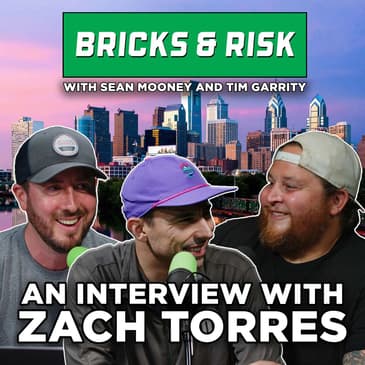
This week we are joined by Zach Torres who runs Studio Torres, a design and build firm based in Philadelphia specializing in residential rehabs.
Our goal with Bricks & Risk is that you walk away with 1 or 2 valuable nuggets that help build YOUR business. Our audience grows through word of mouth, so if you would please take a moment of your time and give us a review on the platform you’re on, that would be fantastic!
Please also help spread the B&R word by sharing your favorite episode with a friend. You can find all B&R episodes on Spotify, Apple Music, YouTube, and anywhere else you get your podcast content. We greatly appreciate your time and trust.
Until next time, keep learning + keep growing!
📲 Contact Info 📲
→ Sean Mooney, Mooney Insurance Brokers: www.mooneybrokers.com/
→ Tim Garrity, The Tim Garrity Team: www.timgarrityteam.com/
💥 Watch us on YouTube 💥
→ YouTube, Bricks & Risk Podcast, @bricksandrisk: www.youtube.com/@BricksandRisk/?sub_confirmation=1
💥 Follow us on Social Media 💥
→ Instagram, Bricks & Risk Podcast, @bricksandrisk: https://www.instagram.com/bricksandrisk/
→ Instagram, Sean Mooney, @sean.moonee: https://www.instagram.com/sean.moonee/@sean.moonee
→ Instagram, Tim Garrity, @realestateinphl: https://www.instagram.com/realestateinphl/
→ Facebook: https://www.facebook.com/bricksandrisk
→ LinkedIn: https://www.linkedin.com/company/bricksandrisk
[00:00:00] What are some of the projects that stick out that like horror story where you like found a body in a freezer in the basement or like just something? How many bodies have I found? Let me see. Or
[00:00:14] like was there one where you're like oh yeah we'll just take this out and we'll add on a third floor to this two-story house and they're like no you can't do that. Like something like extreme
[00:00:22] where you were like... So I've yet to find to my dismay like the Declaration of Independence copy somewhere. Yeah right. In a demo. Be a millionaire tomorrow? Yes I've found nothing.
[00:00:32] Do you open up all the walls when you do these things? So actually one of the first rehabs we were doing it was my dad's old office. It was a triplex, it was an old barn and we were
[00:00:42] turning it into a triplex. Yeah. And I was... Monastery F. Monastery F. Sweat equity, I'm doing the demo and I'm in there and I'm demoing a ceiling and this box falls down. It's like a
[00:00:51] tin box and it's wrapped in cloth and I'm like here it is. Jackpot! Yeah! Here it is and it was dental records. Welcome to the podcast dedicated to real estate, insurance and everything in between. Join us as we take you along our own brokerage building journeys with additional
[00:01:14] wisdom from our network of business experts. Welcome to Bricks and Risk. Hey everyone! Welcome to another episode of Bricks and Risk. I'm Tim Garrity. I'm Sean Mooney. Today Sean, awesome guests. Not only that, we're doing our first in-person interview today. How about it? We
[00:01:40] have Zach Torres, principal of Studio Torres. How you doing today Zach? I'm doing great. Awesome. How about you guys? Good. Thank you for having me. Thanks for coming in. Thanks for coming right
[00:01:50] down the street from your house to Matty Young. It was tough, it was a trek. I love how he was like, I will not do Zoom with you. If you want me, you have to have me. I love it. I'm an
[00:02:00] in-person. I think this is going to start a trend. So, little background on Zach. So, Zach is in construction management and development. He's also one of my development partners. We flip homes and also buy buildings. So after earning his master's of science degree in
[00:02:16] construction management from Drexel University, Zach joined the firm as a project manager and general contractor. He also has day-to-day responsibility for the firm's real estate and development ventures. Also a few things on Zach. So born and raised in Roxboro, Philadelphia.
[00:02:31] What up? Married with two daughters and a dog. Original college plan was to study exercise science. Correct. That's interesting. What is exercise science? The fancy word would be kinesiology. Kinesiology. Oh, yeah. That's when I want to sound smart. Right, right.
[00:02:47] Well, I actually changed majors like five times. I was undeclared. I was communications, education, exercise science. I was a strength coach for a little bit. So, I was always in the sports as a kid. Thought I would do something sports-wise. So,
[00:03:00] I did do that for a little bit, you know, coming out of college. That's awesome, man. Cool. Went to Archbishop Carroll. Wait, I thought you went to Roman. No way. Come on. Come on.
[00:03:13] My dad went to Roman. Yeah. Okay. Maybe that's what I was thinking. I broke the Roxboro mold. That's right. All right. Westchester U for undergrad, Drexel University for your master's in construction management, which is awesome. So, we'll talk about that a little bit.
[00:03:26] And then you were introduced into real estate and development by your dad, Bob, who I know very well, also our partner. And you're a huge sports guy, especially hockey. Do I have all that right? Yeah. So, hockey, football, baseball. I mean,
[00:03:39] those are my three majors. That's one, two, three right there in the order. That's on your ankle. It depends on the season. I mean, so baseball and softball. So my daughters play softball. So that has kind of like dominated my life recently. You're a softball dad.
[00:03:53] I'm a softball dad. I coach three teams. So yeah, that's like my number one right now because the kids are into it. Makes sense. But yeah. Although my son likes soccer and
[00:04:04] I hate soccer. Yeah. My kids hated soccer. I mean, you can tell by the build of me. You want a soccer player? Great game. No, not for the kids. All right. So we're going to get to our first question here. So your dad, Bob,
[00:04:18] got you into the real estate game. So what was it about real estate and development that made you want to kind of like step into what I would like to call like a family business? I know your dad started his architecture business and then started diving
[00:04:30] into investment development. So what was it about that that got you into it? So like I said, I went in, you know, I was in college studying like exercise science and I was kind of, I was a strength coach. And that's what I was doing in college.
[00:04:41] Can I correct you and say kinesiology? Please do. You know, we'll stick with that. To get the record straight. Yeah. So I was doing that and I loved it and it was great, but it's, it's a hard lifestyle. It's, you know, if you want to be
[00:04:56] like my always thought was I'll be a D1 strength coach. Like I'll go to a college. It's, it's a tough gig. You got to travel a lot. If you can't tell being born and raised in Roxborough and still living in Roxborough, I'm a home body.
[00:05:07] Yeah. Yeah. Not looking to travel. Yeah. So I was like, not going to happen. So my dad who owned his own firm for I don't 30 some years at this point, bought a house, started renovating it and I was home for college. I was home in the
[00:05:23] summer for college. So I started helping them and we were swinging hammers. We were doing demo. We were doing trim like, so that really kind of sparked my interest in it. I thought this can be like my, my real job. I mean, like my grownup job.
[00:05:36] So started getting involved in that and helping with those things over the summer. Obviously my dad was still running architecture firm, you know, five to six days a week doing that. So once I realized I kind of wanted to progress into that field,
[00:05:52] you know, the easy situation as you go to your dad and you're like, daddy, can I have a job? So my dad refused to let me work. Yeah. Well, hook me up.
[00:06:00] So refuse to give me a job until I went to school for it. So he was like, cause look, what happens to me? You need to have your own kind of background, your own background,
[00:06:09] your own, you know, kind of your own leg to stand on. So I was going to school part time at Drexel working. I was kind of working like four jobs at a time. I was working for the architecture firm part time doing like project management,
[00:06:23] construction admin. We were doing a lot of commercial work at the time. Yeah. Yeah. I remember we're working at the Bellevue. We were doing restaurants, Hugo boss, like stuff like that. So I was kind of doing that part time. I was working as a strength coach part time.
[00:06:36] We were renovating our inside houses part time. So, and I had my daughter at the same time. So a lot of stuff going on. That was like right around when we met. Yeah, exactly. Yeah.
[00:06:46] So a lot of stuff going on all at one time. And then just kind of progressed into more and more involvement, more and more kind of ownership into, you know, the architecture firm. And then we slowly kind of just eased our way out of
[00:07:04] architecture and more into real estate. So it's been a good, a good, good progression. So I was very lucky to have my dad like kind of help me, like I give people a lot of credit who do this industry, who have no, like no experience,
[00:07:19] no, you know, they just kind of go out and do it. I was fortunate. I kind of, I had my dad as a mentor. I learned a ton from him. So I was very lucky in that sense to
[00:07:29] kind of ease my way into it. But also kudos to him because he's like, you got to go to school. You got to get some background here. You're not just coming on board. Yeah. My dad is like, he is one of the hardest working people I've ever
[00:07:43] met. I mean, my mother too. Like so I was very fortunate. Like I had parents who worked really hard, both of them, and they worked not even just working hard, but worked a lot for me. I mean, I played hockey, I played football,
[00:07:54] I played baseball. So, you know, leaving work early to get me to practices, hockey, you kind of travel everywhere. So, I mean, I was really fortunate. I had a good, you know, base and background and, you know, support system just as a young kid even,
[00:08:08] and then leading up to what we're doing today. Prior to that first house, when you got in and you started kind of like, you know, rehabbing it together. Yeah. Had you done anything prior to like, were you always kind of handy? Did you have odd jobs
[00:08:21] or is that the first time you really started swinging a hammer? It was really my first time swinging a hammer. So my dad was always very entrepreneurial. So my dad, born in Mexico, came here. He's got six or seven, bro. We have a lot of aunts and
[00:08:34] uncles. So he had to work very hard for himself. I mean, he was born or not born, but raised on Lyceum Avenue. Yep. My old street. That's right. So he worked hard, you know, even as a kid and like he would cut grass
[00:08:48] and he would, you know, kind of shovel. And I was a little more spoiled and didn't really need to do those things. Kind of at his dismay a little bit. So he wanted to guide me to
[00:08:59] do kind of entrepreneurial things, but didn't necessarily like force it down my throat, which is, which I appreciate in a sense because I couldn't imagine not being like self-employed
[00:09:10] at this moment. I mean, I would do whatever I have to do in life. You know what I mean? But that's like what I say is I'd be a terrible employee. That's what my dad says all the
[00:09:18] time. All the time. But you and I have worked for other people. Sure I have. So we have. We've had like corporate jobs technically out of college. Sure. But my point in saying that
[00:09:28] is like if you had this experience as working for yourself for this amount of years, just like me, whatever. For me to then change to go back and then do it now would be difficult.
[00:09:44] It would be. I mean not that I don't think I would work hard for the people, but like flexible, like being able to kind of like come and go as you please. And like,
[00:09:53] like I want to pick my kids up from school and go take them somewhere. Like yeah, I need to ask permission to do that. You know what I mean? Like so I think that would be the hardest thing. Well, that's one perspective of it, but the other is
[00:10:06] like wanting to do things the way you want to do it. Yeah. You know, it's with my insurance agency. I do everything the way that I want to do it. What's comfortable to you.
[00:10:17] Yeah. Yeah. And so going to work for someone else would be like, how do you want me to do this? So that, like I say all the time, like so my dad, like talking to him, like we talk,
[00:10:28] me and my dad talk every day, whether it's like the design, the construction, things like that. Once a day? At least. At least. So the one thing I always say is like, I've learned I don't
[00:10:39] ask questions. I don't want the answers to. I just do what I want to do. So if this is the direction I feel, this is the direction we're going to do and I'll live with those
[00:10:48] consequences if they come. Don't ask for permission, ask for forgiveness kind of philosophy. It's like I'd rather just take the shot and if I mess up, which we all do, like I'll learn from
[00:10:59] it. Yeah. And that's, and here's another thing because remember you and I did the episode on goals? Yeah. Which I don't know if has, I don't even know if it's even come out yet. It's one of the past episodes that we recorded and we were talking about, okay,
[00:11:11] like you're getting into business entrepreneurship. Like why? Like what drives you? Like some people are driven by money. Some people are driven by, you know, fame. Yeah. By they want, they want status. Some people want freedom and freedom can be done in different ways. Like you
[00:11:27] saying, Hey, I want to be there to pick up my girls from school and have the afternoon. Like if I need to do some work, you know, I'll do it. But while I'm doing my thing with them.
[00:11:36] Yeah. I mean, there's pluses and minuses because then there's plenty of Saturdays and Sundays where you don't want to be working, but you're working. And there's times where it's, you know, 10 o'clock at night and you're doing things that need to get done. So it's, you know,
[00:11:49] well that's the, the old adage is I work 80 hours a week. So I don't have to work 40 hours a week. Yeah, exactly. Yeah. Like you, you work this just so you're not, you know,
[00:12:00] absolutely boxed into that 40. Yeah. Holy man. All right. So we went over a little bit of your history, like how you got into it, what you and Bob are doing. Talk a little bit about the design build side of your business. Cause again, you guys do development investment
[00:12:17] for yourselves, but you also have clients. So when with clients, you know, I think design build is more like, Hey, you know, I need some remodeling work done at my house and a new kitchen, new bathrooms, new floorings. I mean, you've done tons of projects. So
[00:12:31] talk a little bit about that side of your company. So as I discussed, like, so my dad as an architecture firm, I started as I opened my own GC firm technically. So when my dad was doing
[00:12:44] architecture work, he was basically like kind of dishing off just a lot of opportunity as far as building these things out. Cause the first question that comes, it's kind of like being
[00:12:53] a realtor. It's like, okay, I want to do this. Who do you know? And it's the same thing in architecture. Like we designed this. Now, who do you know who can build it? So we,
[00:13:02] we kind of stepped in or I kind of stepped in, in that aspect too. So clearly I'm not handy. That was one of the questions you asked. I'm not handy at all. I do think I'm a pretty good
[00:13:13] kind of organizer of teams and people and leaders. Yeah, exactly. So that's what I really like doing. And we've had relationships with the same subs who we kind of work with regularly. You know, we have one or two of each, but you know, we have pretty good
[00:13:28] relationships with all the people that we work with. So we were able to kind of step into that role of, okay, we've designed this now we can take it to completion for you as well.
[00:13:38] And you kind of get like a one, I wouldn't say a one-stop shop, but you try and make it as seamless as possible for customers. Yeah, because there's gotta be scenarios where they would come to your dad or your dad would do the design and they'd be like,
[00:13:50] all right, great. I'm going to take this off to my contractor. And then you don't know what happens, but I'm sure he's had phone calls coming back like, I can't, you know, there's so
[00:13:58] many issues with this contractor. Can you go over this, that, that, you know? And I will say there's a lot in like kind of the construction industry where trades love to blame other trades.
[00:14:08] You know, like I've squashed with the guys I work with, I'd squash a lot of that. Like everyone's got to play nice together, you know? But yeah, I mean, that has happened where we've designed something and we don't necessarily build it. And you drive by and
[00:14:22] you're like, that is not what that's supposed to look like. And you can tell they took the cheapest and easiest solution out. So it's nice to be able to control the, I guess the narrative you would say from, from beginning to end and kind of help guide people
[00:14:38] like, okay, here's the dream scenario. We might have to make sacrifices from that, whether it's finances or building code or zoning code or whatever it may be. And then back into that. So it's helpful to be able, and it's nice to kind of put a project together
[00:14:53] and then see it to completion. So it's similar to like doing real estate in a sense where, you know, you envision it and then you help complete that. So yeah. Matt- Dude, what's interesting. So my own opinion perspective, which
[00:15:07] Mooney always corrects me is like this whole thing's our opinion. I'm like, yeah, but just I'm so used to saying that. It kind of is. Matt- It is. So finding a trusted general contractor in my, in the way I see it
[00:15:23] is one of the hardest things to find. It really is like, again, is it tough to find a good real estate agent too? Yes. I would argue that finding a good general contractor is much harder.
[00:15:34] There's, there's less, less of you that really look into the customer service aspect of it, not every general contractor has the design aspect of their business. Like maybe, oh, go talk
[00:15:46] to this architect, get all this. Once you have all that, then you come to me. And I can't tell you how many stories of clients, friends, family, like anyone in my life, because I'm constantly dealing with this stuff in real estate, that they're just like worst experience
[00:15:59] in my life gave him or her money. It's gone. They said they were going to do this. It doubled. Like talk about, so being that, that is kind of like a perception out there and
[00:16:11] perception is reality. Like how hard is that to do what you do from like a design build standpoint? So I wouldn't necessarily say it's, it's hard managing clients. Like I really haven't had issues managing, like the issues you've run into is some people look like they'll look at
[00:16:28] a project and they'll know that there's certain things that they're going to kind of come across, but the drawings don't say that or, you know, we don't, we didn't specify that. Well, I think some general contractors look to make their money on change orders. I hate
[00:16:44] change orders and also I lose work this way though too, because I can look, I mean, we work in traditionally really old houses. So like you do enough of them or like you screw
[00:16:53] up enough, like in your own experience, you know what to look for. So I'll kind of account for things as you're bidding it. And I would guarantee, I'm never the lowest bid. I would
[00:17:03] guarantee that. A lot of times I would argue you don't want that. That's usually a sign of things to come. Or if you are the lowest bid, they're going to make their money somewhere,
[00:17:13] either they're missing something and not that I'm perfect. I mean, and I say this all the time, like even when we're doing jobs, something's going to get over. Like no matter how much you stare at drawings, no matter how many times you walk the project,
[00:17:24] you're going to miss something. So I hate going and like nickel and diming people or like, Hey, we overlook this. It's 200 bucks. Oh, we looked over this. It's, you know, $75. Like I hate that. So you lose jobs that way because I try and bid it in such
[00:17:41] a sense that I know we're covered, but not so much. It looks like we're trying to gouge people in price. Like hedging your bet a little bit. Exactly. So it's a tough, you know, and I might, I might approach it differently. If I was only a general contractor,
[00:17:54] I might look at things differently. I might try and be a little tighter. I mean, I'm fortunate in the sense that, I mean, like when COVID happened, I mean, although real estate ended
[00:18:04] up exploding at the time when they shut down real estate, I was scared to death because I was like, what, what am I going to do? And oddly enough, like COVID caused a lot of people
[00:18:14] to do work at their house. So like GC business kind of picked up and real estate business picked up. So ended up like in the, you know, arguably like greatest catastrophe like that has
[00:18:25] happened over the past, or at least our lifetime. It was a good opportunity for us. So I think with, with GCs though, I think what you were trying to hit on in addition to that was some guys don't show up and some guys don't communicate. And there's
[00:18:44] a level of service. Like how many times, Hey, he won't return my call. Yeah. I mean, dude, like when I tell you how many times I've heard like a poor or boohoo GC story from like just
[00:18:57] someone in my network, it could even just be like a friend that I've never even worked with. And they're like telling me something like that. I'm like, yo, you gotta work with Zach, like great communicator. And the thing that I've always said about you too, which I think
[00:19:09] brings it home. I'm like, you rehab my house, like you rehab my brother's homes. Like he's rehabbed some of my, he's rehabbed your home. Oh yeah. He did mine too. Yeah. Like, oh yeah. Forgot about that. Still standing? Is it still good? Okay. Good.
[00:19:21] So it's like, I feel like that example shows the trust because again, one, one thing that we constantly talk about is like we're all three of us, we're in the relationship business. Like you treat people right. You treat your subs right.
[00:19:35] Subs want to keep working with you. You treat your clients right. Like you got business, your subs got business and everyone's on the same page. It's like if you're playing the transaction game again, like if you base it off of change orders, probably going to be
[00:19:49] the only one with that client because at the very, very end when push comes to shove, and I've been through this, they're just gonna add all these things up and say,
[00:20:00] you owe Y now, not X. And that is like a dagger to the heart in my own opinion. Because again, when you're dealing with people's homes, like this is their livelihood. It's invasive.
[00:20:10] This is where their family is. It's like, this is their dream. This is what they envision. And then like real estate can be like that too. Like you can crush someone's dreams if
[00:20:19] you're not good at what you do because they're like, I'm trying to buy this house. And if you're like, I don't do this very often. I'm not very good. Unfortunately that can screw
[00:20:28] that up. But yeah. It's service, right? So like when we talk about like providing service to the client, you and I have talked is like over deliver, over delivering. And if you rely on
[00:20:42] that more business is always going to follow. Like, right. James gonna tell Judy, you know what I mean? And your next project is- Judy? Judy? You're talking about Judy? Judy comes
[00:20:55] over her house. Hey, who did this? You know, and then it, oh, how is he to work with? He was great. He was unbelievable that, you know, it, you're kind of like, and there's a lot of contractors that don't, don't steer their company in that direction.
[00:21:11] Yeah. So I think, you know, you stand out and over deliver and that's how you grow with a profitable business. Yeah. I mean, that's what you try to do. And that's, you know, you do the best you can. Not a hundred percent. It is not. I mean,
[00:21:27] you do- We all take our punches. Like, of course. It's like, you have to. Yeah. It's like sometimes you make more money than you thought and sometimes you make less money than
[00:21:36] you thought. And it all probably ends up right in the middle, which is where you want to be. Or sometimes you have a client that's just not happy with what you're giving them. Yeah. It's true. Yeah. It's especially like you said, being in people's homes,
[00:21:48] it's, I think initially people are always worried about me and the subs. And I say this all the time, like the subcontractors who work for me in a customer's home are the same people who work in my house. I mean, they're, you know, I wouldn't necessarily say family,
[00:22:01] but I mean, some of the guys that work for me, like they're at my house for Thanksgiving. They're, you know, I'll have them over. I mean, the one, our carpenter, Dan, my dad's had a relationship with him for 30 some years. So like,
[00:22:14] I trust all these people and what I am more worried about is I'm like, I'm worried about you. Like this is your home. Like, I don't think you realize what you're going to be the one that is more convenient. I go home at the end of the day.
[00:22:26] Yeah. Like you are the one that's going to be in convenience to live through this. Like when we're done, we're done. Like we, you know, we lock the door and we go home. You have to deal with this. So are you sure you want to stay through this?
[00:22:36] That's a really good example. Yeah. So talk about, so you mentioned real quick, like during the pandemic, because again, like same thing, you know, running a real estate brokerage and they're like, you can't practice. Like you can't take buyers to homes. You can't
[00:22:50] go on listing appointments and Pennsylvania, a lot of people know this locally, but maybe not nationally. Pennsylvania was the last state in the entire U S to finally say, this is a service
[00:23:03] that's needed even during the pandemic. Okay. We'll turn the lights back on. You can go out. We were the last state. So we were literally, the lights were off for two months, which was crazy. But talk about that. So like pandemic happens, we're all kind of freaking out.
[00:23:16] Yeah. You know, Mooney not so much because you know, a lot of his stuff he's doing, he's doing over the phone anyway. He's locking his door. He's like, I don't take clients in my office. Nobody comes to my office anyway. Right, right, right. Didn't disrupt business.
[00:23:26] It's just easier. I just get to do business in my pajamas now. But, so what kind of things were you doing? And what was seen? Like what, like, yeah, what was that? How am I going to handle this? From a construction standpoint.
[00:23:39] What was I seeing? Well, first I was very fortunate that my wife works and has a very good job. And so I'm like super relieved at that scenario. At least one of us has a gig. You know what I
[00:23:52] mean? Like exactly. We'll survive noodles and noodles, but we'll make it work. You know? So that was the first thing is thank God for her. And it was just, it was weird. I mean,
[00:24:04] for me personally, my subs, I was worried about them. You know what I mean? One, not just from a health perspective, but financially as well because indirectly I help employ them. Or a big percentage of their income comes from your project.
[00:24:20] Yeah. I mean, even if it's a small portion of it, it's still an impact to them. So it's not just me. Like I don't think it's just me. I think of these other guys that
[00:24:30] are working and we're used to buying houses and we're turning them over and it's onto the next one or whatever it may be. And then you kind of think like everything is stopped. It was a
[00:24:40] little scary in that sense. And then also just trying to be safe. Like I was having typically, especially at the end, I remember we were finishing a project. It's usually chaos
[00:24:48] at the end of the project. I mean, you have every sub, you have every trade all on top of each other at once trying to get done. And I was like, probably not a good place
[00:24:55] to be doing it. Nobody, you know, it was like nobody knew what was going on. Six feet. You guys six feet. There's little X's on the floor. That's where you stand. Now granted 95% of them didn't even care. They're like send me in. I'm like,
[00:25:07] I don't need this on my conscience. So that was really scary in the beginning. I mean, even when real estate opened up, I remember going through walkthroughs and it's like hand sanitizer and standing outside and it was just, it was weird. It was really,
[00:25:24] really weird. I guess kind of ended up creating like, I guess a good bubble. And it's like, yeah. And you know what's interesting about all that? We talked about like, you know, residential real estate like took off. Well,
[00:25:37] commercial real estate is the opposite commercial real estate started going down back then because the entire commercial landscape, a lot of let's say the office market, I want to say commercial multifamily took off, like industrial took off. Office commercial
[00:25:54] went like down the drain because they're like, what are we supposed to do with all this stuff now? Like, and it was all propped up by the fact that everyone had to go to work.
[00:26:06] So what was interesting is like, not only was it like a lot of people talk to me and they're like, Hey, like during the pandemic, like residential real estate took off. Everyone
[00:26:14] just wanted to move. Like, yes, like my house is too small. My house is too big. My house is too crappy. Like whatever it is, like I got to go somewhere. But what was interesting is that residential real estate basically became like a substitute good for office commercial
[00:26:30] because what would happen like in my shoes, like, you know, things are like changing and people are like, I need a finished basement because we both work from home now. So we need two separate spaces. Like I need more space inside for the kids.
[00:26:44] Outdoor space, outdoor space. And it was like, so not only that, it was like the average American home before the pandemic was actually shrinking, like the size, like people are living more compact urban living. Like think about
[00:26:57] people moving to cities, their spaces get smaller and that was the trajectory we were on as soon as the pandemic hit everything exploded back. Like everyone wants more square footage. Now they're like, you know, I want more space, home office, playroom,
[00:27:11] entertainment space. Like I just want to breathe in my house, feel like I can like move around. So it's so interesting. Like residential real estate, yes, it took off because a lot of people's lifestyles changed, but it also took off because it literally became like a
[00:27:26] substitute good for your office. Therefore you need more space or like you needed to be nicer. You need to be compartmentalized now. Like open floor plans not as hot anymore. Why? Because people want compartmentalized spaces again after the pandemic. I want to be here and listen to my
[00:27:42] podcast and you be in there and watch your game. But I want the dining room to be cut off by a wall or the stairs. Like if I'm right here and you're right here, like we can't, we can't do
[00:27:52] our separate things. So that's actually changed too. The open floor plan has changed a little bit. Yeah, a little bit. Yeah. I mean, people still like, you know, flow but- It has, yeah. A little bit. Look it up. Yeah.
[00:28:01] Yeah. Well, in South Philly, no. In Roxborough, Manioc, no. You open places up because they're like 1100 square feet, 1400 square feet. And they would have a parlor. I mean, your house is built in the late 1800s.
[00:28:13] Think about like McMansions, suburban residences. Like they were having, they had these big grand kitchens going into like a dining room. Now that trend is like, no, I want a half wall
[00:28:25] or I want a full wall to separate my dining room from my kitchen because this is just too open. I thought they were going forever. I can't imagine going- Look it up, dude. I don't have to point to the article. You're the pro. I'm not the pro.
[00:28:37] Google search on your droids is very simple. Zach! Made by Google. Zach! Let me see that thing. Zach. You've done a lot of projects in Philly. On to the next thing. Moving on. Hey everyone. This is Tim, your favorite Bricks and Risk co-hosts. But don't tell Sean.
[00:28:57] I hope you're enjoying this episode and I'll get right back to it in a moment. Our audience grows through word of mouth. So if you would please take a moment of your time and give us a review on the platform you're on, that would be fantastic.
[00:29:10] Please also help spread the BNR word by sharing your favorite episode with a friend. We greatly appreciate your time and trust. Now back to the show. Uh, a lot of projects, a lot of different houses. What are some of the projects that stick
[00:29:30] out that like horror story where you like found a body in a freezer in the basement or like, just something. How many bodies have I found? Let me see. Or like was there one where you're like, oh yeah, we'll just take this up and we'll
[00:29:45] add on a third floor to this second two story house. And they're like, no, you can't do that. Like something like extreme where you were like. So I've yet to find to my dismay, like the declaration of independence copy somewhere. In a demo. A millionaire tomorrow?
[00:30:00] Yes. I found nothing. Do you open up all the walls when you do these things? So actually one of the first rehabs we were doing, it was my dad's old office. It was a triplex. It was an old barn and we were turning it into a triplex.
[00:30:12] And I was. Monastery F. Monastery F. Sweat equity. I'm doing the demo and I'm in there and I'm demoing a ceiling and this box falls down. It's like a tin box and it's wrapped in cloth and I'm like, here it is. Jackpot.
[00:30:24] Here it is. And it was dental records. That is the closest thing I found to like some something cool. But other than that, I wonder, I do wonder how many like things of value that we've tossed because I'm like, oh yeah, I'm not in the antique business.
[00:30:40] Like so there's people I work with, you know, they'll catch something or or they just, oh, this is cool. And I'm like, like I'm more of a production line. Like we need to, we need to go, we need like, this isn't my school.
[00:30:53] Yeah, this isn't my gig. Like we're here to renovate a house. We're not here to, you know, sell antiques. So I do wonder about that. Ever stumble upon like a little wad of cash? I have not.
[00:31:04] A lot of people think they're like, oh, you're going to find cash on the walls. You would think, I mean, especially the work we do in South Philly. You think some of the old school, you know. I remember when I bought Lyceum and when we had a rehab,
[00:31:14] this is before you and I were working together. And a lot of people who knew the family before us were like, Check the walls. He used to like put shit in the yard. He would like dig, he would like dig and put money.
[00:31:26] Like he's probably got money hidden in like closets and walls. I was like, we had that place down the studs. Yep. Now either someone didn't tell me or absolutely nothing to be found. Or the daughter came in before you were in there. Could have been.
[00:31:38] Yeah. I found nothing of value. Dolan found cash in that Chestnut Hill house. Did he? Oh yeah. Like thousands of dollars. Whoa. Yeah. He gave it back. Oh, of course he did. What a nice guy. So he really found more than thousands of dollars. He found a G.
[00:31:56] He's like, yo, we're, Disney World's partially paid for. We did. We did find a safe, huge safe. Oh yeah. Oh yeah. What house was that? Can I say it on the? Sure. Just say the street. Yeah. Fallon Street. There was nothing in it. Yeah.
[00:32:15] So there really wasn't, there really was nothing in it. Not really. But this thing weighed. Yeah. Yeah. So what I do, I actually feel bad for the people who do eventually find it.
[00:32:24] Because what we did is we put it under the basement steps and we built a wall around it. So it's just, it's still under there. And that's how he's going to find it. Like somebody's going to find it one day and they're going to be seriously disappointed.
[00:32:35] I'm going to go on the premise that the person that finds it is like, oh my God, I've been, I need it safe. And they'll bring over like a dude with like, you know, little stethoscope like on his, like he's trying to break in this thing.
[00:32:46] Well I told the demo guy, they actually broke it trying to open it. And I told them like, there's nothing in here. I promise you. And they still broke it trying to open it.
[00:32:54] But I think you would need a torch to like cut it and get it out. I was like, we'll stick it under the basement steps. We'll frame a wall around it. Hey, leave the history where you found it. Yep. Nothing wrong with that.
[00:33:01] Somebody is going to be severely disappointed one day when they, maybe they already are. I don't know. But it reminds me of the time. It reminds me of the time we brought a fire hydrant home to. Oh yes. Senior year of college.
[00:33:14] Got me thrown out of the townhouses. That was a good time. That was one of the signs. Fire hydrant or a fire extinguisher? Fire hydrant. Let me tell you this, a fire hydrant, for most people, I mean most people don't know this, weighs like a thousand pounds.
[00:33:29] Like literally we were like- So you can't steal them. It was definitely a sober idea to bring it back. We were driving somewhere doing something. We saw this thing just like it was just sitting on the side of the road. We're like, well we gotta bring it back.
[00:33:39] You need it. And we're like, took like four or five of us like going into like the townhouse, the on campus townhouse like bringing this thing. And we just like had it next to our doors. It was like a lawn jockey. Yeah, it's cool.
[00:33:50] And then I remember we got in trouble and they came and they saw it. They're like, this is like government property? We're like, oh boy. We didn't think about that part. All right, so enough college stories. So I mentioned this before.
[00:34:03] So you've rehabbed my home, both my brothers, Sean, friends, friends of friends. So there's a lot of people that I meet in my business, Sean's business, and your business that say they don't work with friends and family. I just keep it separate like for whatever reason.
[00:34:20] Why has that worked for you? Like working with people, you know, you and I do stuff together. Obviously you knew Sean, like we know Sean, you've helped out family. So why is that a good part of your business? Why does it always work for you? Hmm, good question.
[00:34:37] Maybe I'm too easy. But no, I think so. Of course everyone's in business to make money. I want to make money as much as the next guy. But at the same time, I think sometimes, particularly in family or in any business, sometimes you got to eat shit.
[00:34:55] So there's plenty of times like whether I'm working with a good friend or a family member or a customer I've never met before, you're the professional. Sometimes you miss things and you just got to eat it. You just got to deal with it.
[00:35:10] And there's people who I think sometimes can try and turn it into the customer's problem, which I think that's where a lot of things can go south sometimes. That they're just not willing to kind of like either admit fault or kind of deal with, you know, losing money.
[00:35:29] So I mean, sometimes you lose money. And obviously you try and keep those as small as possible. But so I try on my end to be aware of that one, going into the project and then two, as we're going.
[00:35:45] And then line of communication I think is really important is that you need to, if a problem does come up that is unforeseen or you can't own everything. As some customers think you own everything.
[00:35:59] But there are things that are buried in floors and walls that you're unaware of. And you open it up and say, I can't believe this is like this. And we try to account for all those things ahead of time.
[00:36:10] But I do think trying to just, you know, guide people through it and then understanding that like you're not perfect. And sometimes you need to kind of deal with those things on your own. I think sometimes too is when people have that perception,
[00:36:27] whether it's the client that's going to work with a contractor or vice versa. Is a lot of times they've just been burnt. You know, it's like, oh, I worked with my brother on this and I'll never use family again. Right?
[00:36:43] Or, oh, this happened to my uncle and he told me never to work with family. So I think that a lot of times people will use that like one incident as a kind of a blanket rule. Here's another.
[00:36:57] Sorry, I think also, I mean, I try and vet my customers too. Like I am not. As we've talked about. I am not here just to like. My door's locked. You're not coming in to me. I'm not a servant. You know what I mean?
[00:37:11] So I vet them, I think just as much and usually, I feel like I'm usually pretty right. So it's not, I think a part of it is also the people that I have worked with. Like I trust and I know and I've had a relationship with them.
[00:37:23] Gut feeling. Yeah, gut feeling, like meeting people. Usually kind of get a good feel of like kind of what's going on. And I've turned down some like what could be some potentially really good jobs where I'm like, This sounds great and I love it.
[00:37:36] Like it would be beautiful, but like I know this is going to be. Turn into something. This is going to be a disaster and I would pay money to like, I might as well give you a check.
[00:37:45] Not even start the job, give you a check now and go away. Seriously. And I'd be better off. You know what I mean? You know what's funny? One thing that you said during your explanation I thought was interesting.
[00:37:55] You're like sometimes you got to eat shit and you have to lose money, which is the other side. I feel like you're giving the side. I've been burned. I don't want to work with people I know, but the other being willing to work with family,
[00:38:08] work with friends, friends of friends. I feel like when you do that again, you're in business to make money. So there's that, but you're also willing to leave money on the table to give additional time, which time is money to eat shit at the end.
[00:38:26] When you realize you're like $5,000 over and whether it was your fault or not, it doesn't matter. You just get to that point. You're like, you know what? I want to honor this relationship and it's fine.
[00:38:39] And this was one perspective I had which brings up a discussion about working with friends and family. When I first got started in the business, this is like 15 years ago. It was very traditional to say like, it's always 6%. Remember we had the realtor conversation.
[00:38:55] The big broker just had it pre-printed on listing contracts. It's 6%. Some had 7%. That's where it was. That's where the mindset was. Not everyone, it wasn't a big thing that everyone was doing, but some places did that. And then when I came in, sometimes I would see listings for 5%.
[00:39:12] People in Manioc, Roxboro selling houses, doing a lot of business, 5%, 5.5%. When I came into the business, I said if you're friends or family, I do 5% on the list side. In the beginning, everyone was like, whoa, what a discount. I'm like, it's not a discount.
[00:39:27] I'm doing it because I think that's fair. I don't think we're going to lose any activity on the buy side if we offer 2.5%. And I'm willing to take a half percent less. So why don't you save a percent by doing that?
[00:39:39] And I think the way I looked at it is like, I already know you. We already have a relationship. Either you're a family cousin or whatever, or you're a good friend. And because of that, I'd rather just start this off in that way. I recognize that.
[00:39:52] And I'm going to give you a little bit of a break. I don't call it a discount because this will work my ass off. But I'm just going to give you a little bit of a break to set the table as this is how I operate.
[00:40:00] And I think that has set up referrals. Maybe the financial piece in the beginning when it wasn't so calm, people were like, every time he sells a home, he does it for 5%. Now it's like 80% of them are 5%. Again, with the realtor lawsuit, what people didn't talk about
[00:40:15] is the average in the last 20 years is 5.3%. It's not anywhere near 6 anymore. And it's just because of competition. It's like everyone watching everyone, people doing different things, trying to win business. OK, I can't offer 6. If I offer 6, someone's going to come in for 5 or 4 and a half.
[00:40:30] So I can't go that high anymore. But it's interesting the way you would put it is like, I'm willing to fall on my sword if I have to? Yeah, you hope not to. You hope not to, but you're willing to. Yes. It's all relationship-based.
[00:40:45] I mean, I know you guys talk about that. It's kind of like an easy blanket statement to figure out, yeah, we're relationship-based. But it is. It's about a long-term relationship. And it's also like I say this all, my peace of mind is worth money too. Exactly.
[00:41:02] My peace of mind, I like to sleep at night. Yes. Karma. Yes. Trying to squeeze a little bit of something that may or may not create a long-term problem. It's not worth it. So one recent thing that we did for client avoidance in our office. I like that.
[00:41:23] When you say we, he's not talking about us. He's talking about moving insurance brokers. I don't do marketing. I do client avoidance. Just to clarify. Not looking to grow. I'm looking to shrink. Sometimes, yeah. But with our business, we know. Like a person calls into your office,
[00:41:40] I mean, we have them sized up almost immediately. You know, five questions. I know where they're coming from. I know what kind of claims history they have. So like right out of the gate, we know. So I literally have. You're really good at screening. You really are. Yeah.
[00:41:57] Well, it's knowing your ideal client and knowing if it's a good fit for your agency. That's how I look at it. And so I literally have a website where I'm like, hey, we're not going to be able to help you. But check this out.
[00:42:14] You'll be able to get something really good right here. So it's like diverting them and actually offering them. What's on the website? I'm kind of like, where are you sending them? So I have a dark web. Yeah, the dark web. That's all I got to say.
[00:42:30] No, I have a screen all black and weird. Like, OK, perfect example is a contractor, right? Like I had a guy call me the other week and he's like a contractor. And he's like talking through and he's like, oh, I need new insurance. This is going on.
[00:42:49] I'm having this problem, this problem. And I'm like, OK. You know, and one of the questions is like, have you ever had a claim in the last five years? Oh, yeah, actually had to call one in the other day. I'm like, like yesterday.
[00:43:03] And I'm like, that's why I need the coverage so I can put the next one in. As soon as we hang up. So I have a commercial contractor where you can get a quote online, real speedy. And then it's just like, I don't want to leave them hanging.
[00:43:21] You know, I kind of want to like, at least from my perspective. Yeah, that's cool. You're saying like, I'm not going to work with you, but here are some people who might. It's not a good fit for me. Yes, that's nice, man.
[00:43:30] But here's something that might be able to help. Yeah, I have the same thing for personal lines. Hey, I'm getting non-renewed on my homeowners. Gotcha. I've had two claims. You know, I need to get coverage, you know, my home.
[00:43:46] I'm like, oh, we can't help you, but go here. They're really like liberal on who they'll take. Gotcha. So you're like literally saying, I know these people are way more flexible than me. Yeah. Therefore, if it's someone that doesn't fit my mold
[00:44:00] because you're a little bit more strict, I'm going to refer to them. And then that way, I know they'll at least get like the time they need. They'll go through it. They still might not get help, but you know the chances are much greater than helping them.
[00:44:14] That's cool, man. And so what we found is number one, they're going to be a better fit somewhere else. But number two, they're appreciative. They're like, I called five other places and all of them are just like. Can't help you.
[00:44:27] Yeah, just hang up the phone, leave me hanging. And then thirdly is like, it may just be a bad scenario where they had just a bad batch of luck and they remember you. And like maybe that changes over the next couple years and they keep you in mind.
[00:44:42] Yeah, no, it's like you're constantly like another an example I could give to that too on my end would be in like I did a ton of rentals when I first got into the business. And you come across a renter on tenant, unfortunately to have like 550 credit score.
[00:44:58] And it's like. Is that good? It's fantastic. The best you can be. It's double mine. Yeah, yeah. It's way more than 100. So it has to be good. So basically, I can someone have that score rather than just like throw them out like trash
[00:45:13] and say like you can't nothing. I would say here's what I would do. I would go to Craigslist at the time because if you go to Craigslist, they're less likely to credit qualify. They're going to qualify you based on who you are
[00:45:25] like maybe like past landlord, landlady history. Leading you. The amount you're willing to pay, whatever. And I haven't said that in a few years, but because I don't even know how. I guess I could say Zillow these days
[00:45:38] and be like there's a lot of off market rentals on Zillow. But yeah, I used to say that all the time because I didn't want to just say like no, sorry. I'd be like, well, this I know this owner is not even going to look at your application.
[00:45:49] Unfortunately, this is a part of their criteria. Not every owner is the same. So why don't you go here where they're not listed with criteria? They just want to meet good people. And you seem like a really good person. So hopefully that works out.
[00:46:02] And so many people over the years would literally email me back and they're like it worked out. Like five or 10 people over the years actually said, I found something. Or they potentially become a good customer of yours down the road or like you were saying. It is.
[00:46:16] It's a karma thing, right? Like if you come to me, maybe it's not a fit, but at the end of the day, I still want, you know, I'd rather you be in a good place. Yeah, absolutely. Than not be. Well, let's do this.
[00:46:26] We're going to get into some of our questions here that we always ask. Oh, now the questions are. The ones you've already answered. Most people are like, what did I say? I remember. All right. So one thing you said that you value in business is
[00:46:40] why is it important to find people that are smarter than you to do well in business? Like, first of all, it's a very humble thing to say because most people think they're the smartest or the greatest things in sliced bread.
[00:46:52] But why is it important to you to find people that are smarter than you to help your business thrive? So. So I've worked with some people previously at other, you know, jobs and places where I think they want to be the smartest person in the room
[00:47:08] and they only want they want your opinion, but they want it until it's. It matches their opinion. Yeah, exactly. So I'm kind of I mean. I'll admit I'm the dumbest guy in the room every single time. I don't know. This it's a tight race. You're smart, dude.
[00:47:25] And so are you. No, but I would I say that. I mean, like you're sort of like self-deprecating. I was just going to say, yeah, like no, not even that. But like I like the approach of like me being like
[00:47:38] you're going to know more, you're going to know more. We're going to know more. So I'm going to treat it as like a learning like a potential to learn. Yeah, that's what I mean. Certain things. So certain things I'm very open minded with
[00:47:48] and other things I'm like, nope, this is what I do. This is it. So I don't want to say that I'm just like, oh, yes. Like, you know, tell me, tell me why everything, you know, I mean, obviously there's some like processes that we,
[00:48:00] you know, typically follow in a house and procedures and, you know, things like that. But, you know, like electrician, like I'm not an electrician. I am around it. I know about it, but I'd like to kind of like energy and kinesiology, kinesiology, energy. Similar, right? Yeah, they're close.
[00:48:21] But I would kind of want there. I'm like, you're the what would you do here? You know, what are your thoughts? How do we solve this? You want someone that has the right lane. Exactly like they know.
[00:48:30] And I think that helps people like feel a part of it too. Like, I think ownership and a job. Like I don't want people who are on a job just think, well, it's my job is what I'm here to do
[00:48:40] and this is it and that's the end of it. You know, I want people to feel ownership and then kind of backing up to about like why I want people. Like, I'm not that smart, number one. So I want the smartest people,
[00:48:53] like people have specialties, like this is your specialty. They also make you those people make you look better. Absolutely. Totally. Yeah, absolutely. Like, oh, wow, I can't believe they did that. Like, yeah, well. I mean, remember the old expression, fake it till you make it?
[00:49:05] And people are like, I'll just come in and like, you know, bullshit a lot of people until people like nod, yes, I'll work with you and then just figure it out. And not to say there's anything wrong with that, everyone has to start somewhere.
[00:49:14] Yeah, you got to have a level of confidence in what you do. But it's way better to say, I don't know, but here's the person who does. Absolutely. Whether they're right in front of you or you're like, text, call, email this human being
[00:49:26] because they're going to get you what you need. And as soon as they do, then you and I will further discuss. Can then then we can talk about the next step. And I think indirectly, you become smarter by working with people who are smarter than you.
[00:49:38] And would you listen? Yeah, you listen, you ask them their opinion and they tell you why this is good, why you may agree, disagree, whatever. But that's how you then gain more knowledge and start to understand. Oppose just like, nope, this is it. Highway or moving on.
[00:49:55] Sometimes that needs to be the scenario, but for the most part, that's why attorneys exist. That's why electricians, plumbers, there's specialty trades and I will trust you until you give me a reason not to trust you. That's kind of my philosophy. Love it.
[00:50:11] All right, few other things we do. We're quote guys. We love quotes. So your two quotes were work your ass off. It's great. It's easy. And learn to sacrifice. Like, why are those two like when people get these questions, sometimes they're like such and such by Plato.
[00:50:26] And, you know, they think of it that way, like very philosophical. This is like who doesn't understand what these things mean? Well, that goes to tell you who the smartest people are. But so example, right? It's so like working your ass off.
[00:50:42] I mean, like, I don't want to say I don't work hard now, but I physically at least I work less now than I did when I was trying to get into the industry. But I realized those like I was making sacrifices then
[00:50:55] that kind of helped me do what I want to do in the long run. And the same thing goes like financially, like financially when I first got into real estate, like it's I wouldn't even say feast or famine. It's, you know, nipple or famine, you know? You're starving.
[00:51:11] But I was doing what I wanted to do and I knew I was trying to set myself up to, you know, be more successful. So I was willing to make those sacrifices then where like I was in construction management. Like I could have went and gotten, you know,
[00:51:23] like a project management job for a bigger firm, made a hell of a lot more money, would have had a 401k and a retirement plan and health insurance and all that stuff. Not to say there's anything wrong with that,
[00:51:35] but it's I knew I didn't want to do that. And I've I've toyed with the idea of like being younger doing that because you see other like, you know, you compare yourself like driving nice cars, see going on vacation.
[00:51:49] You're like, oh, you know, it's it's Friday night or Saturday and like they're out and I'm like, I need to go work like at a house, you know what I mean? So it is it is tempting. So that I think is you need to work your ass off.
[00:52:05] You need to obviously work, you know, work hard, work smart, all that. But I was willing to do those things in order to kind of, not that I'm anything big or anything important, or but but I'm doing what I want to do with my life.
[00:52:18] So I was willing to make those sacrifices being younger and I was fortunate that I started it younger. Well, you all it was alarm behavior too, because like you mentioned before, was like your mom and dad. Yeah, yeah. Right. Like you saw it firsthand. Right. Absolutely.
[00:52:32] I saw your dad work his butt off and become successful in like after doing this, doing this is and you're like, oh, like, yeah. If I do this, follow that. Yeah. And that's, you know, what I was willing to do at the time. You just hope it pays.
[00:52:48] I mean, there's plenty of people where it doesn't. Yeah. And that's it's hard. It's especially like you start to have, you know, you start thinking about having a family and having kids and, you know, doing those things. And you're like, all right, do I continue to do this
[00:53:01] or do I kind of take? And I don't even know if I'd say it's the safer route. I mean, it's easier. It's easier initially to get a job. But I mean, I say this all the time. If you work for someone, they could fire you tomorrow
[00:53:12] if they wanted to. And then what? You know where I mean, I would do anything I have to do. Like I dig holes if I had to do whatever it requires. I mean, I'm not above anything I would do. I mean, our houses like half the time
[00:53:26] I'm doing the shit nobody else wants to do. Like when we're finishing a job, I'm cleaning toilets or I mean, we're doing everyone kind of chips. I thought you said you weren't handy. Well, cleaning toilets. I don't know. I'm good with a toilet brush. I'm really good.
[00:53:39] I'm dangerous with Windex. That sucker's clean as hell when I'm done with it. You should see Zach's bowl. And he doesn't use any of those little cakes or anything. He's straight up hustle. All right, so last question. It's a new question.
[00:53:55] You an iPhone guy or you a droid guy? It's a tough call. No, I'm an iPhone guy. Tell me why. Tell me why. There's a standard in society. And, you know, some people meet those standards and some don't. It's called sanity. You familiar with that concept?
[00:54:19] I mean, that's any comments? What do your bubbles look like in text messages, Sean? Just curious. They color this mic. When you print from them, do you have like the perforated edges? Do you have DOS on there? Where do you store the carbon copy from your text?
[00:54:44] I love this new question. But actually, in Sean's defense, we interviewed someone that hasn't gone on yet. And it was like a couple of weeks ago. I was like, I just out of the blue. I'm like, you an iPhone guy or a droid guy?
[00:54:55] He's like, I'm a droid guy. I was like, whoa! He got someone. He also runs like a $60 million agency. Very true. Does that connect? Is it because of the droids? He did have a landline as well. Probably only be $20 million if it were an iPhone. Makes sense.
[00:55:13] I believe it. So that's the secret of this whole conversation. I just got to get rid of my iPhone. That's what it really is. After an hour of this, we just figured it out. It's the secret. I love it. Awesome. All right. Well, let's do this.
[00:55:26] So at the end of the show, too, we also ask, people want to learn more about you, Studio Torres. Where would you direct them? I would go to our website, which is kind of outdated. I just saw it the other day. Actually looks pretty good. It's all right.
[00:55:42] So www.studiotorres.com. Spoken like a true iPhone owner. That's the World Wide Web, right, Zach? If you use Google. You forgot the HTTPS. Damn it. My Instagram is kind of weak too. And I mean, I'm not the best with social media. So what's your handle?
[00:56:07] Zach underscore Studio Torres. There you go. OK. Well, you just posted one of our flips. Yes. So go check that. It's either a finished flip. I'm terrible at doing like progress. So it's either flip to houses or pictures of my kids here and there. So, you know.
[00:56:23] And if people are like want to reach out, just have questions in general or see this and, oh, I've been meaning to like email phone would usually like better. Sure. If you're reaching out to me, I would say go to my email.
[00:56:35] It's Zach at studio Torres dot com. Awesome. And then from there, I'll probably tell you to text me. But yeah, we'll go from there. Awesome. That's great. Well, hey, man. Thank you so much for coming. You guys, it was fun. Yeah, it was. Thank you.
[00:56:49] And want to thank everyone again for tuning in to another episode of Bricks and Risk. See you soon. Thank you for joining us on another episode of Bricks and Risk. Our goal is that you walk away with one or two valuable nuggets.
[00:57:04] And we greatly appreciate you sharing your time with us today. You can find all BNR episodes on Spotify, Apple Music, YouTube, and anywhere else you get your podcast content. Until next time, keep learning and keep growing.