
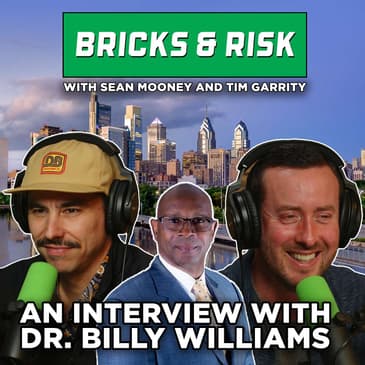
Billy Williams is a business expert, insurance mentor, amazing father, and all around great guy. One of the things he prides himself on, that resonated with Sean & Tim, is that he focuses on the fundamentals. He also believes that referrals come to you when people know how you are going to "act" and "react," as that builds trust.
Our goal with Bricks & Risk is that you walk away with 1 or 2 valuable nuggets that help build YOUR business. Our audience grows through word of mouth, so if you would please take a moment of your time and give us a review on the platform you’re on, that would be fantastic!
Please also help spread the B&R word by sharing your favorite episode with a friend. You can find all B&R episodes on Spotify, Apple Music, YouTube, and anywhere else you get your podcast content. We greatly appreciate your time and trust.
Until next time, keep learning + keep growing!
📲 Contact Info 📲
→ Sean Mooney, Mooney Insurance Brokers: www.mooneybrokers.com/
→ Tim Garrity, The Tim Garrity Team: www.timgarrityteam.com/
💥 Watch us on YouTube 💥
→ YouTube, Bricks & Risk Podcast, @bricksandrisk: www.youtube.com/@BricksandRisk/?sub_confirmation=1
💥 Follow us on Social Media 💥
→ Instagram, Bricks & Risk Podcast, @bricksandrisk: https://www.instagram.com/bricksandrisk/
→ Instagram, Sean Mooney, @sean.moonee: https://www.instagram.com/sean.moonee/@sean.moonee
→ Instagram, Tim Garrity, @realestateinphl: https://www.instagram.com/realestateinphl/
→ Facebook: https://www.facebook.com/bricksandrisk
→ LinkedIn: https://www.linkedin.com/company/bricksandrisk
[00:00:00] When people know how you are going to act and react, that's when they refer business to you. Agreed. You guys at our listening. When people know how you're going to act when they can trust,
[00:00:12] how you're going to act and react, that's when they're comfortable referring business to you. Wonderful advice. Welcome to the podcast dedicated to real estate, insurance, and everything in between. Join us as we take you along our own brokerage building journeys with additional wisdom from our
[00:00:38] network of business experts. Welcome to Bricks and Risk. Hey everyone, welcome to another episode of Bricks and Risk. I'm Tim Gardy, and I'm Sean Mooney. Today's Sean, we got a friend of yours on today. Don't you go ahead and introduce him?
[00:01:00] Dr. Billy Williams, he's CEO of Williams Family Investment and ShortenScrew. Founder and President of Inspire Nation, Business Mentoring Services. Mark is best insurance agent and small business coaching and mentoring company. And then let's also let me interject there. Insurance expert and all around great guys. I'm
[00:01:20] starting the learned so really look forward to talking to you. You know, I don't ever find to the word expert because you're an expert today and then tomorrow something changes and you're no longer an expert. Right. So okay. I try to stay. I try to step
[00:01:33] and try to be on the insurance on top of it guy. I try to be on top of all these learning Billy, right? Always learning. Always. Always. Awesome. And then so you study biology at USC. That's correct.
[00:01:47] Even though your Texas boy. Yeah. And you're also the author best best responses to overcome sales objections pocket God. Yeah, that's an interesting story. You do if you want me to talk about
[00:01:59] that. Sure. We'd love it. I think your audience would really appreciate that. So I started out as a captive all-state agent back in 2004. Right. Can you explain some real quick? What does it mean to be
[00:02:11] captive? Captive means you can only sell their product. Gotcha. Go like state farm, all-state farmers, whatever you can only sell one flavor of ice cream. That's it. Wonderful. Yeah, you can sprinkle some chocolate and some jelly beans. No, that's the end of the day. It's one day
[00:02:29] I'm flavor. Gotcha. Yeah. So I started out that way. And after four years, I realized they were going in a different direction than what I wanted to go because I've always wanted to have multiple entities, multiple operations, multiple locations, and they just weren't that wasn't their mindset.
[00:02:49] So I let that go and I went into pendant. And dependant means I sell multiple things. The best way I explain it. A captive is there to take care of the company. An independent is there to take
[00:03:03] care of the customer. Wow, really good. It finds the best customer for the company. And independent finds the best company for the customer. Wow, fantastically to put it. Does that make sense?
[00:03:16] Okay, makes sense. So after four years I went independent, start doing all that. Then I started investing in other agencies. Still have my agency but we started investing in other agencies and grew that thing
[00:03:28] to like a 1.2. I think we're 1.2, 1.3 billion now on total premium under management between the 160 plus agencies. But about two years ago, my kids said Dad, we want to start our own agency.
[00:03:43] These are my kids. I have three amazing kids. My son just graduated from USC and I have a daughter at University of Texas, our own student. I have a daughter at University of Nebraska who
[00:03:52] I have to brag on. She just took second in national championships and powerlifting. She's little little powerlifter and she broke the national deadlift record. Wow, 168 pounds. 468 pounds. Yeah, so anyway, that's like a fucking swag. Yeah, she's a strong kid. So anyway, let me not brag.
[00:04:16] I mean, okay, I got my bra again. So when they came to me, I was like, great, you know, we start the agency I've done this forever. No problem, no problem. And then what I realized is my kids didn't know how to sell
[00:04:28] then no clue. No clue. Oh, we're come up. Jections. They had no clue how to pivot, how to make it real value based for the consumer for the prospect or whatever. So I start writing all these notes.
[00:04:43] Okay, when this happens, you do this. When this happens, you say this. When they come back with this, you come back with that. And before long, I had about 400 notes. Right? So it was like,
[00:04:53] this is a book. Yeah, this is a book. So I turned it into a book and it was, you know, on Amazon, when you release a book for it to do well for a day is considered good, especially in sales and
[00:05:08] marketing and that air. We were number one for over three weeks in that sales and marketing. Wow, which is really big because there's just a little book that I put out. I didn't think anything
[00:05:20] about it. We didn't promote, we didn't have a big company pushing it. We didn't do whatever. It was me releasing it to my newsletter list and letting go from there. So but I think it's important
[00:05:30] to understand why I wrote that. I didn't write it because I wanted to write a book. Yeah, it just like organically happened. You helping your kids. Exactly. I wrote it because I felt it
[00:05:41] was a needed thing. And I think business owners really need to think about that. If you're selling something because you need to make money, you're not, we probably not going to be good at it.
[00:05:51] Okay, probably not. But if you sell it because you see a need, you see a value, you see how it's going to benefit a large group of people, you will make money. If you chase money,
[00:06:03] are you going to get his problems? If you solve problems, you'll get money. That's, and that's what we always say is that's what I always say. Start with value. Show that person
[00:06:15] that you can deliver value and then that's how you get the deal. Yeah, and value is very simple. Value is are you solving a problem? There's their safety security opportunity, right? Safety is what happens right now at this moment. Security is what happens long-term.
[00:06:33] And then opportunity is what am I missing or what am I getting? So at the end of the day, if we're solving a problem whether it's a problem we're solving something immediate like McDonald's. Now, McDonald's solves the immediate problem. I'm hungry and I don't want to cook.
[00:06:46] Yep. I'm going to feel like spend a ton of money either. Right. That's the immediate problem they solve where when you go to a grocery store, they're solving a security problem, which is long-term,
[00:06:57] which is I need to have food for the next week for the next month for the next year. Right? So I think we have to think about that within our products as well. Are we solving a safety problem?
[00:07:07] Are we solving a security problem? Are we solving an opportunity? And a really good product will solve all three. You know what I mean? Yeah. You can even focus on one or two. And we really
[00:07:18] focus on that. The money will come. You will always make money when you help people solve their problems. I love that. Well, when you solve that person's problems, that person tells this person,
[00:07:29] this person tells that person. It's how you kind of have it snowball into a referral business. Agreed. Well, like in our business and our commercial business, my actual agency will use family insurance and investment. We don't buy leads. We don't do any that 90% of my business
[00:07:46] comes from me playing golf. 90%. I'll tell you. I need to play a little more. Yeah, we don't write stuff. But let's get out there. Yeah. We don't write small deals. Like I'm not chasing the
[00:07:59] the contractor who's at lows with a truck. You know, we write big deals. 150, 200, 250,000 premium deals. And those are folks that they're not out online shopping for a quote. We're folks that are
[00:08:15] at the country club, that are at the golf course, that are at the networking event, that are at the association event. And so I make sure I live in those places. Plus I love golf. So that's
[00:08:26] good. All right. So let me hit you with this one. So okay. Good. So based on all that, how did you go from being an all state agent back in 2004 to mentoring the Asian owners that you have today?
[00:08:39] That produces almost 1 billion in new and renewal premiums. Like, did you think this is where you would be today? Even given that example you did the country club and like meeting people like
[00:08:50] I don't do that. Once I retire from the military, I just wanted to have a really good profession. I didn't want to chop. Okay. Didn't want to go work for the government.
[00:09:01] Didn't want to do all that other stuff. I wanted to own my own business and do all that. And so all state gave me a really good opportunity to own my own business. It's just I outgrew the opportunity.
[00:09:12] And it wasn't anything they did. It was me, my mentality, my focus just outgrew that opportunity. So once I went independent and I started mentoring before I went independent, I started helping other agents. Remember I said solve a problem? So other agents were seeing
[00:09:27] what we were doing. Like we won the Asian of the year, star performer, all this other stuff in all state and agents were like, what are you doing? And I'm like, well here, I'll show you. So I would
[00:09:37] have like a webinar conference call. It was really a conference call back then but I have a conference call and I would explain this is what we're doing. This is how we're doing it. This, you know,
[00:09:46] and the thing is I've never feared sharing what I do because if I tell 100 people only two of them are actually going to do it. It's just like your podcast. You guys are sharing amazing information and amazing knowledge and wisdom. But of the 100, 200, 500 people that are
[00:10:03] listening in the next hour, two of them were actually taking action. Sure. The rest of them sit around and think about what they want to do and then they have paralysis about analysis and
[00:10:11] then if you have that for so long, you just go back to what you normally do. Yeah, excitement only lasts so long. No, true. All right. So let me go, let me kind of build off that a little bit. Why, why,
[00:10:23] or how did you outgrow that opportunity with all state? I mean Sean runs his own insurance brokerage as you do, but like what made you feel like you outgrow it? I wanted multiple locations.
[00:10:34] I wanted to acquire other agencies. Okay. All states said, no, we're not doing that right now. This was in Illinois. I was in Illinois and you know, and then it changes on a
[00:10:45] cycle by cycle basis. So what they're doing now, but at that point when I was like, look, I'm agent of the year, I've got all these awards. I've got all this. I want to acquire other agencies.
[00:10:56] No, we're not doing it. You have to be an outside buyer. Meaning you couldn't be an inside all state agent. You had to be someone from the complete outside of all state in order to buy an agency.
[00:11:07] And I just do with why they were doing it because those folks are coming in new with a lot of money and the folks that buy inside what do we do? We ride on their renewals, right? We just take, we buy your book
[00:11:18] and then we cross sell your book, but we don't really go market. We don't really help expand your brand. So I understood exactly what they were doing. It just didn't fit in my mindset. It didn't fit
[00:11:27] in my model. And so I decided, you know what? I'm a process guy. So whatever I did successfully here, I can take that and take that successful process, tweak it, and be successful anywhere.
[00:11:42] You know what I mean? Yeah. Play golf. So if I have, if I have a really good golf swing at Pinehurst, I'm going to have that same golf swing at Tori Pines. I'm going to have that same
[00:11:54] golf swings at Valhalla. Now does that mean I'm going to come with the exact same score? No, but it means I have the exact same process. So all I have to do is tweak it for the course.
[00:12:04] It's the same thing when you're doing a little business. You just have to tweak. If you have something working successfully, all you need to do is tweak it for something new, not create
[00:12:15] something new like most people want to do. Billy, work with so many different agencies and you talk about successes and you talk about probably some similarities you see with successful agencies.
[00:12:28] Can you give us like one or two things that stand out in your mind with what some of the successful agencies are doing? Oh, I can tell you exactly. I can give you the exact formula.
[00:12:41] It's not even something you're only having. Yeah, I can give you the exact formula. So if you guys want to form you other than your insurance agent, you go to my website and spyraignation.org
[00:12:51] and we got all kind of retraining out there. But number one, it starts with communication. Okay, you have to speak a common language and that's where most agencies fail. So I'm going to do
[00:13:03] I'm going to use a biblical reference, okay? In the Bible, man got really arrogant and wanted to go and talk to God. So they started to build this tower of Babel, right? I'm going to go
[00:13:14] I'm going to build a tower to the back to the to heaven. Well, God didn't rain down fire and bremstone and you know, smite in 20 million. All he did was make them speak different languages
[00:13:25] and the tower stopped. And that's what happens in our business. In our business, she got 6, 7, 8, 9 people. But they're all speaking different languages. And when you're mentioning that, are you talking the language to prospects and clients or your toilet? All of it. All of it.
[00:13:43] So let me give you exact because I don't want to speak in generalities and give you specifics. So the first thing I do when I'm going to part of an agency is I go in and I set agency,
[00:13:55] coverage standards saying, okay, whenever we talk to a customer about auto insurance, we're going to talk to $2,500 to $150,000, right? For one person, 500 for the total accident. We're going to talk 10,000 medical payments. We're going to talk 75 dollar rental coverage. We're
[00:14:14] going to talk about everybody talks from the same standard. Now that doesn't mean that customer will take it, okay? But we're going to talk from that standard and you're creating a template, right? This is
[00:14:25] a universal template that we're using it to start this is our agency standard that we'll talk from. So if I'm talking to you about a quote, I'm going to say, well, I'm looking at your all-state policy
[00:14:36] and I see that you have 100, 300. And our agency, we want all of our customers to have 250,500. Okay? So that's first thing I would do is I'm going to tell you what our standard is. Then the second thing
[00:14:47] is I'm going to tell you the consequences that could possibly happen if you have something different than our standards. The reason why we want you to have 2,500 is because the cost of medical bills, the cost of labor, lumber, and cereals, the cost of repair, the cost of everything,
[00:15:03] the cost to rehab if you're injured, all that stuff is so expensive right now that we just don't believe anything below this is really going to benefit you. So that's the second thing I'm
[00:15:13] going to explain the consequences of you not accepting our standards. I'm really going to put it. Then if you, now whether you take it or not that's not our thing. If you don't take it, our next
[00:15:25] our next step is we have to have you sign a decline coverage form saying you understand that you're taking something below our standards. Okay? Now, I don't care if you've been in sales for 40 years or four weeks. If we all operate from that same level of communication,
[00:15:46] we're going to get very similar sales. Yeah. Okay. And it's an end attract very similar types of clients exactly because they refer their friends, they refer their buddies. But again, I don't turn anybody down. If you want 30 60, that's fine. Just sign this decline coverage form saying
[00:16:06] you understand your way below what we recommend for you. Yeah. We'll go ahead and write you. The reason why is because I'd rather have you and upgrade you over time than to not have you at all.
[00:16:16] Yeah. All right. Let's do this. I want to talk about two, four, TS. It's been doing his homework on your bill. Yeah. See, I'll see. So we're asking you guys there we go.
[00:16:28] And I know time blocking is part of it. We just didn't have a soda on time block. I'm a big time blocker. So lay it out for us. How does all of this impact more specifically after you lay it out?
[00:16:41] How does that impact an acquisition? Well, for, okay. Let me make sure I know which way you want to address this. So time blocking, I have this saying if you don't make the time to create wealth,
[00:16:56] then all of your time is spent fighting off poverty. Okay. Yeah. And the reason why I say that is because most people don't know what time makes money. Right? And what money they should be making
[00:17:08] in what time? So that means for me as an example, I'm not going to talk to that 30 60 person that we talked to earlier. I personally as the agency owner, I'm not going to talk to you.
[00:17:20] Okay. Because it's not worth my time and I'm not going to make enough money for my time. But if you're that 20 million dollar manufacturer, I'm going to talk to you. Okay. So when I walk
[00:17:34] into an agency after we personally do as we set standards. So S4CS, which is what he brought up, stands for standards, time blocking, task tools, training and spot checking. Okay. Standards,
[00:17:54] time, task tools, training and spot checking S40s and then in S. So the next thing I do after we sit down and we talk about standards is I look and I see what where are you making the most
[00:18:11] money? I'm going person by person. Oh, she's greater retention. He's graded sales. They're great at handling claims or they're great at service work or they're great at whatever. And then once I know
[00:18:23] what you're good at, I'm going to block off time in your calendar for you to do what you're good at. Doesn't mean it's going to be all day, but I'm going to block off a specific period of time
[00:18:33] where you're going to be good. You're going to train on, you're going to train us and you're going to perform what you're good at. When we first got on the podcast I told you guys,
[00:18:42] today was my chipping and putting day. Okay. I always work golf into the conversation so sorry about that. Oh, let's do it. All right. I'm going to analogy. So so I started golf almost
[00:18:55] little over three and a half years ago. I was a tennis player. So for years and years and years all I did was play tennis. And then COVID came along and I couldn't fight to it. Same or
[00:19:03] he's everything was shown down. So me and my daughter, my youngest daughter, who's a golfer, the one who won national championships and powerlifting, we went out and played golf, right? That's what we did. And she was like, dad, you suck. You're like, you're a little more like, yeah,
[00:19:20] easy honey. No, no, no, this, hey, she was true. That was like, I'm just like, man, you think you've been the tennis player. This game become really easy. Translate. Yeah. Well, the reason why tennis came to me was because I understood the tennis system. I understood it
[00:19:34] back in versus a foreign footwork all this stuff. So I said out at that time and I said, okay, I'm going to break this down and to processes what happens next. Remember, I said,
[00:19:45] a process is what happens next? So I said, okay, I'm going to break it down, get my swing, get my stance, get my ball position, get all that other stuff. And then once I had the basic
[00:19:56] down, I was like, now I know how to train a long game, you know, my driver, and then I'm going to train my mid game, and then I'm going to train my long arms and train my short
[00:20:04] game and all that kind of stuff. So how did all that work out? Two years later, I won DFW player of the year or the United States amateur tool. I don't see two years. Did you play any golf
[00:20:19] before that? Like, we were out there just messing around. You didn't play any. I'm not guessing none. Like, I go to top golf every now and then. But actually getting out there and same,
[00:20:28] you know, like getting on the range or getting, no, I was a guy with a tennis player. I wasn't old enough to play golf. Yeah. Yeah. Both my mids out. Yeah. So but I won US amateur, USAM tooler
[00:20:45] player of the year DFW. This was two years later. And now I'm, I play like it was known as skins games, which is where we travel around the country and play for money within like these
[00:20:58] organized, yeah, pots, these organized games. They're cool rounds or whatever. I still do USAM tool, but not as much. Once I discovered the pot game, I really wasn't as interested in the
[00:21:09] copy game. Yeah. You're like, this is much more fun. Walk away with some cash. All right. So I said all that to say it's always about the process. But if you don't schedule the time to create wealth
[00:21:22] in all your time, it's been fighting a poverty. So the reason why today was my short game, my putting and chipping was because that is my time that I blocked off to get good at that thing. Then on Mondays
[00:21:36] is my long game and my long on game. It's the same thing in an agency and a business, whether it's real estate. So let's talk real estate. We're talking insurers, but you know, we also have some real
[00:21:45] estate. Yeah. My man right there. Right. So if we're talking real estate, let's say I need to go out and do housing. Right? And I need to find what properties are in pre foreclosure, in foreclosure,
[00:21:59] at a tax sale. I need to find all that out. Yeah. So now when do I make the time to do that? A lot of people go, man, I need to go out and get this. Let's do it today. I'm not
[00:22:10] found out what properties are in, you know, sometimes some time is weak. I'm got no. For us, it's like, okay, we have a VA, a virtual assistant that we hire that does our real estate
[00:22:21] research. And I say, okay, between nine and one or whatever on Mondays and Wednesdays, I want you to develop these lists. I want another pre foreclosure. I want to know the foreclosure.
[00:22:33] I want to know the tax sale. And I need you to have that back to me by three o'clock this afternoon, because I gave them a very specific time to get things done. It gets done. If I said,
[00:22:44] whenever you find the time, create a list for me, okay? Nothing happened. Now, if you're allowing someone else to prioritize over what you really need done, nothing really gets done well or on exactly exactly exactly. So that's the same thing.
[00:22:58] Guys, it's not magical. Everything I talk about is not magical, but it always follows that S4TS, but it's not magical. This is a matter of having the discipline to do it. I wrote this book called Ice Cream, Ice Cream. Lesson's for business owner. Lesson's business owner
[00:23:17] is learned the hard way. Okay? Ice cream is an acronym. Incoming money, covering your weakness, ego emotion and expectation, communication, relationships. Right? And then the next is education asking questions and mentorship. Ice cream. Lesson's business owner is usually
[00:23:37] learned the hard way. And you go to icecreamlessons.com. It's free. If you guys want to download it's free. Ice cream lessons, check it out. Yeah, cool. Okay. But in ice cream lessons, the thing is
[00:23:49] when we talk about our S4TS, that we talk about ice cream and we talk about anything, all that does give me a structure, which I can work for. I'm the kind of guy, I need a checklist.
[00:24:00] I'm not smart. I'm a military guy, right? So I'm not smart. I can just follow a checklist. I can follow an order. So when we talk about real estate or talk about insurance or talk about business
[00:24:11] or talk about owning a track leaders or talk about anything, first thing I have to have is a common level of communication standards. Then I have to have the time set of to be able to do everything
[00:24:21] I need to do time blocking. And then I need to know what task generate revenue, because not all tasks generate revenue. Yeah. Right? Yeah. So I need to know what are my revenue producing tasks.
[00:24:33] Right? And then once I have those tasks, then I can come and say, what tools can I use to support the task and the time blocking and the standards, because a lot of times we buy a tool,
[00:24:45] having no clue how we're actually going to finish and enjoy our work will. It's just you, oh man, I've got that latest AI man, I've got that latest AI. No, what are you going to do with it? Yeah, I won't be asking you. It'll tell me.
[00:25:00] Yeah. Yeah. That's great. Yes. Standards tasks. I mean, standards time, tasks tools, then training. If I don't set aside the time to train, if I don't set aside the time,
[00:25:12] to do something, if I don't set aside the time, none of this other stuff is going to happen. So I can talk about training all day long, but when my training at night, I'm a training in the morning,
[00:25:21] I'm a training in the afternoon and my training. Yeah. But I just time it doesn't matter. And then finally spot checking. If I train once all that deal was introduced, if I train you twice, now you
[00:25:31] have an orientation. But you won't know until the third or fourth time. Okay, it'll be the third or fourth time before you actually get what they have we're talking about. So yeah, that's that's
[00:25:43] what we're talking about right there. Just making sure the tasks, the tools, the time, the training, all those particular things are set up the way that they're supposed to be set up. Awesome.
[00:25:51] And Billy, yes, I don't want to cut you off. But what I was going to talk all day, so you have to cut me off. Yeah. So I think the one thing I was the one point I was going to make was that
[00:26:02] having those systems helps your business run smoother, right? You know what, I don't know if it helps it run smoother. It helps me identify where it's not. Oh, yeah, that's a really good way to look at it.
[00:26:15] You can spot the problems easier. Right. Right. Because again, it doesn't having a process doesn't mean Joe is going to follow it. So that's true. Joe doesn't follow it. I need to know he didn't follow
[00:26:27] yeah. So I don't really look at it making my business smoother. I look at it as me. Is it more easily identified? Well, you can identify it in an implement the changes and then
[00:26:37] exactly. Exactly. That's, but I think a lot of people, if you don't look at it that way, it's my opinion. If you don't look at it that way, then you look, you only look at the rosy side.
[00:26:47] Oh, my business is going so well. I made $10,000 this month. Yeah. Well, you could have me $50,000 if you identified where the problems were. Yeah. So I'm always looking for the problem.
[00:26:58] More than I am is everything going okay. Oh, let me other thing, any other point was how much more attractive is the business or the agency, feeling the blank to a potential buyer, if all of these
[00:27:15] things are, you know, soup did not put in place. It's crazy. So if one of our agencies get sold. So remember I'm an investor. I don't own the agency. I invest in the agency and I'm a part owner
[00:27:28] of the agency. Yeah. Well, a lot of my partners as they start to age out, they want to sell. Right. Okay. And I get it. I'm going to get my 10% or 12% or whatever is I'm going to get and they're
[00:27:39] going to sell and move on with their big, but they're big nut. So one of our agencies on average, okay, on average, you can't even look at us unless you're offering 12 to 15 times even.
[00:27:51] Wow. Why is that? Well, 15 times even in the reason why is because all our processes are so tight, our standards are so tight. It's plug and play when you buy us if you don't break it,
[00:28:05] okay, if you don't break it, all you got to really do is come in and keep things going the way that they're going. We have the technology, we have the training, we have the staff,
[00:28:14] we have the workloads, we have the checkmas, we have the order, we have the spot checks, we have everything. Yeah. It says, oh, you got to do us keep it going. Yeah. And don't break it.
[00:28:24] Hey, everyone. This is Tim. Your favorite bricks and risk co-hosts. But don't tell Sean. I hope you're enjoying this episode and I'll get right back to it in a moment. Our audience grows to
[00:28:35] word of mouth. So if you would please take a moment of your time and give us a review on the platform you're on, that would be fantastic. Please also help spread the B&R word by sharing
[00:28:46] your favorite episode with a friend. We greatly appreciate your time and trust. Now back to the show. I was going to say, um, acquisition for what I've been learning. I've been learning a ton
[00:29:02] about insurance to this podcast. Let me tell you. I mean, I've known this guy since I was 10 years old. Went to college together. We talk all the time. We both run different businesses. But I have
[00:29:10] learned through this podcast by talking to great guys like you, the acquisition is definitely like a very valuable model for growth and insurance. It doesn't really play in a real estate. And here's why
[00:29:25] real estate is usually today at least residential real estate. The kind of real estate that I do is built more on the agent, meaning the agent is really driving the sales or driving the customer service
[00:29:35] in every agent at the brokerage or the team is different. Like some are more productive than others, some are more deal focus, some are more customer service focus. So there's not really much
[00:29:45] to acquire because the age of the ages leaves, well, the business leaves with it. But what I've learned is like through insurance and talking about the acquisition model on your you're hitting
[00:29:55] home on a lie this is that the customer is more into like, I almost feel like they're into like the consistency or the stability of their monthly insurance. Like keep my payment around the same,
[00:30:08] like can I talk to Billy if I need them? But like talk about acquisition, why is acquisition such a viable model for growth and insurance? It's the cheapest way to grow your agency. See,
[00:30:21] absolutely cheapest way. Let's say the cost of acquisition of a customer if you went through the normal marketing postal mail, internet, me, Google and this will go like kind of stuff. Cost of acquisition is probably somewhere between $125 to $150 per customer. Wow, okay, per customer. That's all
[00:30:39] ahead. And it's getting even higher today because of the hard market. Yeah, where carriers are denying a lot of, they're turning down business and they're red knowing it's such a rapid rate and I mean,
[00:30:50] it's a great time to be in our industry because it's in such flux that if you really are a hunter, you know, you have hunters, gathers and keepers. If you're a hunter, this is a phenomenal time to be
[00:31:02] in our industry. But if you're just a keeper, you're struggling. Yep, because you've got processes to go hunt, you only have processes to keep your current book of business. So acquisition, like I said,
[00:31:14] 125, 150 bucks per person. I can buy that same customer for $60. Oh, right. If I look at, if I look at buying an agency and look at the cost of acquisition for book, I can buy that customer
[00:31:27] for $60. Now, I still have their lifetime value. They're going to renew three to five years. Yep. So what would your other do? Would your rather get it out of sale of $60 or would you rather
[00:31:38] go get it? Holds a get it a direct from wherever for 150 bucks. This is the same thing. So no, it's just cheaper to acquire. And even the problem with acquisition is that it's like it's like bringing in a stepchild. Okay. You're like, where is he going?
[00:31:57] Yeah, where are we going with this? Okay, it's like bringing in a stepchild if your family is strong and structure and ordered, and you know, whether you go to church every Sunday or whether
[00:32:10] you have dinner or big mama's house or what. And it's everything is just an order. You bring in a stepchild. You simply add them to your process. Yeah, it's stability. But if you're all
[00:32:21] over the place, if you can barely feed the kids you got and you're switching jobs every six months and you don't know where this is coming from. And now you want to adopt a child just so
[00:32:31] you can get a check. That child is coming into a bad situation. That's true. Okay, that's the same thing here. When we acquire an agency, if your agency right now sucks and you think Billy
[00:32:45] said go acquire an agency because it's cheaper, you just brought on a bad stepchild who's going to be in a bad situation. Wow, very good. You just got order process structure. Then yeah, you can acquire that's why we can acquire so easily. Because I know within takes me
[00:33:00] about six months to get an agency from wherever they are to our way. But in six months, you're good. I may have to fire 75% of your people, but you'll be doing it our way. Billy, you referenced
[00:33:14] recently there was a quote and it was, I think you said it was Eric Garcia where he said that the process is it's more important for the processes to be stronger than your people. Yes,
[00:33:29] your process is happy to be stronger than your people. Yeah, and that's Eric Garcia. Okay. Yep, your process is happy to be stronger than your people. And that allows the business or
[00:33:40] the insurance agency or whoever to get people in that, you know, can fall in line and follow. And well, here's the deal. You only build wealth on what you own. Okay, you only build wealth on what
[00:33:56] you own. You know, own people, but you own your processes. Yes, so I can feel well in any world as long as I have my processes, Domino's has their pizza process. Right? Uber has its
[00:34:14] rideshare process. Yep. Google has its ad platform process. So people can come and go. Uber drivers can switch out every day. Domino's can hire and fire all day long, but they own those processes. You can only build wealth on what you own. It's the franchise model.
[00:34:37] You know, you wanted to set your business up to be, you know, essentially a franchise. Whether it is a franchise or not, it's you want your business to be operating at a way that anyone can come in and adopt your systems, your processes and be successful.
[00:34:58] You can replicate it or duplicate it. Get replicated is I do something very similar. Duplicated is I do it exactly the same. So when you have processes, you can replicate and you can
[00:35:09] duplicate. I'm going to throw a wrench in the machine right now. No, no, no, no, no, no, no, no, no, no, Mooney and I talk about the solid time. Are you an iPhone guy or are you a droid guy?
[00:35:17] I'm an Android guy. Whoa, holy cow. I wasn't expecting that. I'm an Android guy. Whoa, so look, as I have, I have too much on my phone to pay for memory. Oh, okay. So that's wow. That's a really,
[00:35:35] oh, let me, let me tell you the reason why and you probably haven't heard our past episodes or if you haven't heard all of them. But Sean is Mr. Pro Android and I'm Mr. Pro iPhone,
[00:35:49] and we break each other's stones almost every episode talking about which one's barely the other. It's more of me breaking his stones. I actually, if I'm going to be honest. But I have heard people say
[00:36:00] like people such as yourself, the value in an Android isn't like the customization of like memory or like the way things flow, like you can customize a little bit more. Whereas iPhone is a
[00:36:09] little bit more, it's like a Honda. Like you know what you're getting with a Honda. You know how made miles you're going to get out of it. You know the cost is what like an ease of use. Like the
[00:36:17] button is right here. You don't got to go to three buttons to get to the other button. But that's interesting. Oh, I love it. Yeah. So that's the whole thing with the iPhone. It is ease of use.
[00:36:28] But you're tied into an ecosystem where someone else determines how you use it. It's very true. Okay. Right. Sure. It's something Android. I can customize it to use it. How I want to use
[00:36:38] this is source. This is absolutely, this is I'm sorry. This is absolutely going to fuel some additional. This is a deal. It doesn't really matter because you can you can make money on both
[00:36:49] of them. That's true. Here's the thing I always tell me. If you've heard any of my webinars have passed whatever, I don't give a damn about the tool. I only care about the process that
[00:37:00] that tool is used in. So whether you use in our industry, you know we have 142 different agency management systems. I don't give a damn about which everyone you pick as long as the one that
[00:37:12] you pick can do my processes. Yeah. It's all I care about. That's awesome. But love that. That's that question. This is my new question. Please, Billy. You're the first guy. I'm telling you right
[00:37:23] now whenever we talk to guests now and we're gonna have real discussions. And you know what I'll tell you because I have friends who love it, who breathe on. I'm sure you guys will Jason Cass and all that,
[00:37:33] you know, he's a big influencer. One of my mentees within our industry and he loves iPhone. I mean, he was just big big big big big guy phone. Now think he's kind of, hey, let me see which one
[00:37:49] works best. Let me go over to the other side for a day and see if that's the secret. It's best. So as an example, my wife has always been an Android person just like me.
[00:38:00] But my kids being in college, they're iPhone kids. So she has an Android and an iPhone because she needs to face time. Yeah, FaceTime's the big one. That's a big reason why he
[00:38:10] know what I mean. And Android has tried to come up with this little knockoff version of FaceTime but it didn't but just this last year. Yeah. They link a green it with iPhone. Well now you can face
[00:38:22] time on an Android. Yep. Wow. They must have paid a lot of money for that. 40% of the components of an Android. Excuse me, of an iPhone or Android components. I love this. I haven't been asking this question all along because we literally have shorts. We have clips
[00:38:41] of me breaking Sean stones about how he's been a joy guy and I love this. This is yes. My question. This is like the two boxing promoters sitting in the back room laughing as they
[00:38:53] count their money. These guys are fighting about double white versus crews. They don't care. They're both of them. So it doesn't matter. Right. That's right. And then iPhone or right now, they're sitting back laughing at you guys because they know that 40% of me is you and 40% of you
[00:39:09] is me and laughing about what you want to go to. So is this funny? It's funny to me. Well, let's get back into it. Yeah, let's get back in. I'm sorry. That was my wrench.
[00:39:17] I threw the wrench in the gear. That's fine. And whatever works, whatever allows you to do what you need to do to make money. There you go. It's not about the tool. It's about the process. Billy, I heard your reference recently. Training and detraining. Yeah. When you're talking
[00:39:38] about employees and I'd like to dive into that a little bit and how that works within businesses and a little bit more about having that in front of you and how that works within the business.
[00:39:55] That's a great question, by the way. And thank you for bringing up that topic because that's a big issue for a lot of people. Yeah. So in our industry, we have these people call agency jumpers.
[00:40:04] They jump from one agency to the next. Looking for a bigger pay more hourly. And they love do agents because new agents are dumb as rocks. And then I would pay you. Right. Yeah. And they
[00:40:14] they all look up. Yeah. From because they're on this enhanced commission and all this stuff. So they throw all this money at you and whatever. So these people come in, but they don't want to do it.
[00:40:24] You're away. They want to do it the way they've always done it. I've worked from seven agencies and this is the way I've always done it. But it's not my process. Okay. So me personally, this is me.
[00:40:35] I would rather take a person who doesn't have extreme experience and train them my way versus taking someone and having to untrain them or detrain them from the way they want to do it.
[00:40:53] Because now I'm fighting, I'm fighting both ways. Yeah. I'm fighting. We get you to do what I want you to do. And I'm fighting to get you to not do what you've been doing. So I'm fighting you
[00:41:04] on two different fronts. Yep. A lot of times the agency owner will just give up. Yeah. So you know what? Fine. Do it your way. Yeah. And now you just abdicated control of your business.
[00:41:13] I know you can't run it. Now it's not your business. You're just you're a staffing agency. You're making sure people have a job. Awesome. All right. Here's another one. We're going to throw
[00:41:23] another one out here. So the insurance consultant unicorn and mentors. So there are the people who call themselves that and say, the best. I'm going to teach you how to get from here to here.
[00:41:38] And then there's the people who have walked a walk. So talk a little bit about that because I know you've talked about that on LinkedIn before. I'd love to hear your joke about that. That was
[00:41:48] that blew up a lot of that. That was a lot of conversation. A lot of conversation. So we're just going for a click. Billy, we're just going for clicks here at this point. Okay. Got you. Got you.
[00:41:58] Well, that's stuff. That's real. Right? Stuff to hits people. Yep. So the reason why I wrote it was because I actually had a former mentee who I know for a fact failed at their agency. I mean,
[00:42:16] sucked. I did everything I could. They wouldn't listen to us. They only want to do it their way. They, you know, whatever. And they literally shut their doors because they fail. And a month later,
[00:42:28] they come out with this super program. I can turn your agency into this. I can make you into this. You know, by spending this whatever the amount of money was up and you can get this. And I
[00:42:40] simply wrote an article saying, guys, if a person can't show you proof, if they can't say, this is what I've done, how I've done it and not just talk about it, but show you proof. They're a sea. They're unicorn. You know, the magic creature that lives in the
[00:42:58] background that no, if you're going to, if you're going to trust to follow someone, follow someone who has some credibility, follow someone who has longevity, I believe, and follow
[00:43:12] someone who has just proof. You can look out there and see, okay, this is it. So why do you think it's sugar cord? I mean, it seems like to most people that would be, you know, a relatively
[00:43:25] echo either way. You know, I see the value of one versus value in the other, but you're very passionate about the deal. Well, because again, I, these are the kind of people in our industry that make
[00:43:36] people leave our industry. Yeah. Because it's, it's almost like a church. If I go to a church in that church is just so extreme and the, the pastor or whoever's standing up there telling me,
[00:43:48] all this wonderful stuff, and then I see them at the strip club. So, you know, to the church, I'm not going back to that church. You know what I was saying?
[00:44:02] So, I see people in our industry that are touting all this stuff that they do and buy our new this and download this and order this and sign up for annual membership of this, and then
[00:44:16] you fail at it. And instead of you saying, maybe that program sucked, you start to question yourself. Maybe I'm not called for this. Yeah. It's almost like a, it's almost like shiny objects syndrome that someone could come out today, very, very trendy topic today in business is AI.
[00:44:33] Let's talk about AI. How was time it saves you? You never going to write a blog post again. You never going to create a postcard again. You're never going to have to write the script for your video
[00:44:42] again. And it's not to say that's untrue. Like can these things do those things? The answer is yes. Well, once you have it, so you got that script for the video, are you good at video? Like,
[00:44:54] what are you going to do? How long's it going to be? How are you going to market this thing? Who are you trying to attract? And I think that's the biggest difference. Like, so in real estate,
[00:45:03] what I see a lot of are trendy topics that will make your business grow in real estate. One thing showing that I've always hung our hats on, which is part of the reason why we're even doing
[00:45:14] a podcast today. It's where very big on relationships. Just like you talked about the golf course. You go out of the golf course. So if you're not looking for that P&C customer, you're looking for
[00:45:23] the person who has the big company that needs commercial insurance. And they want someone like you to get them the best deal with the best customer service. You'll pick up the call when they have
[00:45:36] a problem because it's probably a large scale problem and you will always make sure it gets taken care of with his little penis possible. And building things off of relationships, but my team
[00:45:47] was your people? Well, it gets taken care of. And now I'm, I'm, I'm, I'm, make sure people know look, I'm not a small time agent where you can just pick up the phone and call me on myself. That doesn't
[00:45:57] work. I have an office of 20 people sitting there. You have a system behind you and human beings behind you that can do exactly what you want them to do to service the people that you made that promise
[00:46:07] to initially. And I think that's a lot of it too. It's like even if we're doing this podcast, who we ask people are like, okay, how do we do well in podcasting? Well, ask people this and a
[00:46:16] lot of people are like, it's consistency. Like you think it's like, I mean, you're a fantastic guest or it's like the look or the brand or like how the fact we got a couple screens right now and
[00:46:26] everything looks super sharp. Now, that's great. But one thing Sean and I committed to day one is we're not going to stop doing this. And the longer we do it, the more consistent we are,
[00:46:36] that we always have content in the bank. We never miss a week. Then people are going to make us a part of their routine whether you listen to us when you exercise. You got to speak her in the shower.
[00:46:47] You're listening to it on the plane or in the car or whatever. You just catch him raising your back yard and you want something in your AirPods. Like that's, it comes down to a little bit more
[00:46:57] of the fundamentals. And a lot of what I've heard today from you is a little bit more, you're more of a space. You're a fundamental space. Yeah. Yeah. And I am not telling anyone that
[00:47:05] anyone who follows me, anyone who deals with me, anyone who mentors or let's meet become part of their group. It's always basics. I mean, I'm a military guy. Right. So I mean, I can take the kid from
[00:47:17] the cornfields of Nebraska, from the ocean of California, from the Midwest, from the south, put them all together. Put them in a structure, take them to basic training and turn them into the
[00:47:32] best fighting force in the world. Yeah. How do I do that? I don't do that because like, oh, what journey? How do you feel today? Right. Bobby, what do you think? And what do you
[00:47:42] think? We actually want this. What do you offer dinner today? Right. No, it's because you follow a structure. You follow an order. You follow a process. Now, once these people get out of that process
[00:47:52] or get out of the basic, now they can go into their own individual way. You're still within a system but the system becomes bigger. It's the same thing with you. If you work with us for five years,
[00:48:02] I'm not going to treat you like you work with us for a year. You're going to have leeway, but that leeway is going to be within our highway. You're another lane on our highway,
[00:48:11] but you're never outside of our highway. Yeah, that's incredible as well. I love it. So, yes always the base. Like I say, everything starts with everything starts with having a standard, communication standards, even your templates. Like in our agencies, we all use a very similar
[00:48:28] template for situations, whether it's a claim, whether it's an endorsement, whether it's a new sale, new customer, welcome later, whether it's retention. We all follow a similar timeline. When we all have a very similar templates that we send out, they go out. So, I don't need
[00:48:43] Judy sitting there rewriting templates every time somebody asks for something, modify the template that we use for that unique situation. How much time does that say? More importantly, it still gives us that consistent communication. Well, it's consistent for the client as well.
[00:49:00] Just as much as it is for you and your team, there's an expectation from the client is like, how is this going to be taken care of? And then they know this is how it's going to be taken care of.
[00:49:11] So it's so funny when the client calls an agency and they go, before you even say anything, I know I don't meet your agency standards. I know you've already asked me about it.
[00:49:21] Oh, right now though, you know, I can't afford it, but hey, as soon as I'm, you know, something changes, I'll be, but I mean, and that's what I want because they know what to expect.
[00:49:30] That's cool. And those are when people know how you are going to act and react, that's when they refer business to you. A great. Please, you guys that are listening. When people know how you're going to act when they can trust how you're going to act and react,
[00:49:47] that's when they're comfortable referring business to you. Wonderful advice. Here's one last thing I want to go over. So when we, when we book guests onto the podcast, you know, we send a couple questions and all the questions were different. I thought this was
[00:50:02] very interesting about yours. So we had like four or five different questions for four of them. You put the same answer. Exactly, man. Insurance agent and investor. Why even when we first start talking in the beginning of this, why does that approach work for you?
[00:50:17] Why, I mean, I know we hit on a lot of things. But why does that approach work for you? How does that make you effective? Because that's who I am. That's, that's what I am. If I can't tell you what
[00:50:26] I am in seven words or less, we have a problem. Okay. Unless I'm a thermonuclear physicist under writer slash with he don't mean that's different. But most of us at the end of the day, people
[00:50:39] remember short brief things. We live, we live in that Twitter world, right? We live in that hundred or whatever, 140 character world kind of deal. So for me, when someone says, well, what do you
[00:50:52] do? Oh, man, I do everything. I can build your fence. I can't get you. Put it to the fence. I can do it. Right. I can do you. I can do you. I can do you. I can do you. Fans,
[00:51:04] I don't remember anything you did because you gave me too much to process. When people, when people say my name, I just want them to be able to say, oh, Billy. Oh, yeah, that's the insurance guy that also does the investments. Got it. That's simple. Now that's repeatable
[00:51:21] because again, I'm always thinking about referrals. So that's repeatable. It's the same thing when people ask me, hey, if I'm going to refer someone to you, who do you want? Refer to me businesses with five million dollars in revenue or more that have 50 or more employees. That's what
[00:51:39] I want. Simple. Now, they don't see Joe down the street who owns a landscaping company with two lawnmowers and go, oh, that'll be a good customer for Billy. No, I've already trained you to look
[00:51:53] for my target prospect. And a lot of us don't. Hey, what do you do? I sell insurance. Well, if you know anybody, man, send them over to me. No. That's great, man. That's fine. I mean, there's a
[00:52:07] net the way a lot of agents do it. Oh, yeah. Or even if I was a P and C agent, I'd say, well, when I was a captive, I'd say, well, I'm looking for families that probably live in a home
[00:52:16] less than five years with two kids, you know, pretty decent income. That's really my target customer because I wanted to train people. I wanted to train my hunters on what's a hunt.
[00:52:29] I'm not going to give you a gun to go bring back dinner. You know, maybe I want to deer that day. Yeah, yeah. Maybe I want to buckle over that day. Why do you tell you, go find buckle? Go find deer.
[00:52:39] It's the same thing here. I'm not going to just say that. So to answer your question, it's because I want things as short as the sink is possible. I mean, insurance agent and I invest in insurance
[00:52:49] agencies. That's what I did. That's amazing. Oh, great stuff. Great. Well, we're going to close this one out, Billy, but before we do, why don't you tell the audience where's the best place
[00:52:59] that they can either find you and or learn about you? Okay. So if you want to know more about the mentoring arm, or you want more of this kind of wisdom that we're sharing here, go to
[00:53:10] inspire a nation.org. Not come inspire a nation.org. And that's where you see all of our mentoring stuff and our free stuff and all that. If you want more business, more general business stuff,
[00:53:26] go to ice cream lessons.com ice cream lessons.com and that's where you find ice cream lessons, business owners learn the hard way stuff like that. I'm always on LinkedIn. You guys, I'm a LinkedIn
[00:53:40] guy. That's my format. I'm not a big Facebook person, not a big whatever. I'm a LinkedIn person. So just look up Billy our Williams on LinkedIn and find me there. At the end of the day,
[00:53:52] I don't sell what I do. I feel like I've earned the right that if someone really wants my wisdom knowledge value experience, they'll seek me out. Yeah. So hear me on your podcast. They'll do some
[00:54:05] research on me. They'll figure whatever. So I don't have a today and today only for 15, I'm going to give you 15% off because if you're just use the promo code, I don't know. You're pretty
[00:54:15] good at that for not doing it. I got to tell you, because I see it all day long this one. I don't do that. I don't do. I don't do vendor booths at conferences, because I feel like I've earned the right
[00:54:28] to not have to stand behind a booth and hawk my materials. Not that there are against people who do that. Yeah. Maybe it's my ego and arrogance but it's it's served me well. So if you really want
[00:54:41] to find out more about what we do and how possibly we could benefit you just go to our site, check it out. If you like it, if you don't, you know. So well said, put awesome stuff. Thank you so
[00:54:50] much. Really appreciate your time today and that's all we have for this episode folks. So thank you for tuning in again to another episode of Bricks and Risk. See you soon. Thank you for joining us on
[00:55:02] another episode of Bricks and Risk. Our goal is that you walk away with one or two valuable nuggets and we greatly appreciate you sharing your time with us today. You can find all B&R episodes on Spotify,
[00:55:16] Apple Music, YouTube and anywhere else you get your podcast content. Until next time, keep learning and keep growing.