
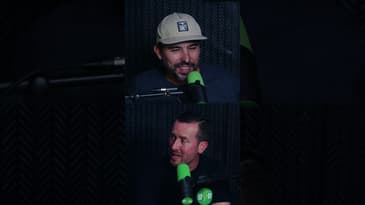
In this episode, Tim Garrity and Sean Mooney dive deep into the psychology of why attention matters more than ever and how influence, once earned, can transform a small idea into a movement. They explore the difference between simply marketing a product and creating a moment that makes people stop, think, and remember.
The conversation begins with a simple truth: marketing has changed forever. Traditional advertising no longer guarantees results, and audiences have developed immunity to the noise. The only brands breaking through are the ones bold enough to do something unexpected — something that makes people talk.
Tim and Sean unpack this idea through one of the most brilliant campaigns of the last decade: Burger King’s “Whopper Detour.” A 2018 campaign that used geo-location marketing to pull customers directly out of McDonald’s drive-thrus and into Burger King parking lots. It wasn’t just clever; it was revolutionary. By offering a Whopper for one cent to anyone who opened the Burger King app within 600 feet of a McDonald’s, they flipped the fast-food war on its head. In nine days, the brand racked up more than a million app downloads and achieved a 37:1 return on investment.
But the brilliance wasn’t the discount — it was the mindset. Burger King proved that when a company dares to think differently, it can outperform competitors ten times its size. It’s a real-world example of what marketing legend Seth Godin calls “The Purple Cow.” In a field full of ordinary brown cows, only the purple one gets noticed. Only the brand that breaks pattern earns the right to capture attention.
Attention, however, is only half the equation. The second half is influence — what you do once you have the spotlight. Sean points out that influence isn’t manipulation; it’s connection. It’s the ability to speak to an audience in a way that feels personal, relevant, and honest. In a world overloaded with options, people follow authenticity more than slogans.
Tim expands on this by describing how most businesses still rely on outdated playbooks. They pour money into ads, leads, and generic funnels but forget the human element: creativity, emotion, and storytelling. The payoff for doing something new — for being truly creative — can catapult a business overnight. It’s not about budget; it’s about boldness. When you create a marketing moment that feels fresh, you’re no longer competing on price or proximity. You’re competing on imagination.
The conversation moves into the psychological mechanics behind attention. Humans are wired to seek novelty. Our brains reward difference — not repetition. When a company surprises us, it earns a tiny moment of wonder, and that moment translates into loyalty. Burger King’s Whopper Detour wasn’t selling a burger; it was selling the feeling of being in on the joke. It turned customers into co-conspirators, not consumers. That’s how influence is born.
Tim draws a line from billion-dollar campaigns back to small business owners, real-estate agents, and entrepreneurs who can apply the same principle. Creativity scales down. A single agent can use humor, storytelling, or a local event to create their own version of a “Whopper Detour.” It might be a unique giveaway, a video series, or a community challenge — anything that sparks curiosity and breaks routine.
The duo emphasize that the market rewards originality far more than perfection. Too many companies spend months polishing a strategy that never ships, waiting for the perfect message or logo. Meanwhile, someone else launches a bold, messy idea that catches fire. As Sean says, “You can’t perfect your way into influence; you have to act your way into it.”
They revisit Seth Godin’s “Purple Cow” philosophy — not as a buzzword but as a discipline. Being remarkable is a choice. It’s a willingness to risk comfort for impact. The most successful marketers aren’t following formulas; they’re rewriting them. Whether you’re selling real estate, insurance, pizza, or sneakers, the rule is universal: if you blend in, you lose.
The conversation also touches on the emotional ROI of attention. When audiences connect with your story, they don’t just buy once; they stay. Influence isn’t about going viral — it’s about being remembered. It’s about shaping how people feel when they think of your brand. Burger King didn’t just make people laugh; they made them talk. Nike didn’t just sell shoes at the 1996 Olympics; they created a movement of gold shoes, gold medals, and gold-standard storytelling. Each brand understood that creativity plus timing equals momentum.
Tim and Sean close with a challenge: find your own version of the purple cow. Ask yourself what you can do differently this month that your competitors would never think to try.