Jimmy explains that this belief didn’t come from theory or management books. It came from years in the field, working long days, solving problems under pressure, and learning firsthand how much the people around you affect the outcome of a job. Construction isn’t done in isolation. It’s collaborative, physical, and demanding. When the people on a crew don’t respect each other, everything suffers. Quality drops. Stress rises. Mistakes happen. And no amount of talent can fix that.
He talks about how easy it is for some contractors to justify keeping difficult personalities around because they’re “that good.” Jimmy rejects that mindset entirely. To him, a bad attitude spreads faster than bad workmanship. One person who creates tension, ego, or negativity can undermine an entire crew. Skill can be taught. Precision can be refined. But character is much harder to change.
That’s why Jimmy places such a premium on who someone is when they show up to work. How they treat others. How they handle pressure. How they respond when things don’t go perfectly. Being reliable, respectful, and consistent matters just as much as laying a perfect line or striking a clean joint.
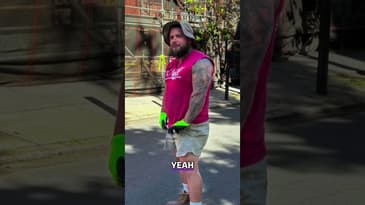
This philosophy comes to life when Jimmy starts talking about Trav @stay_leveled , affectionately known as “The Short King.” The way Jimmy speaks about Trav makes it obvious how rare he believes someone like him is. Jimmy says he’s been waiting twenty years to find a guy like Trav to work with, and that statement carries weight. Two decades in the trade, meeting countless masons, and Trav stands out not just for his skill, but for who he is as a person.
Jimmy describes Trav as an incredible human being first. A good dude. Someone you want on your job site, around your crew, and representing your name. That alone would earn him a place on the team. But Trav doesn’t stop there. His craftsmanship backs it up in a big way.
Jimmy gives Trav one of the highest compliments a mason can receive when he says that nobody can “stroke a wall” like him. In masonry, that phrase isn’t thrown around lightly. It speaks to an elite level of control, precision, and feel. Stroking a wall isn’t just about making it look good from a distance. It’s about consistency, timing, pressure, and an intuitive understanding of the material. It’s muscle memory built from experience and care.
When Jimmy says no one can stroke a wall like Trav, he’s acknowledging mastery. Not flash. Not shortcuts. Mastery earned through discipline and attention to detail. It’s the kind of compliment that only comes from one professional to another who truly understands the craft.
What makes the praise even more meaningful is that it comes second to who Trav is as a person. Jimmy makes it clear that the order matters. Trav is a great human being who also happens to be exceptional at masonry. That combination is rare, and it’s what makes him invaluable.
This clip highlights a deeper truth about leadership and team building. Jimmy isn’t just assembling a crew to get jobs done. He’s building an environment where people want to work, where standards are high, and where respect is non-negotiable. By refusing to compromise on character, he protects the culture of his business.
Jimmy also touches on trust. When you have good people on your team, trust comes naturally. You don’t have to micromanage. You don’t have to worry about ego clashes or corners being cut. Everyone is pulling in the same direction. That trust shows up in the work, in the way jobs run smoothly, and in how clients experience the process.
Another subtle but important point in the clip is how long Jimmy waited to find someone like Trav. He didn’t rush to fill a spot just to have another body on the crew. He was patient. He knew what he was looking for and was willing to wait until the right person came along. That patience paid off.
For Jimmy, hiring isn’t about filling roles. It’s about alignment. Skills can always improve, but alignment around values is what keeps a team strong over the long term. He would rather run lean with the right people than grow fast with the wrong ones.
The conversation also challenges a common myth in the trades: that being tough or difficult is part of being great. Jimmy rejects that entirely. In his experience, the best craftspeople don’t need to be arrogant or abrasive. They let their work speak for itself.