
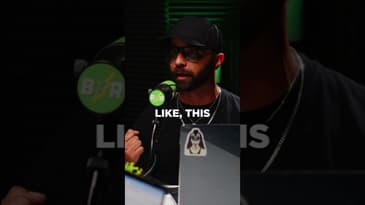
In this Bricks and Risk conversation, Jarrod Blackwell, founder of Let’s Be Strategic, reminds us that success in business — and in life — isn’t just about performance or profit. It’s about presence. It’s about remembering that behind every deal, every meeting, every collaboration, there’s a human being trying to make sense of their own story.
Jarrod shares a truth that’s easy to forget in our hyper-connected, always-on world: people don’t remember what you said or did nearly as much as they remember how you made them feel. A genuine check-in can change someone’s day, shift their mindset, or even save a relationship.
He talks about the importance of slowing down long enough to notice when someone might be struggling — even if they’re still smiling. The coworker who’s unusually quiet. The friend who keeps saying they’re “fine.” The client who suddenly becomes distant. Sometimes the first “How are you?” isn’t enough. That’s why Jarrod lives by a simple rule: always ask twice.
Because the first time, people usually give you their reflex answer — “I’m good.”
But the second time, when you ask again, when you show that you actually care about the answer, the walls start to come down. That’s where real connection begins.
Jarrod’s insight comes from a place of empathy and real-world experience. He’s built his company around understanding people, not just systems. And in this discussion, he points out that the strongest relationships — personal or professional — are built on intentional care. When you take time to reach out, to follow up, and to check in without an agenda, you create a kind of loyalty that can’t be bought or automated.
It’s easy to get so focused on work, goals, and deadlines that we forget the people behind the projects. Jarrod reminds us that leadership isn’t just about direction — it’s about attention. It’s about noticing. It’s about asking.
He shares how checking in has become part of his daily rhythm, not because it’s a networking tactic, but because it’s a human one. Whether it’s messaging an old client just to say hi, calling a friend out of the blue, or checking in on a colleague who’s been quiet, those small moments add up to something much bigger. They build trust. They show care. They keep relationships alive.
Life is full of challenges we don’t see. Everyone’s carrying something — stress, loss, uncertainty, exhaustion — and often, the people who seem the strongest are the ones who need support the most. A quick check-in doesn’t solve everything, but it tells people they’re not alone. And sometimes, that’s exactly what they need to hear.
Jarrod explains that checking in isn’t about fixing someone. It’s about listening without expectation. It’s about showing up with empathy, not answers. You’re not there to solve their problem — you’re there to stand beside them while they navigate it. That simple act builds deeper, more authentic relationships in every part of life.
He reflects on how this habit has strengthened his friendships, improved his business partnerships, and created a culture of care within his team. When people know you genuinely care about their wellbeing — not just their output — they engage differently. They communicate more openly. They give more effort because they feel seen.
It’s a ripple effect. The more we check in with others, the more we invite others to do the same. Communities strengthen. Teams become more supportive. Families grow closer. Friendships deepen.
Jarrod believes that success without connection is hollow. The goal isn’t to impress people; it’s to impact them. And sometimes, that impact starts with nothing more than a simple question: “How are you, really?”
He challenges everyone listening to reach out to someone today — not because it’s convenient, but because it matters. That old friend you’ve been meaning to text. That coworker who’s been quieter than usual. That relative you haven’t talked to in months. Don’t overthink it. Just check in.
Ask once. Then ask again.
That second question — the one that shows you care enough to dig deeper — could be the moment that makes all the difference.
Jarrod’s message isn’t complicated, but it’s powerful: business is human. The more we remember that, the stronger our relationships become. The best partnerships, teams, and communities are built on empathy — on people who take the time to care without expecting anything in return.
So next time you think of someone, don’t wait. Don’t assume they’re fine. Don’t let the busyness of life push compassion to the background. Pick up the phone, send the text, check in.
And long after they forget the words you said, they’ll remember that you were the one who cared enough to ask.
Because in a world where everyone’s trying to be heard, the ones who stand out are the ones who take the time to listen.