The discussion centers on a pattern seen across countless cities and towns. Jobs leave. Industry dries up. Downtowns hollow out. Main streets become quiet. Buildings age. People move away. For a period of time, these places are labeled as tired, rundown, or past their prime. But history shows that decline is rarely permanent. When the right mix of public and private investment begins to flow back in, everything starts to change.
Investment into infrastructure, walkability, and local businesses becomes the catalyst. Roads are improved. Public spaces are restored. Old buildings are repurposed instead of torn down. Artists, entrepreneurs, and small business owners see opportunity where others see risk. Restaurants open. Coffee shops follow. Breweries, galleries, and music venues appear. Slowly, foot traffic returns. Energy returns. Identity returns.
Tim and Sean talk through why downtown districts are often the first place where this transformation becomes visible. A thriving downtown acts as an anchor for the entire community. It becomes a destination instead of a pass-through. When people have a reason to gather, eat, drink, shop, and spend time together, the economic ripple effect is massive. Residential demand increases. Property values stabilize and then rise. Local pride grows. Momentum builds.
The clip highlights how these turnarounds are rarely accidental. They are the result of layered investment and long-term thinking. Public investment sets the foundation, whether through zoning changes, infrastructure improvements, or incentives that encourage redevelopment. Private investment brings creativity, risk-taking, and innovation. Together, they create places people actually want to be, not just places they pass through on the way somewhere else.
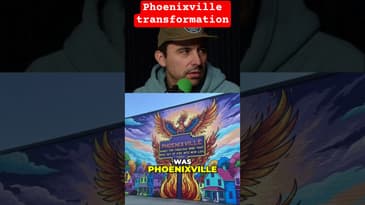
There is no better real-world example of this transformation than Phoenixville, Pennsylvania. Once a blue-collar town that experienced the same industrial decline seen across much of the country, Phoenixville spent years overlooked and underestimated. For a long time, it was not considered a destination. It was simply there. But that narrative changed as investment, vision, and community involvement aligned.
Phoenixville’s downtown was revitalized through intentional development that respected its character while modernizing its use. Historic buildings were preserved and repurposed rather than erased. Restaurants, bars, and gathering spaces brought life back to the streets. Arts and culture became part of the town’s identity, not an afterthought. Events, nightlife, and local businesses gave people reasons to stay out, linger, and return.
Today, Phoenixville stands as proof of what is possible when a community commits to itself. Its downtown is lively and walkable. The arts scene is active and visible. The restaurant and nightlife options rival much larger cities. Residents feel connected to where they live, and visitors feel welcomed rather than rushed. This is not manufactured energy. It is organic growth built over time.
That transformation did not go unnoticed. Phoenixville was recently named the best small town to live in by Travel and Leisure Magazine, a recognition that reflects years of steady progress rather than a sudden trend. It speaks to quality of life, culture, accessibility, and community strength. It validates the idea that smaller towns with strong cores can compete with larger cities when they invest wisely and intentionally.
The conversation also makes clear that revitalization is not just about economics. It is about people. A thriving downtown creates shared experiences. It gives residents a sense of belonging. It attracts new people who want to contribute, not just consume. It fosters creativity, collaboration, and pride. These intangible factors are often what sustain growth long after the initial investment is made.
Tim and Sean emphasize that smart investors and community leaders understand this cycle. They look beyond short-term conditions and focus on long-term potential. They recognize that places with good bones, strong location fundamentals, and committed local leadership often represent opportunity long before the broader market catches on. Phoenixville’s rise did not happen because it chased trends. It happened because it leaned into its strengths and invested in them consistently.