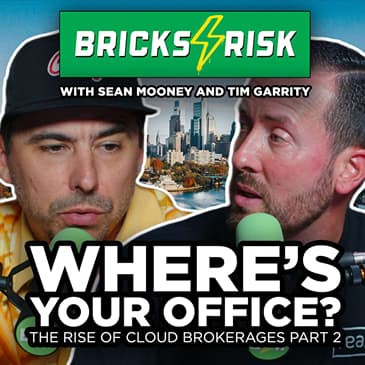
Part II of the "yo, where's your office" series where Sean & Tim talk strategically about the placement of your office, when it matters, and when it doesn't matter. But more specifically, in residential real estate. Hint: 99 times out of 100, it doesn't matter; haha. With the rise of the internet over the last 25 years, things have changed with the perceived value of physical spaces; sometimes more, and sometimes less. Now with the rise of AI, things will change again; and who knows which way. Dive into Part II as Tim shares his "where's your office" experiences as a real estate agent, but brings Sean along for the ride. Another B&R banger from your 215 Labs boys!
Big shout-out to our show's loyal and dedicated sponsor: Property Management Redefined. John Sacks and his property management squad love our show and continue to support our mission of helping people through podcasting!
Our goal with Bricks & Risk is that you walk away with 1 or 2 valuable nuggets that can help build your own business. Our audience grows through word of mouth, so if you would please take a moment of your time and give us a review on the platform you’re on, that would be fantastic!
Please also help spread the B&R word by sharing your favorite episode with a friend. You can find all B&R episodes on Spotify, Apple Music, YouTube, and anywhere else you get your podcast content. We greatly appreciate your time and trust.
Until next week, keep learning and keep growing!
** Episode Shout-Outs **
→ Center City, Philadelphia: https://centercityphila.org/
→ Episode Sponsor, Property Management Redefined: https://gopmr.com/
📲 Contact Info 📲
→ Sean Mooney, Mooney Insurance Brokers: www.mooneybrokers.com/
→ Tim Garrity, The Tim Garrity Team: www.timgarrityteam.com/
💥 Watch us on YouTube 💥
→ YouTube, Bricks & Risk Podcast, @bricksandrisk: www.youtube.com/@BricksandRisk/?sub_confirmation=1
💥 Follow us on Social Media 💥
→ Instagram, Bricks & Risk Podcast, @bricksandrisk: https://www.instagram.com/bricksandrisk/
→ Instagram, Sean Mooney, @sean.moonee: https://www.instagram.com/sean.moonee/@sean.moonee
→ Instagram, Tim Garrity, @realestateinphl: https://www.instagram.com/realestateinphl/
→ Facebook: https://www.facebook.com/bricksandrisk
→ LinkedIn: https://www.linkedin.com/company/bricksandrisk
I hope nobody finds my office. I have a disregard for my office. Like the purpose of it. Well, like where it is. Right. Or the need for this. Correct. Everyone else out there, probably in and around me, is like, this is my office. This is where my office is. And I'm like, I hope nobody finds my office.
SPEAKER_00No one will find me again ever. Welcome to the podcast dedicated to real estate, insurance, and building your business. Join us as we take you along our own business building journeys with additional wisdom from our network of local and national experts. Welcome to Bricks and Risk.
SPEAKER_01This episode is brought to you by Property Management Redefined. PMR is not just managing properties, we're creating partnerships that build long-term success for property owners. John and his team can be reached at manage at goPMR.com or by phone 267-753-6005. Tim. Yes, Sean. Who's a good client for PMR?
SPEAKER_00Property management redefined is looking for property owners who value three things accountability, reliability, and a results-driven approach. You want to maximize returns, but still provide client and tenant satisfaction.
SPEAKER_01There's a lot of property managers out there. What does PMR do really well?
SPEAKER_00Biggest thing is they're seamless and they're worry-free. So with that approach in mind, it allows the property owner to put their trust in PMR and know that the results will be there. The other thing I think a property owner is really gonna value because they do it so well is that they have a local expert team boots on the ground, managing your properties and your tenants' expectations every day so that you feel good about your investments.
SPEAKER_01We have millions of listeners out there. Tens of millions. If they want more information, how do they find PMR?
SPEAKER_00Right here, guys, reach out to John Sachs and his team at Property Management Redefine. We'll take good care of you. Alright, so I'll give I'll give a story. When I got into real estate and I started with Brown McKinney, shout out. And we had the row home on Cabot Street in Brewery Town. Kabot. I did that for a year and a half. Then I graduated to U.S. Spaces shout out. And I was at 20, uh, about 22nd, 23rd in Walnut. Yep. Great office. Cool. Uh did that. Then we started Copper Hill Real Estate. We were very strategic with our office. This brings up a really great point. Back then, all these companies, so this is 24, this end of 24.
SPEAKER_01I think you forgot. Uh I my memory is like a steel trap. Okay. What you got? Do you you left out a spot in Roxboro?
SPEAKER_00Yeah, that was through U.S. Spaces. Yes. And they opened a second office like blocks from my house. Yeah. Because I was growing with the company. Yes. And got to a point, didn't make sense to work together anymore.
SPEAKER_01No, but it also was an opportunity for you to position yourself in your backyard to display, hey, we're we're operating in this location. Yeah. I think that you didn't even bring it up. I'm bringing it up.
SPEAKER_00Yeah, but we don't let me get into the 30,000 foot view.
SPEAKER_01I know, but you just went through a timeline and didn't even have this kind of intrical part.
SPEAKER_00So for like a year, year and a half, my last year, year and a half at U.S. Spaces, we had a second office in Roxboro, and then they had a third office at like a co-working space in the city. So they had co-working, they had Walnut, they had Roxboro. So thank you. Then when we started Copper Hill Real Estate, we were very strategic about how we handle our office. And this was so against the grain back then. Because we were in, first of all, we're in center city. Yeah. So when we started Copper Hill, we said we want to stay in center city. Why? Well, primarily we were doing a lot of Philadelphia real estate, and center city was booming. It was just like a young business person's like playground. Everyone worked down there, everyone was hanging out down there, everyone was networking down there, everyone was like doing, we're living down there, like in and around there, like South Philly and Fairmount and Fishtown, whatever. Graduate. So when we were figuring out where we wanted to do our office, we're like, okay, well, maybe we look at a property on Walnut or a property on Chestnut or Sansome or Fairmount or whatever. Then we we switched our thinking because at the end of US Spaces, they had the office in the co-working space. And I remember Andrew was kind of like working in that one. I was like, what was that like? He was like, dude, it was great. It was like very inexpensive. And I was meeting lots of people because there's other businesses in the co-working space, and you would just naturally network, organically meet people, go to happy hour, whatever, go to lunch. So then we're like, well, why don't we look at co-working spaces to headquarter Copper Hill? This is like very out of the box back then because co-working was fairly new in Philly. So then we go to this beautiful new space. It's under construction. It's at the Graham Building. Shout out to Pipeline. Love you guys. Thank you for everything. You were the best and still are. Go to Pipeline. Shout out Graham Insurance. Shout out Graham Insurance Building. They're literally like spackling and painting and laying floor and like building out 20,000 square feet, two stories in a high rise, a 25, 20-story, 25-story high-rise building right across from City Hall, downtown Philadelphia. All the like like 50 companies they expected to come in here. They had like 20 some offices. We were like one of the first people to look at it. We're like, what's your cheapest office? Like this one right here. It's $800 a month. We're like, what do we get? They're like, you get access to the front desk, you get your own office, you get to close the door, you get branding on your office, you get that beautiful conference room overlooking City Hall, you get free coffee every day, you get free Wi-Fi, no utilities, get packages here, network events. Are you interested? We're like, we'll take it. I think we were their first lease. Maybe the second. Yeah. Anyway, we sign up, we end up staying in a pipeline for four years, and we started to grow the brand, Copper Hill. So we really went against the grain. One, we were like, we're gonna rent because we want to feed the business and it's inexpensive. And two, we're going to do our renting two ways. One, we're gonna do it very cheap, and two, we're gonna do it organically and by relationship. We're gonna meet all these other businesses. And we did. Even in our first year, we got like a $700,000 referral for like a high-rise condo, like downtown, purely from pipeline, from working there. So, like all this cool stuff was happening. Yeah. So we rented there four years, then we got the office at 18th and JFK at Sterling, did that for a couple years, then we disbanded, and then I go with real. This is where it gets great. So then I go with real and I make the decision, and I love my real people, but some of these real people were asking me, they're like, Where's your office? Where's your office? Where's your office? And what I would tell them, I was like, my office is in my house.
SPEAKER_01Wait, real, say that again. Real agents who you so you're now with real and you're talking to real agents. I'm meeting people at real. I don't know anyone. So then was it common when you so what year did you sign up with them? I was two years ago. So was it common that those real agents would have real offices?
SPEAKER_00Yeah, a lot of them were starting to like build offices themselves. Maybe they're team leaders. They wanted offices for their teams. Yeah. They saw value in like growing their own.
SPEAKER_01Eli Campbell would have an office. Exactly.
SPEAKER_00Yeah. So people started doing it, and people are getting offices. And when I when I started back, when I started the Tim Garretty team on my own, I said, I'm going to work out my home office. I have a great home. I'm very blessed. I have a beautiful office there. I have an extra office upstairs. I have everything I need. I can work on my deck if I want to, which I do. So I said, I'm gonna work in my home office. But you didn't put it in the basement? No. So I start there, and at real, like, even people out of meeting, they're like, where's your office at? Like, dude, you have an office? Because I came from kind of like a bigger company, I had a team. I said, No, I don't need an office. Why don't you need it? I was like, dude, I had the office. Like I had the small office in the co-working space, then I had the medium office in the co-working space, then I had the big office at 18th and JFK. I don't need an office. Maybe that'll change in three years, five years, ten years.
SPEAKER_01So Copper Hill at Sterling, I remember that uh pretty well. Yep. Did you so I guess just to kind of build context, how many agents did you have, give or take?
SPEAKER_00Like I would say when we moved in there, we probably had less than twenty.
SPEAKER_01But but the intent was we'll get this office, it'll be in a great location, and we'll use this as part of our recruitment.
SPEAKER_00Yep. Yeah. It was kind of like we graduated from co-working. Yep. We're we're we're big boys now. Mm-hmm. And and part of it now, this is in twenty may probably like twenty eighteen. Yeah. Somewhere around there. Yep. Uh so offices are still highly important because COVID has not happened yet. Right. Maybe COVID happens a year, year and a half later. So how big a space was that? So 20 agents. 2,500 square feet. So Massive.
SPEAKER_01What um was it used by the agents initially? Like, I guess I want to get into your head. It's like, all right, we sign this lease, it's great space. We're gonna make it so awesome for our agents. Come in. Uh was there like a flood of agents? Like, no, like you're 20. When you're when you had your team of 20, were they in here like using the office all the time?
SPEAKER_00I mean, a couple days a week. So let's call it on average. I would really only go down to the office maybe like two, maybe three days a week. Because I was still more productive out of my house. Yeah. I'd go down for meetings, I'd go down for training, networking, closings, whatever. Yeah. So in the beginning, with less than 20 agents, less than a lot of people.
SPEAKER_01I'm trying to like temperature, like we got this great space, and was was the expectation like oh it'll be so great, and everybody would come in, and then you come in one day and you're like, dude, has anyone been here in two days? Like, yeah, people because I think that was the start at that time, like 18, like prior to COVID, was like, uh, you know, I don't I don't I don't know.
SPEAKER_00Technology's getting pretty good.
SPEAKER_01Yeah. Laptops, everyone's got a laptop now. Zoom was like, you know, no, no one was doing that back then.
SPEAKER_00No, no. Um, so probably let's call we had, you know, we had a team of transaction coordinators and we had um two employees probably in the first year. Yeah. So the employees would come in every day. We would come in, yeah, and then you would maybe get a handful of agents. Okay. So call it eight to ten people randomly, like during the week. Okay. And then what we would do is we would kind of like like um, you know, elevate the space in the evenings. So we would do like networking there, we'd do training there, like the agents could meet each other, like we'd bring in business people, we would do like like a wine and cheese or a happy hour or pizza. You know, we did like even a couple like random like call-a-thons to like investors because we were doing development. Okay, you'll get the deal and like find us a new development. So we were getting creative. Yeah, it was awesome. And then when COVID happened, it really changed everything. It changed center city big time, and it also just changed people's perception of offices, especially even in real estate. Like it was already kind of like waning a little bit, even when we got our space. But what we did is even though we were less than 20 when we started, we ended up being close to 50. So it did work for us. Yeah, it showed people that we were serious and we were growing and we were looking for people who loved doing Philadelphia real estate. That's what we wanted, and that's what happened. But after doing all that and then going to real, then people would just be like, Well, where's your office at? I'm like, My house. And then they kind of like, and I didn't really know any of these agents, and they're like, Oh, really? I'm like, Yeah, my home office. They're like, Oh, really? Well, what do you do with your team? I'm like, Zoom, calls in person at a coffee shop. They're like, Well, where do you do closings? I'm like, you know, uh, I know people have offices, title companies have offices, I'll go there. They're like, oh. So even at Real, two years ago, people are like, oh. And even still today, people are kind of like, no, like I see a lot of value in the office. Now again, it depends what you're doing. If you want a big team or a big network, let's say, and an office is probably a part of your strategy, your budget, your marketing.
SPEAKER_01Yeah, but isn't that different too? Because I mean, when we talk to John Campbell, he has a big team with a big office, and he's like, we really don't need this big space. Well, he doesn't even live here anymore. So he's like for his meetings, he has to do them on the road. I know, but I think it for him is just the way that the industry is going. Shout out to John Campbell, by the way. Yeah, make sure we get that. Um just the way the industry is going with the technology, I I just the need for the big office, just it doesn't uh it doesn't exist for you because it's not like in my office, like we're coming in every day. Right? So like whatever the demand would be based on employees. So if I have five new employees, I need to get a bigger space because we're in the office every day. You're in the office every day. Real estate is different. You don't have the need to have everyone in the office at the same time.
SPEAKER_00I'm gonna give you a really good example that has nothing to do with real estate and has nothing to do with insurance. It's my favorite topic, which is pizza shop. We're gonna talk about pizza shop owners, and there's different types of pizza shop. Okay. Now, you have the pizza shop owner who is opening a shop in a city neighborhood or suburban town, just don't interrupt. They're opening I I could sense it. They're opening a pizza shop in a city neighborhood or suburban town. They're gonna start making pizzas and they want to build their business, and we've talked about this. Then you have ghost kitchens. You know what a ghost kitchen is? No. Really? What is it? Oh my gosh. Do you know what uh Wonder is? Have you ever seen the the place where you can order food from Wonder? No. Are you being serious or do you really not know? Wonder what? Okay. A ghost kitchen, whether he's being serious or not, a ghost kitchen is when you have multiple restaurants functioning in one restaurant because it's takeout only.
SPEAKER_01Oh, you don't sit down.
SPEAKER_00So it's a re it's a place where they make food, they sell food, they have menus, they have online ordering through toast, and they have takeout, but there's five restaurants operating in one space. It's like co-working for restaurants. Oh. And the reason they do that is they're like, I don't want this sit-down thing. All I want to do is make pizza and have people come here and pick it up and eat it at home. I don't want people to come here, order a pizza, get a Coke, or get a glass of red wine and sit down with their kids. This is a takeout business. So that is pizza shop owners, you can have most of them are standard, but you have ghost kitchens now. You have these brands within brands. Wonder has 10 different kinds of food, 20 different kinds of food you can get in one location. Would you like Thai? Would you like pizza? Would you like uh Japanese? Would you like burgers, barbecue, Bobby Flay? Like they got all this, and you go to the app and you're like, no, I want Bobby Flay tonight. You order a Bobby Flay meal and they deliver it to you, you know, through DoorDash or whatever. It makes sense. So that's what's happening today. So even offices apply to people making food. That has changed, and a lot of that changed during COVID. It was very big in the city, it was trendy. Where some of the fancier restaurants, like star restaurants and stuff, during the really hard times of quarantine, were like combining with other restaurants. Because the other restaurants, like, we're going out of business. They're like, we've tried to raise money, we've tried to do takeout, we've tried to sell six packs, we're we're going under. Hey everyone, this is Tim, your favorite bricks and risk co-host. But don't tell Sean. I hope you're enjoying this episode, and I'll get right back to it in a moment. Our audience grows through word of mouth, so if you would please take a moment of your time and give us a review on the platform you're on, that would be fantastic. Please also help spread the BR word by sharing your favorite episode with a friend. We greatly appreciate your time and trust. Now, back to the show.
SPEAKER_01I think actually uh Chef Chad from Ambler. Uh shout out to Chef Chad. The current uh Mary restaurant. Uh he owned the Lucky Well, which was a barbecue joint uh in Ambler. And I think he opened a Lucky Well in Fairmount. And during COVID, I think he did an experiment where he actually was like inviting other chefs in because you couldn't, I think he couldn't use the space or whatever it was, was trying to take a different angle on what this r the definition of a restaurant was. So I think he did it where he would like Monday would be his restaurant to do barbecue. Right. And then the Tuesday would be like Mexican food. This is what people did during COVID.
SPEAKER_00They got creative. Yeah. And again, if no one's sitting in the restaurant, or maybe you got a decent sized kitchen, they're like, two other people could be cooking food right next to me, and then none of it's gonna cross contaminate or cross paths. So people were doing that. People were you know doing ghost kitchens or just going to like some creative takeout model or collaborating with other restaurants, and then you were doing it like Grubhub and Doordash. We did a lot of that during quarantine. What was Bar John? Was that Pizza John? Was that uh Pizza John started off. Shout out to Anna and Dave Lee. Anna and Dave, we love you guys. Pizza John, Bar John. They started making pizzas in their house. That's what I mean. And they were selling them through, you know, uh like social media basically, taking orders, selling out, taking orders, selling out. Then they would do events and they would get paid for an event, then they're like, okay, we're gonna open up a Pizza John on Main Street in Maniock. Now we're now we're gonna have a brick and mortar.
SPEAKER_01Yeah.
SPEAKER_00So they went from the the home kitchen to a truck, like an event thing, yep, to brick and mortar. And then this has happened with food trucks, whatever. Restaurants are a great example of this, of like getting creative as to how you want to do it. Also, like a hoagie dom. Shout out to Hoagie Dom. I have yet to try your food. I'm dying to go to one of his events where he just makes What if they're not any good? I still gotta try it. He makes a select number of hoagies and does pop-ups at a at a kitchen in Philly and says, once I sell whatever, a hundred of these, I don't know, like I'm done. And that's it. So put your order in now because that's how you get it. So offices do play a role in that, and even in the food and hospitality space. Think about small boutique hotels that don't have check-in. Everything's done online. You check in online, or it's Airbnb activated, or VRBO activated.
SPEAKER_01So what I glean from this is that yes, this is the transformation on a lot of industries. But what I think that is one of the components to it is the technology. Correct. Because now for real estate, let's say, you can get on a call with everyone in your office tomorrow. Right. Right now. Right now. Hit Zoom, tell everyone to hop on. Um Hoagie Dom can put up an Instagram uh post to let people know I'm gonna be over there tomorrow or I'm at this restaurant. He can have a Shopify app where you could like pay for your Hoagie before you even go pick it up, right? Right. So I think the technology is allowing because if that if this kind of stuff didn't exist, how would people know about Hoagie Dom if there wasn't an Instagram? Like you wouldn't even know who he is or where he is or where he is. Yep. And and the ability to transact money in such an easy way, you have to go there. Oh, we're cash only. Oh, I don't have cash. You know what I mean? So the technology component is a is a key piece in all of this, no matter what the industry is, that allows these businesses to get creative.
SPEAKER_00Well, the technology piece, and then also Let's call it the marketing plays into that too. Sure. How do you market yourself? Do you market yourself on social media? Do you market yourself, you know, doing uh content, video content? You know, do you do YouTube? Uh do you do Zoom uh home buying seminars? Like, do you do a podcast? Like there's all these different ways to market yourself. And this brings me back to one of the episodes we did recently where why is residential real estate eating itself? And one of the big components I brought up was the office space, how office played a big, big role in how these companies were formed 40, 50 years ago, and where they've come today to now having cloud-based brokerages that say, we don't have any. Okay, if you want it, we'll help you get it, but we're not providing it.
SPEAKER_01Isn't it um maybe uh like a stamp of approval or it kind of reinforces your thinking? Because if you roll back the clock to when you started at Brown McKinney, which was what year? This was 2010. If I were to come into your office in Brewery Town in 2010 and I said people did. Yeah, sure. Um and I said to you, hey, by the year 2026, half of real estate agents aren't gonna even have an office, you would have probably been like, uh what? How's that? And then if I took it a step further and I said, Hey, listen, there's gonna be this cloud-based real estate company where they won't have any that's going to purchase this other entity with a hundred and fifty thousand agents, true, you'd be like, get out of my office. You're crazy. Crazy. So I think that that's one way that we can look at it to see how far it has changed and where we are today based on on kind of those um examples.
SPEAKER_00Yeah, I think it's and also like I also think let's take insurance for example. Insurance, and we're we're gonna do an episode on this. There's a company that's changing a lot of their internal financial, let's call it contractual obligations with people who are associated with it. Yeah. Part of it, I think, has to do with technology, competition, the cost of things, whatever, which we'll get into. Yeah. So that's interesting. You making the example of, you know, a cloud-based brokerage buying like an older franchise-based model. So like heavy office, heavy location. Even the franchise model has changed. Me making the example of ordering food, having DoorDash, having Grubhub, having Uber Eats, having ghost kitchens, that all has changed. But do you know what it really comes down to? I feel like before we get into our uh actionable advice, is like, where's your office such an interesting thing in insurance and real estate? Because they're old, antiquated business models. They're old in thinking, they're old in speed, they're old in tech. People do it their whole lives from age 20 to age 80. My grandmother did it, or my aunt did it, or my brother did it.
SPEAKER_01Like well, here's another interesting like tidbit in in the relationship here, but you and your kind of lack of real estate, and me acquiring an office on the main dragon town. Right. With a deadbolt. With a deadbolt.
SPEAKER_00Like Yeah, but that's interesting. Talk about that for a second.
SPEAKER_01Well, here and and and I think that it's like the same. It is. In that I have a disregard for my office. Like the purpose of it. Well, like where it is. Right. Or the need for this. Correct. Right? So everyone else out there, probably in and around me, is like, this is my office. This is where my office is. And I'm like, I hope nobody finds my office. If you do the doors locked, the door's locked, you're not getting it.
SPEAKER_00The blinds are the blinds are shut.
SPEAKER_01Yeah, literally. I know. So it's interesting to me that you kind of went the way of the cloud-based real estate company, and here I am. Like, I'm like, so I've been in this office for a little while. Yeah. The main sign on the on the building has the old insurance agent's name.
SPEAKER_00That would have been changed before I ever set foot in there. That's my personal name.
SPEAKER_01And phone number. But he hasn't been in business in like three years. So it's Are you changed online yet? Yeah, yeah. Okay, cool. Well, yeah, like and that that goes to my point of that's funny. My importance, like what I deem to be important for my agency, is and I spend a lot of time because it's not easy to get everything. No. So we have a lot of legwork. We have contracts with 50 different insurance cards. Changing addresses sucks. It sucks. It's brutal. Yeah. So where I put my time, money, money, effort, energy is to making sure that my digital storefront is like that's in order. Everything is, and I really don't care that the sign above me has the guy from five years ago. Like you you buy a building, spend the money to buy the building.
SPEAKER_00Spend the money to buy the building. You move your team there. They're working in this place. Every time you open the front door, there's another insurance company's placard on it. Yes. With a with a big box company and some other human being's name that you're like, you're walking into every day. You're like, we're running our business out of here. Yet I don't care because it doesn't matter. It doesn't matter. It doesn't matter. And now again, let me let me shout out Joe Hussey, Joe Hussey Austin.
SPEAKER_01He was Ambler Insurance. His office was an Ambler, uh super guy. So that's awesome. Shout out.
SPEAKER_00So the legacy of Joe will live on. Yes. But you were just showing me yesterday. You're like, check out what it's going to look like. And folks, wait till you see when Mooney's done with this building. Let me tell you, we will be doing episodes on his new building because it is so smart. It's so well thought out. It's a long-term plan. Like he's not rushing anything. He's like, look, let's let's design it right. Let's not overspend. Like, let's take it one step at a time. But when it hits it's good, it's gonna slap. When it's done, I'm like, you know, we're we're gonna have to do like some kind of networking. We're gonna do bricks and wrist community events at Mooney's office. Oh, yeah.
SPEAKER_01We're gonna have to. I already got my son set up doing the lemonade stand out front. So it would make sense. That's a good move, too.
SPEAKER_00Yeah. Um, all right. So let's get into like actionable advice. And by the way, I actually think this is gonna we'll probably split this one up into part one and part two. Maybe. Maybe. Maybe I just let it run. We'll think about it. Yeah. Okay. Uh so actionable advice. So gripping.
SPEAKER_01Let's won't want to turn away.
SPEAKER_00Let's get let's get to your let's get to your actionable advice first. Let's skip that. Right. And let's get to Tim's. All right, let's get to mine first, and then you can think about yours. So I my actionable advice is like I just want to hit on the point. Like, where are offices headed? Where do I think they're headed? So again, this this podcast is a lot of opinion. It's a lot of our own experiences, it's a lot of advice that we believe. It's IMHO, in my humble opinion, about us trying to help people understand how we run our businesses and what we think are are good ways to maybe help you run yours. There is no right or wrong way. Well, we're gonna tell you how we think it should be run, and hopefully this advice sticks. And if it doesn't, at least you get another piece.
SPEAKER_01Well, the other part of that is we've been through a lot. We have. So if someone's considering going this route or that route, at least we've been through it and can kind of speak to why it worked or why it didn't work to give them a little bit of understanding of what may lie ahead.
SPEAKER_00It's like Howard Stern. It's like some people are listening because they they actually enjoy it and they laugh and they find it funny. And other people back in the day, this is like Private Parts movie. Shout out to Private Parts. In the movie, they're like, half of your more than half of your listeners are listening because they hate it. They absolutely hate what you're doing on this show. So there's gonna be some people that will listen or watch Bricks and Risk who don't agree. But you know what? That's a good thing because they know what they want, which is also very good. So here's my actionable advice.
SPEAKER_01You don't think it's like I hate them, I hate what they're saying, I hate this, but some of that. But maybe there's one day that I'll listen and I'll be like, oh, I agree with these guys. There's there's so they're like longing for that one day where there's an agreement.
SPEAKER_00I agree. And haters are gonna hate, so there's nothing you can do about that. So where are offices headed? So I think this is going to become more exacerbated, exacerbated over time. I think in residential real estate, I think cloud-based brokerages will gain even more market share over time because they've leverage. They figured out they have leverage. They have leverage, they have better margins. Yep. So that's the direction they're going. But like, let's just stick to like small business. Let's say you're a small business versus a big business. Big businesses, I think, will continue to figure out ways to shrink office space to allow for efficiency and to strategically place their offices in like strategic geographic locations. We did the example of State Farm used to have like regional headquarters, and they got rid of all of them. Yeah. They didn't need them anymore. No. Because they're like, they're in, it's centrally located now. We don't need that. Technology, everything else. So I think that's going to continue to happen with big business. That they will always have offices, but it's going to be very strategic and budget conscious as to why we have an office and where. Yeah. But let's talk about small business. So you just made the example of you buying a building because part of your approach is hyperlocal. You're trying to be a part of the community. You live in the community, your kids go to school in the community, you run a business in the community, you eat lunch in the community. So why wouldn't I maybe own some real estate or strategically place my office in the community?
SPEAKER_01I do go to Sweet Briar probably two to three weeks, two to three times a week.
SPEAKER_00Shout out to Sweet Briar. Chad. Um so I think for you being a small business and being strategic, I think it's very smart to have an office in a community where you're involved and you're doing business. Yep. I think there's other people, other small businesses that are getting offices just to get offices. Yes. And crossing their fingers that this office will grow my business. And I'm not saying it won't, but here's what I will say: be careful. Because if you're just wishing it grew your business or hoping it grows your business, I would tell you to look real deep down and really understand what are you going to do with this office to grow your business. If you just think if I build it, they will come. That's not true. That's not the way it is anymore. Because they will not come. I'll tell you, I've done this. Build it or have it for a reason. You're trying to grow your team, you're trying to grow your brokerage, you're trying to grow your network, you're trying to grow your pizza shop, trying to grow your ghost kitchen, whatever. Get it because of that, because you know you can earn more business, meet more clients, make more money. If I don't do it, I might lose money. So therefore, hey, I would consider an office. What you got?
SPEAKER_01Yeah, so it depends, right? So I think to follow up what you said, there's people that say, Oh, I want to go put my office on the main line because I want mainline clients. If you do that just to do that, it probably not gonna work. Right. Like with me, to kind of piggyback on your point was yes, like I'm in the I'm in the neighborhood, I'm in the area, we live here, my kids go to school here, we participate in all of the Ambler events and stuff. So for us, it's complimentary. Correct. So the uh it does make sense for me. Do I put a real big um so so someone might come here like, oh, I want to be an Ambler because I want is just thinking that like by being here is just going to like make our phone ring off the hook. It probably won't. It won't. Um but for me, in relationship to we've been here, we're gonna be here, we're gonna be here forever, that this is like this is the plan. This is it. Um it makes sense for me, and I don't have any expectation that being in this office at this location is going to do anything for me. But in a complimentary way, it's nice to be here inside of this great community, and you know, kind of like what we were talking about before, it's kind of a karma thing. Like if I can do anything to help any business owner in Ambler or or the business community itself, I would be happy to do any and all with the expectation of nothing.
SPEAKER_00Well, yeah, well, it's what's interesting is that like even though you've been operating for about 13 years. Yeah. Okay, you've been operating 13 years, you rented for 12. Yeah. Because financially, renting made the most sense. As you grew it, keep the money, build online, or like invest in my people, or whatever it is, technology. And then as you rent for a long period of time, you're like, well, obviously, owning is better than renting in the long term. Yeah. Because I will own this building, I will pay down the debt, it'll likely appreciate. You know, you happen to buy a building where it's mixed use. I have a tenant, they're paying me rent, there's tax benefits, there's business write-off benefits, like there's all these benefits to owning versus renting. Yeah. So you just got to a point and just said, look, financially, it probably makes more sense for me to own than rent. Plus, I'm doubling down on my commitment. So I think that's really, really great, really great point and an example.
SPEAKER_01Yeah. And, you know, in the end, I I think in some form or fashion it's going to be beneficial for us. I don't know what that is, or you know, it's kind of like the podcast. Like, what door is it going to open, or or something like that? But uh, I think that continuing to be a part of the community and you know, helping where I can and doing all of those things with no expectation of anything. Uh at some point, it's great advice. It may uh you know turn into something. Awesome. All right, go ahead and shut this one down. Folks, hit us up on the social media channels, Instagram, Facebook, get us on YouTube, make sure you hit that subscribe button. On our previous episode, we talked about it. We are going to make a push for a thousand subscribers. Thousand. Seems crazy because we only have three hundred right now. Let's go. But we are strategizing, talking to the bot farms to try to uh get us up to a thousand. And if you can help in any way, we would love it.
SPEAKER_00All we have for this one, folks. Thank you for tuning in again to another episode of Bricks and Risk. See you next week. Thank you for joining us on another episode of Bricks and Risk. Our goal is that you walk away with one or two valuable nuggets, and we greatly appreciate you sharing your time with us today. You can find all BR episodes on Spotify, Apple Music, YouTube, and anywhere else you get your podcast content. Until next time, keep learning and keep growing.