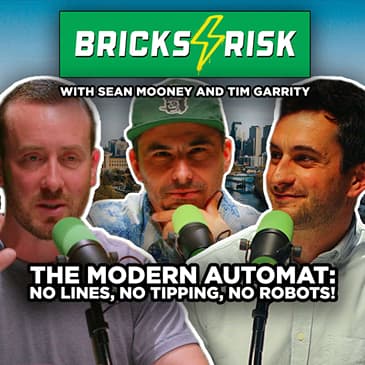
Welcome to Part II, Bricks & Riskers! As mentioned last week, Dave Arena was our first official Bricks & Risk guest to warrant two parts for his episode. I mean, the conversation was just too good not to go deeper; kudos, Dave! Anyhoo, the main reason Sean Mooney & Tim Garrity wanted to sit down with Dave Arena was to learn more about his current mission to revive an iconic brand, Horn & Hardart. While H&H was known for their automats, Dave is bringing back the brand in a different way ... amazing coffee through ecommerce. Dig into Part II as Dave shares more about slinging top-notch coffee online, how Google & Meta are helping him get the word out, and his end goal of bringing back the automat to Philadelphia.
Big shout-out to our show's loyal and dedicated sponsor: Property Management Redefined. John Sacks and his property management squad love our show and continue to support our mission of helping people through podcasting!
Our goal with Bricks & Risk is that you walk away with 1 or 2 valuable nuggets that can help build your own business. Our audience grows through word of mouth, so if you would please take a moment of your time and give us a review on the platform you’re on, that would be fantastic!
Please also help spread the B&R word by sharing your favorite episode with a friend. You can find all B&R episodes on Spotify, Apple Music, YouTube, and anywhere else you get your podcast content. We greatly appreciate your time and trust.
Until next week, keep learning and keep growing!
** Episode Shout-Outs **
→ Horn & Hardart (damn good coffee): https://hornandhardart.com/
→ Episode Sponsor, Property Management Redefined: https://gopmr.com/
📲 Contact Info 📲
→ Sean Mooney, Mooney Insurance Brokers: www.mooneybrokers.com/
→ Tim Garrity, The Tim Garrity Team: www.timgarrityteam.com/
💥 Watch us on YouTube 💥
→ YouTube, Bricks & Risk Podcast, @bricksandrisk: www.youtube.com/@BricksandRisk/?sub_confirmation=1
💥 Follow us on Social Media 💥
→ Instagram, Bricks & Risk Podcast, @bricksandrisk: https://www.instagram.com/bricksandrisk/
→ Instagram, Sean Mooney, @sean.moonee: https://www.instagram.com/sean.moonee/@sean.moonee
→ Instagram, Tim Garrity, @realestateinphl: https://www.instagram.com/realestateinphl/
→ Facebook: https://www.facebook.com/bricksandrisk
→ LinkedIn: https://www.linkedin.com/company/bricksandrisk
When I came into this, we did our e-commerce strategy. I got very excited and I was like, now I'm gonna we're doing the automat. So about a year after we started, I put together a pitch check and I was out there trying to raise money for the automatic and everyone loved the idea and no one would give me money. And I quickly realized just the disconnect of like, I have a great idea and it's definitely gonna work, but I need to convince people who are literally gonna write me a check for that. And it just didn't work.
SPEAKER_02Welcome to the podcast dedicated to real estate, insurance, and building your business. Join us as we take you along our own business building journeys with additional wisdom from our network of local and national experts. Welcome to Bricks and Risk.
SPEAKER_00This episode is brought to you by Property Management Redefined. PMR is not just managing properties, we're creating partnerships that build long-term success for property owners. John and his team can be reached at manage at gopmr.com or by phone 267-753-6005. Tim. Yes, John. Who's a good client for PMR?
SPEAKER_02Property management redefined is looking for property owners who value three things accountability, reliability, and a results-driven approach. You want to maximize returns, but still provide client and tenant satisfaction.
SPEAKER_00There's a lot of property managers out there. What does PMR do really well?
SPEAKER_02Biggest thing is they're seamless and they're worry-free. So with that approach in mind, it allows the property owner to put their trust in PMR and know that the results will be there. The other thing I think a property owner is really gonna value because they do it so well is that they have a local expert team, boots on the ground, managing your properties and your tenants' expectations every day so that you feel good about your investments.
SPEAKER_00We have millions of listeners out there. Tens of millions. If they want more information, how do they find PMR?
SPEAKER_02Right here, guys, reach out to John Stacks and his team at property management redefine. Take good care of you. All right, let's j let's jump back into H H. So again, recognizable brand name. You're like, should I do the automat? Maybe maybe I shouldn't do it. It's almost like you kind of went back to your photography roots. You're like, how do I go, how do I go small, be smart, don't invest too much time, too much money? Not not the time, don't invest too much money, and let's get it going. Let's see, let's test it. How do people like and treat this brand because it's a local brand? So talk about when you were testing HH with coffee, what was kind of like your response? Like what were you seeing or hearing?
SPEAKER_01You know, it was overall very positive. We, of course, have very big shoes to fill with this brand because of the memories and what it meant and where it is. Um it's been a really tough couple of years trying to fill those shoes and to try and convince people that we are legitimate and this is real and that we're trying to bring this company back in a way that matters and that I always think, and I don't think they're like looking down on me or anything, but I'm I always think like if the founders, Frank Hardart and um Joseph Horn, if they were still around looking at me, like who's this guy taking our names and this business that we built? Um I just I would like them to be proud of kind of what we're doing. So um that's my goal with it. And the feedback was generally really good. People were very excited. We of course have people who are like, open an automat, just this isn't the real company, or you're just using the name for this. And um so it's it's not more than the people who are very excited, though. Most of the time, one of the coolest things about this business is like people reaching out with their stories. Uh somebody sent me cool man a photo the other day of they emailed us and they sent a photo of um them as a kid with their dad, and they were sitting on a bench in New York, and a Horn and Hard Art was behind them, and he said, like, every Saturday, my dad and I would go to this Horn and Heart Art, and the email was awesome. It was very cool. And I just I stared at this photo for a little bit and I was like very few companies can transcend that transactional nature of like, here's a product, we're selling it to you. But Horn and Hard Art did, and it didn't just do that. Like, Horn and Hard Art didn't represent a restaurant to this guy, it represented his dad and the weekends with his dad going to Horn and Hard Art. Memories, nostalgia. So powerful. And so respecting that and kind of trying to have that guide our decisions is is what we're doing. Um today we're in a in a really cool spot. Um, and I can kind of talk about what we're doing today. Yeah, please. Um, not to jump the gun on your questions.
SPEAKER_00If it involves more cold brew, I'm all for it.
SPEAKER_01Yes, Mr. Mooney is interested. I will get you guys so much. I'll take the regular. Yeah, I'll take the break. You can just fill the table with swag. I should have done done that today. He can drink the the cold brew. I'll drink the regular.
SPEAKER_00I'm also so like black coffee, but I have this special place in my heart, and there's a place in Ambler that serves it up. Uh Vietnamese coffee. Oh, yeah, you do like Vietnamese coffee. It's like with the condensed milk. Yep. Oh yeah. But if I get the concentrate, I get make my own, you know.
SPEAKER_01I see. The concentrate's a good product. I'm really excited actually to hear your feedback on this because it's it's very good. Nice.
SPEAKER_00I'll be like uh Portnight. I will uh have to give you my my dead honest. I will rate it. No one gets above an 8-5.
SPEAKER_01Yeah, please give me like a weird rating too of like an 8-7 or something, some some random.
SPEAKER_00I've had them all. I've had the breezy, I've had the uh Batista had one, and and I know all my palette is like the good thing about the concentrate is number one, we're not shipping you water.
SPEAKER_01So you're not paying for shipping water. Yeah. Uh, but you can kind of make it how you want. If you want a little more, you can make it stronger if you wanted less, or if you want to use milk instead of water, like drinking the concentrate.
SPEAKER_02Yeah, well, you know what's funny about one thing, one thing he just said that relates to us when we started this podcast. Um, because I'm like a glass half full guy and Mooney's glass half empty. That's just like how we look at life. And it's great because it gives us like two perspectives with the show. I'm like too optimistic and he can be too negative. Um, but one thing he said when we started this podcast, he was like, I can't wait until we get like almost like the negative comments from people. Like almost like the people reach out to you, like, what are you doing? This isn't a real company, like, where's the autumn at? Like, you're almost getting like the glass half empty version of Horn and Hard Art. But what that tells you is that people are noticing. So there's so there's that. And I think also it's like this happened to us recently. We we've been getting more comments now, and a lot of them are negative. Yep. And I keep saying to him, I'm like, we finally made it because we're we're hitting a nerve where we're talking, we're doing a short, and it's like and it's me talking about something or assuming something or him doing the same thing, and someone's like, that's not true, or like, I don't like that, or like, no way, and we're like, oh, we love this. Like, because people care. Like, actually, that's a good way to look at it. Like, when people do that, I feel like they're doing it. Well, they're doing it for lots of reasons, but I do feel like they're actually the they care, the the serious ones, and they're like, When are we bringing back the automatic? It's kind of like you're like, I would love to do that, but we're not there yet. Like, let me let me start with this, and if this goes there, then maybe.
SPEAKER_00Well, I think a lot too with yours is the nostalgia piece of it is gonna be 75% of the people that you know you may interact with. And if I was in charge of marketing at H, I would run a long program of people sending photos of their H H days, and they pick a winner and you get free coffee or something like that.
SPEAKER_02Great idea.
SPEAKER_00Because your nostalgia tells your story.
SPEAKER_02He's got twenty more ideas, Dave.
SPEAKER_01I do. Let's just I mean I mean, we could probably use you with marketing and absolutely come in, and but I also can't pay you. So that's possible. Just get me the equity piece in the room.
SPEAKER_02I'll give you the taste tester, I'll take some shares and pre-carfing.
SPEAKER_01Pre-cold brew, yeah. Simple. I will pay you in a cold brewer. Very easy. Which from I mean, the sounds of it would actually save you a ton of money.
SPEAKER_02That's an expensive moony household. Thousands of dollars a month.
SPEAKER_00Well, if it's eight point eight point five or better, you know, make it work. But the nostalgia piece and the connectivity with P I mean, I imagine there's people like I remember the smell at Horn and Hard Art. Like, like by seeing that name, it like takes me back. And like I would I would just drive home on that every single day because people talking about what they used to love positions you as a brand that people can love. And I think that the visuality of it, like that picture you describe, is like such a fond time and being connected to such a fond brand. I mean, I think it just works so well. I have to ask, do you have like a separate refrigerator for your cold brew?
SPEAKER_01Does it have to be refrigerated? He's very interesting.
SPEAKER_00I'm not even in this uh Mooney's obsessive. I do. I so it's funny. I get these big deliveries at my house. Yeah. They're called pallets.
SPEAKER_02You're familiar with pallets and forklift forklift drops it off.
SPEAKER_00I have uh dedicated space really in my garage. It can't go in the fridge, uh in the fridge, in the house. It's the garage fridge.
SPEAKER_02Because you have three children and they wouldn't be eating if you did that.
SPEAKER_00So uh, but then sometimes when I buy it, it it does have to sit. So because there's just not enough room. Okay.
SPEAKER_02He might be busting out his credit card. He'll tap it on your phone on the Square app. It'll just go like that. Yeah. He can buy it. I'll send you some. Nice. Awesome. Uh one thing we do like to ask when we have guests is is biggest struggle. So you had put entrepreneurial struggles. So do you do you have is there like one entrepreneurial struggle or struggles that you can think of that that made you want to like highlight that?
SPEAKER_01Um okay, so biggest struggle. Uh so for me, but like personally. Yeah, yeah. Personal business? Um, so this was um the thing that I have never done before. So my last business was bootstrapped. Uh all me. I did not have investors. Um it was great in a lot of ways. And so when I started this, I knew that that was not going to be the case. So, which is also what I wanted.
SPEAKER_02So I'm not Yeah, you know, this was you did not want to bootstrap again.
SPEAKER_01Yes, I wanted the challenge of um having investors, having people to answer to, everything that came with it, um, you know, good, bad, or not. So when I came into this, we did our e-commerce strategy. I got very excited, and I was like, now I'm gonna we're doing the automat. So about a year after we started, I I put together a pitch stack and I was out there trying to raise money for the automatic and everyone loved the idea, and no one would give me money. And I quickly realized just the disconnect of like I have a great idea and it's definitely gonna work, but I need to convince people who are literally gonna write me a check for that. And it just didn't work, and I had to scrap it. And so we're years behind where I would have wanted to be with a retail location, but it's just because of how difficult it was and my own sort of lack of um my network with high net worth individuals and angels and uh, you know, institutional investors. Um, so that has been my biggest challenge and biggest learning curve was this is not my old bootstrapped small business. You know, I'm trying to turn this into a hundred million plus dollar company. Wow. So we're gonna need investors, and I'm gonna need to be the CEO that is answering to a board and investors, and that's a very different thing. So that learning curve has been a challenge. Um, I will say my response to that was to go back to the drawing board, scrap the idea. There was even like a there's a New York Post article about me out there that's like where I am quoted and saying, like, we're gonna have an automat in like a year or two. And the the article's already like two years old. So um that's embarrassing. But um being an entrepreneur. You're you're gonna win. Right. And so that was my loss. But if you overcome that, we're actually in the middle of a fundraising round right now. Um we went back to the drawing board and positioned the fundraising round around our current model to say we're not doing the automat yet. This is gonna be a really slow phased approach. So we're doing a smaller round right now just to raise money to expand our current business, add the cold brew, which we did. Um, and that actually did work, and we're over halfway funded to our goals. So that's still a big part of my life, but it was sort of that like recalibration of like, okay, what are people actually gonna give me money for? Yeah. And um, you know, our first two investors were actually members of the hard art family, which was really cool. So that's cool, man. So talking about that legitimacy piece of what we're doing, you know, it's been, and we haven't really done like a press release. This is breaking news. Uh, we haven't done like a press release or anything around it. But the that is so exciting that we have a couple members of the the family that have said, like, we love what you're doing, you are doing this true to you know their grandfather and great grandfather in some cases, and they believe in the mission. So um we're still two, three years away from an automatic, but you know, I think the business is in such a good place right now because we do have a good group of investors and people that actually care, and then we're gonna be set up, I think, really well for um you know the future.
SPEAKER_00For your business. Dope, man. Uh how does your automat get you to a hundred million dollar business?
SPEAKER_01So good question. That is a good question. So imagine um we're in the city here, so take like your normal size Starbucks, right? I don't know.
SPEAKER_00So let me let me uh the reason I asked that is because in my mind, when you say that, it makes me think that the brand or the business would actually lose steam by focusing on this. And in order to scale that, you're in a totally different ball game doing a totally different instead of just coffee or saying. Well, coffee or or or or or things that you can ship or deliver, you know, this becomes a comp this becomes a restaurant business.
SPEAKER_02Right. It's less e-commerce, it's more experiential restaurant. Correct.
SPEAKER_00So how does that play in? Like how does that, if you because you wanted to do it and you had to take a step back, but you still want to do it, how would that how do you see it in terms of implementing that to increase your velocity to get to a hundred million?
SPEAKER_01So I think the two are actually very complementary. Um what we're really doing is not focusing on coffee, but focusing on the supply chain, the logistics of e-commerce fulfillment. And that could be anything. It could be food, it could be coffee, it could be our merch, it could be whatever. You're mastering the e-commerce model. Yes, and the operations and sort of the business behind that. We have customers in all 50 states. Um in the last 30 days, we've shipped twice to Alaska. So Oh, nice. I don't know why. Was it cold brew? No, actually. Why the hell would they drink that? So, like we we have customers all the time. So outside of the Northeast, Florida, California, Texas, um, Chicago's a big market for us too. I assume that's why Illinois always shows up. Um there are some really big markets outside of the Northeast here. Sure. And we also know down to the zip code where our customers are and who's buying and where to put these locations. And when we do need to ship coffee to all these different locations, we already have the ability to do that and the knowledge on how to do that. Um, so uh it is very complimentary actually. And again, you know, merchandise is 30% of our business, um, 30% of our revenue. Um so these are the lifestyle and the brand around that. Um I think we've done a really smart job of getting there without having a retail storefront. So how we grow this um is um I there are um my my sort of idea of it is a very tactile non-screen experience. So take like a 1,500 square foot cafe, probably the size about your normal Starbucks-ish or um somewhere around there, not too big, you know, maybe a thousand to two thousand square feet, but remove the lines, remove tipping uh anxiety, and um we're gonna have probably a breakfast and lunch focus um on that, but we could even do dinner and um make it styled in like a 1920s, 1930s, like really high-end style. So when you're on your way to work or you're walking down the road, and you want to jump in for a cup of coffee or like a quick lunch or breakfast, you know, I I go to coffee shops all the time and I I'm like love muffins. I don't know why, I just I'm big, it's like cake basically, so of course I love them. Um but you go in and they're like, you want to heat it up? And I'm like, no, because I'm out of my way. Well, the automat machines um are heated and cooled. So like the items in them are already hot and cold. So when you walk in, you tap your credit card. It's already the temperature you want. The coffee, I have a really great little idea for our coffee spout. So you tap your card, you get coffee. It's a very cool automated experience. Everyone asked me about like robots too. That's not my goal. Yeah. Um, really what we're doing is we're moving.
SPEAKER_02Maybe maybe once we go to Japan, we'll see.
SPEAKER_01I'm sort of uh anti-robot. Uh so what we're really doing is removing the pain points, which is like waiting in line and just having somebody stand there and be a cashier of just sort of this very bland transaction and moving those employees to making the experience actually worth it. So um I think it's a great concept. I think it could beat other cafes and coffee shops and lunch places out there. Yeah. Um I mean, look at Panera Bread, Starbucks, like these are all big businesses. So um $10 company. I don't believe that like just because somebody's doing it means you can't, or that it's gonna be too hard to squeeze your way in. Like I think you just have to do it.
SPEAKER_02And I have a question for Mr. Mooney. I would I would love to do a part two where we deep dive into it more, or we could ask some more questions if you're good on time, and we can turn this into a two-part interview. Which we haven't done yet.
unknownOkay.
SPEAKER_02Listen. All right, so we're doing all right, so I got I got a question. Okay. All right. So so we're talking about the brand, the marketing, it's like a branding exercise we talked about. Let's start with coffee, let's start small. We're not we're not at the automat yet, but obviously you're very passionate about that. That was what brought on the interest of this whole thing. So that seems to be a goal still. You're selling to all 50 states. What are you doing for marketing? How the hell are you selling to all 50 states? I'd like to know a little bit more about that.
SPEAKER_01Okay, so that wonderful person that I told you about earlier. Um Alaska? My wife. Your wife. Uh, who believed in me. Yeah. So we um Mrs. Arena. Mrs. Arena. So she um has a completely different skill set than me. Um and we, when we had our second kid, um, she she's like highly educated, wonderful employee, incredibly smart, really good hard worker, opposite of me. So we after we had our second kid, she wanted to make a career change. She was at her job for uh almost 10 years, you know, she'd been in the nonprofit world her whole life. Um, and I was like, hey, instead of going back to work, uh, how about like I kind of need your help? Like I was struggling uh with trying to get trying to do everything we needed to do. And um so she said, fine, I'll help you out. And so she is actually our um filling the role of our COO and doing a wonderful job. And she is um, because we have a small team doing all the marketing in charge of all of our marketing strategy as well. So I don't handle it. I am not a wonderful marketer, but she is, and similar to she's managing the marketing team, yes. So and she didn't have a bad like a marketing background either. Um, but similar to me, I think, was able to put in the work to learn it and and has done that. So obviously.
SPEAKER_00Is she a better marketer than you are a photographer?
SPEAKER_01She's a better everything than me. So it's yeah. Um I got pretty good as I was a very good photographer, though. Yeah, um don't shortchange that.
SPEAKER_00I was saying early on, like she started out being CEO on marketing.
SPEAKER_01All right, so a bit.
SPEAKER_02Thing for us is our paid media strategy. So we do yeah, I was gonna I wanted to dive deeper. So what is the marketing team doing? Like what kind of paid marketing, sweat marketing, creative marketing, content marketing? Like what are they doing?
SPEAKER_01So, like all e-commerce brands, we have to burn a lot of money on paid advertising. On meta is a big one, like Google and Meta are the big ones. Um, our biggest problem is everybody remembers this brand. There are millions of people that remember it, but a very small percentage of them actually know what we're doing and why we're bringing it back, and that we're even back. Um so just getting that out to people, getting in front of people is the challenge. Um the positive thing with the brand is we can acquire customers for much cheaper. So, and that's part of my pitch, my my investor pitch. Absolutely. So the average, if you look at a coffee brand, like their average cost of acquisition is probably 30, 40, maybe 50 bucks. Oh, really? Um, it's very expensive. And ours is like 11. And you know, like I ours is like maybe I I think last month maybe it was like 15 bucks, and we were like, gosh, it's so high.
SPEAKER_02Oh my goodness, you think it's 11 because it is a nostalgic classic brand, so that when people know that you exist, the repeat or the light bulb going off in their mind be like, oh my gosh, Warner Hard art is back.
SPEAKER_01Yes, it's the brand awareness is is already there in a lot of cases. So we're able to advertise and get customers very cheaply compared to I think a lot of traditional e-commerce brands. Like so interesting. These even these big e-commerce brands. I talked to somebody recently and they're they have a huge e-commerce brand. Um, and they were talking to me about how the one year they the company did about 70 million in revenue and they spent 40 on meta.
unknownWhoa.
SPEAKER_01So that is what 40 mil? Yeah. So when you look at when you're scrolling on Instagram and Facebook and you see these ads, like this is millions of dollars going into these, and they're having to hit people multiple times, as we do too, to get a customer. But it is very noisy. It is very hard to get someone's attention, and we struggle with it too. Um you know, we do very well with people who remember the brand, but um, like with this cold bros mentioning, that's a product where we're trying to hit a younger generation. Um, we are having a harder time getting that across in our paid ads to people who, you know, to say, like, here's why you should care about this brand. Um, but we I are doing a really good job at it. Um but it's it's tough, but yeah, it's uh the e-commerce is uh it's a tough, tough industry, tough business.
SPEAKER_02All right, so my my mind's working a little bit. Have you ever considered doing because it is kind of a local brand, have you ever considered doing any like in-store tasting? Like if someone could like if you could go to a grocery store, like let's say you got in Whole Foods or something like that. I'm just throwing this out there. And then you're like, cool, can we stand by? Can we stand right around our and we can give people a little taste of the cold brand? And people would the amount of people that would walk by you and see this brand that they're like, oh man, I remember that. Yeah, my grandmom used to take me. Can't do it, or whatever.
SPEAKER_00Can't do it. The man hours, the pat I'm just asking. Yeah.
SPEAKER_01Because it is I appreciate the question, and also you knowing how hard uh stuff like that is. So we're gonna start doing it more. Um, we do have like the ability and and the bandwidth to do more of that stuff. Like in-person stuff? Yeah, in fact, we have something uh coming up. We have two events coming up from now until the end of the year that we're working on. Um, and one of them is with a store here in Philly, kind of locally. So that would be really cool.
SPEAKER_02Stuff like um You should do the coffee for our upcoming event at the Ambler Theater. Yeah, let me know. Hey everyone, this is Tim, your favorite bricks and risk co-host. But don't tell Sean. I hope you're enjoying this episode, and I'll get right back to it in a moment. Our audience grows through word of mouth. So if you would please take a moment of your time and give us a review on the platform you're on, that would be fantastic. Please also help spread the BR word by sharing your favorite episode with a friend. We greatly appreciate your time and trust. Now, back to the show.
SPEAKER_00Yeah.
SPEAKER_01Hey, wait, I heard about that.
SPEAKER_00Yeah. Okay. Um I have an idea. You heard about it too. Yeah, it's great. Um what I would do is I if I this is like part two of if I was in I would do the nostalgic pictures because I think that that really gets people soaked into your brand. But I would only do coffee, ones that involve coffee, because then you're telling people without telling people that you are hard on that does coffee. And you lead them down that trail. That would be number one. Number two, I would do a deal, because I'm a big collaboration guy. I think collaboration now is like the way it goes. I would um if I was your like booking agent, I would um is that what it's called? Whatever it is. Are you available for these things? Do you keep? I mean, you're you seem so good at it. I've so we're having lunch with your wife by the end of the week. If I was uh in charge or if I was working for your wife, I would recommend I would I would call Bassett's ice cream and I would say, hey, do you guys have a coffee? Dude, that's a really good idea. You're a Philly brand. I've talked to them actually. Holy cow.
SPEAKER_01So that's yeah flavored with H H. So it's it's hard to do. Like so they were um they were like, yeah, well, we there's a lot of uh like regulatory things around their products and um and at the time we didn't have it have the bandwidth for it. But yeah, so their ice cream is on the we'll see.
SPEAKER_00I don't, you know, we but we actually have a friend that's in North Jersey that does ice cream.
SPEAKER_02Yes, we do. Right in the middle point between Philly and it's a local high-end restaurant focused ice cream maker. So they go in the high-end restaurants in New York and they make these specialty ice creams for the high-end diners who want this like flavor.
SPEAKER_01We're very very of their own little like ice cream shop. Is that yeah, they do.
SPEAKER_00No, no, no. They're wholesale. They they do like a retail shop.
SPEAKER_02They have a neighborhood shop, and then but they're big business, I don't know what percentage it is, but most the majority of what they do is selling to restaurants, delivering this local generational homemade ice cream to higher-end places in New York that they're like, I don't want, you know, nothing against Bastitz is wonderful. They want even more premium than that. They want this super unique high-end premium ice cream. They won't have to keep talking about this offline then. That's a good uh that would be a good connection. I think both of you because it's such a New York Philly brand. Yeah, and he's right in the middle. That was really good.
SPEAKER_00Uh I mean, I you want me to just keep going. I got I got another car.
SPEAKER_02This is why this is gonna be a two-parter. Um, so one thing too that you said that I thought was very interesting. So we asked for like tips for our listeners, watchers are bricks and riskers. Uh that you've always found that the most successful people aren't the smartest. They're just willing to work the hardest, which I know this guy's really gonna appreciate this one. So why that tip? Uh well, I'm I'm not very smart.
SPEAKER_03So no. That was awesome.
SPEAKER_01That was that was pretty self-deprecating. But um, that was great. Yeah, I so I um it's just uh that's just what I found, you know, and that's actually what got me into entrepreneurship. Um I was a car salesman at one point in my life. Um best uh one of the best jobs I've ever had just because it was such a wonderful learning experience. Education that's such a pure hustle job, too. It is, and it's very, very difficult. Um, you know, it was long hours. Uh it was show up every morning and cold call people. And then, you know, the people that walk through the door like learn how to and it was for a luxury. I worked for Audi, so I I sold Audi's. Oh, nice, and I got really into the brand, loved it. But these were people that I had never really interacted with before buying hundred thousand dollar cars or sometimes not, but um, you know, I had to be able to, and I was like 20, 21 at the time, wow, and had to be able to sit down with somebody and convince them that I knew what what I was talking about and that they should trust me, even though I'm a car salesman. And um I, you know, basically did what we're doing. Like, I got to meet hundreds of people over the couple years I did this. I met hundreds of people who were doctors, lawyers, business owners, entrepreneurs, people who were doing well enough in life to buy an Audi. And I was seeing their credit applications, I was seeing how much money they were making, and I got really into just asking people all the time, like, how did you start your company? How did you get into being a doctor? How did you do this? Like, how I just wanted, again, just was very curious, just wanted to learn. And the through line of a lot of entrepreneurs that I talked to was I would sit across from them, and not to say that like they were dumb, it's just like a lot of times I would sit and be like, Oh my god, I could do that. Like these people weren't, you know, geniuses that you know they were just people who work crazy enough to start the business and to do it and to hustle. And and so that was sort of um what actually made me decide like I want to work for myself when I left car sales. That's when I got my real estate license because I wanted to be an entrepreneur because I just saw all these people do it, and I thought, oh my gosh, you know, a lot of these people are right place, right time, and they're they're very smart people and they know what they're doing, but they're not like Steve Jobs. You don't have to be Steve Jobs to like have a successful business. Yeah. Um, you just have to be crazy enough to do it. So did you did you go to college? Did you bypass that? I bypassed it. So I was not very good at school. Um, I don't there was there was no metric uh in school that I was good at good at. So um when I was 18, my girlfriend at the time, my now wife, um was going off to college, and um I was like, that's not for me. So I joined the military. So that was my uh Oh, no way. Thanks for your service. And it wasn't that intense.
SPEAKER_00Uh so that's a choice. Yeah.
SPEAKER_01Yes. It I you know, it got me out. I needed to get away, you know, and so that was uh that was how about when you were younger?
SPEAKER_02So when you were growing up, were you entrepreneurial as a kid or were you just willing to work? Like how'd you how'd you get into working hard?
SPEAKER_01Um parents I guess I you know, I uh I I wouldn't call myself entrepreneurial. I of course like I when I was little, I like passed out flyers around my neighborhood to do like lawn work for some of my neighbors, and I like watered plants for a neighbor and they paid, you know, I so I always was like, I guess kind of into that, but I never thought of myself as entrepreneurial until much later. Um but yeah, again, I think I'm you know, uh school was just I never did well at school. Um, but I'm very good at I love learning new things. So you'd think like, well, why weren't you good at school? There's new things. But by the time I was a teenager, you know, 14, 15, I sort of felt like I'd learned all that I could from school and maybe it wasn't challenging enough or whatever for me. Um but I was just so ready to get into the workforce. I was just so excited to take what I knew and actually apply it to real life and my life. So um, you know, my first job was uh I think at 14. Um and it was a job that my mom had gotten me that I could like walk to was near my house. And then even when I was 16, um, I worked at a gas station because my mom got me that job too. She was at the gas station that was again like walking distance from my house and was like, Would you hire my son? And they were like, sure. Um and that was a great job, by the way. Uh it was in Pennsylvania.
SPEAKER_02I've had a gas station before, fun fact.
SPEAKER_01Yeah, it was it's I loved it. It was also like a good um, maybe that was really my first um view of entrepreneurship. The two guys who had it was a tiny little getty here in Pennsylvania, and the two guys that had owned it um were just awesome. They were just good guys. And uh they had a little mechanic, one was a mechanics, they had a little mechanic shop, and then it was gas, and I pumped gas, and that was um I did that until I was like 18. Um so I was just excited to learn and work and um how I got into the military was uh when I was working at that gas station, those guys they were all volunteer firefighters, and so they were really into that, and so I kind of got into it, and there was a fire station again walking distance from my house, so I became a volunteer firefighter, and that was really cool. But then there was an ambulance, a paid, like a an ambulance, a pretty busy ambulance, uh, that ran out of the fire station as well. And so I got obsessed with the medical field because again, it was just I just want to learn new things, like I'm just like craving sort of, and it it was very awkward as a teenager because I was jumping around from thing to thing, and everybody else, I have a lot of friends who like they knew what they wanted to be as kids, and that was just not me. I'm the opposite. So um, although that was challenging, like looking back, it was kind of neat. So um when I was 17, I ended up going um to get my EMT license at night, so I went at night to get that and got that, and then um that's why I joined the military. I was a medic. So I thought, you know, everyone else is going to college, I have my EMT license, I'm loving this medical stuff, I'll join them so I joined the Air Force um to be a medic. So just to get just to further you know my education at the time and that sort of field. Um, but then when I realized I didn't want to do that, so I wanted to do other things. So had to go through it first. Yeah.
SPEAKER_02Very cool, man. Awesome. And uh let's see, so one thing you also put here is that um every day is something new, which is kind of like some of the things you were like just going over. So when you were like in high school, what was it that made you realize that like working was more your passion and like furthering your education, like kind of like you said, like everyone else was not?
SPEAKER_01I don't know. I don't know if there was like um I was a pr I was like a pretty dumb kid too. So I mean I don't know if there was one thing, you know, I was a pretty reckless teenager. Um so I don't know if it was like the most logical decision. Yeah, I I don't recommend it. Uh like stay in school kids.
SPEAKER_00Um if my kids tried half the stuff that I did, I'd beat the crap out of them.
SPEAKER_01Yeah, so I I think I was just um I wanted to be independent so badly. And so I um I think money was sort of that way. Like freedom. Yeah, I was so ready to dump my, you know, I didn't want to be on my parents' phone plan, and I didn't want to like, I just wanted to be my own individual person. So um working and getting money, I think, was how I filled that void at that time.
SPEAKER_00Let's get back to the nuts and bolts of the business. You're in 50 states, uh, a lot of spend on uh uh customer acquisition, social media, and stuff. What other avenues are you using to to get new clients?
SPEAKER_01So that's the main one right now, because we uh it's it's so easy to get distracted. And we're really trying to grow uh the revenue of the e-commerce business. So right now, paid ads. Um, but we are actively as we speak, because we do have some money now coming in from this fundraising round we're doing um more partnership ads, more interesting um online advertisements, and a focus in the future too of going into wholesale. So of going into retail, like grocery stores, um, some of those of those mom and pop shops. Um right now we're in like probably five to ten, you know, little gift shops around the country. Um somebody just saw our coffee, then there's this little shop in South Carolina. Yeah, it's in Charleston, uh sweet Charleston. Shout out to them. Um they have our coffee down there, and somebody was down there on vacation was like, Oh my gosh, your coffee's here. And I said, Yeah, that's like so that is a focus of us of actually going into some of those channels. It's harder though. Um, the margins are really tough. Like, we don't make any money from it, yeah. To be honest. Um but it's advertising of sorts, you know, if your brand is down there, brand recognition, building the brand. Yep. And it helps there's a couple things that I um, you know, I I didn't know coming into this, but obviously learned very quickly. The volumes that that you know consumer products need to buy at is really insane. And if you can't buy at those volumes, your prices are crazy. So, like, for example, our bags, uh the the bags that we put our coffee in. When we started this, we were paying two dollars and seven cents per bag. Just for the bag. Just for the bag.
unknownWow.
SPEAKER_01So wait, what? Because I was buying like a thousand at a time. Yeah, you gotta buy them. Um so right. So now we've that number is like 70 cents, and that's very low for us, but it's still 70 cents per bag versus some of these bigger brands, it's like three cents.
SPEAKER_00It's margins.
SPEAKER_01Um, that's those margins. So when we look at like getting into a grocery store, um, we don't have the margins for right now because if we're selling a $15 bag of cost, slotting fees, and there's all these fees.
SPEAKER_02Wholesale sale, it's not direct to consumer.
SPEAKER_01The retailer wants 40, 45%. So if if the coffee bag is our coffee is $15 a bag, so I would need to sell it to a grocery store at $750, $8. And then they're not gonna buy it direct from us, most likely. They're gonna buy it from distributor, which wants 25%. Yeah. Um, so like we would have to be producing the coffee for like three dollars a bag, and we just that's not even close to what we're producing it for. Yeah. Um, so it's it's tough, but um hopefully again, with like we were able to sort of increase, we've been able to increase our volumes and get our margins a little bit better. So that might be an option for us.
SPEAKER_00Well, it's also makes me think that if you're uh doing the paid media and your customer acquisition cost is 11 bucks, why really go deep into another avenue that might raise that to $20. You know what I mean? But but it there is a tipping point that becomes okay, well, we need to do this or we need to do that.
SPEAKER_01Yeah, and it also is just our to our end goal. You know, my end goal is to open an automat. Um really what we're doing is we're trying to get our revenue high enough that you can invest in yourself kind of thing. Yeah, and and do we're gonna have to do another fundraising round for the automatic, but it's gonna be much higher, you know, it's gonna be in the couple million dollars. And I've got to be able to show that, hey, this brand matters, it's relevant, it's a a real business, and to do that, you know, our revenue has to be high and we have to be profitable. So um, you know, we kind of have to pick and choose like, okay, does this actually help us achieve that goal or not? Um, you know, I'm not actually trying to become a national grocery store brand, whereas that is the goal of a lot of CPG consumer packaged good products. Um, that is their only goal is to get into Target and Walmart and just play the volume game.
SPEAKER_02They want to be national global. Here's a question Have you explored at all the um business slash office coffee market? You know, so office traditional offices have coffee and they have suppliers that bring them the coffee you know every week or every month, however often they get it.
SPEAKER_00WB Mason. Exactly. Yep.
SPEAKER_02Yeah. Have you looked into that model as like a non-grocery store model? Maybe it's got a better margin, maybe the packaging is not as expensive. Like, is that have you explored?
SPEAKER_01Very competitive. Um even like restaurants, so when you're at a restaurant and you're like, hey, can I get a cup of coffee after dinner? That it's so competitive. And I think I read a stat like a year or two ago that was of the coffee, that is like three percent of the market. So it's a very small percentage of coffee sales and coffee drink. Uh-huh. That's the right way to say that. Sure. Um, and it's very, very competitive. And um, you need a real heavy distribution capability, and like for restaurants, let's say, they expect a lot of times that you provide those machines too. So they'll say, like, well, I need an espresso machine, and they're $20,000, so we'll rent it from you, but like, I have to go buy that machine, and then I've got to rent it to a place, and then I've got to teach them how to use it. Interesting. And it's it's a really hard um business. And obviously, some people are very successful at it. Starbucks, Lock Loam, uh, even Rival Bros in the city here. I'm starting to see them everywhere. Um, but they have like salespeople too out B2B markets, knocking on doors, knocking on restaurant doors and one handshake at a time kind of thing. Yeah, yeah. So it's very hard. And again, do I want to be in restaurants and offices? Yes, if it kind of helps. I'm not saying I wouldn't, but um, it's that like time versus reward thing of I want to I want our coffee in my own restaurant. Yeah.
SPEAKER_02Um it sounds like the D the D to C uh direct-to-consumer uh strategy is what you're focused on. So how do we get our coffee in front of more consumers so that they just buy it through our website, let's say. Um, and then uh obviously the goal of being like, hey, one day we're gonna open up the Automat as well, and then the coffee will also turn into more business through the Automat model. Even if it was one, you could technically increase the coffee sales because the amount of people that are coming in to eat there will be drinking your coffee and they're like, huh, how can I buy the coffee? And then they just buy it on their own.
SPEAKER_01Yeah, and the brand gets a ton of press uh because of that. So when we do have an The New York Times called me three months ago and they were like, Hey, love what you're doing. We want to do an article. And in my head, I'm like, This is amazing. Oh my God, we're going to be in the New York Times. And they were like, and they were like, Do you have an automat? Is it opening? And I was like, Well, no, not really for like a couple of years. And they were like, Okay, call us when it's open. I was just on Bricks and Wrist. Yeah, I was like, I don't know if you know that podcast. And I'm crushing it through that. So, you know, there's a lot of like, I think, yes, when we do have an automatic, there's going to be a ton of opportunity to expand. And that's why I think they're complimentary. Um, we'll have a lot of opportunity to expand the e-commerce business.
SPEAKER_02It's like I'm already thinking for Dave to be like, who do we know in an in a complimentary business that would want to talk to him about coffee?
SPEAKER_01I'm sure we can She'll come up with it. Just now that I've been here. Exactly.
SPEAKER_00Once I taste the cold brew, it's gonna it's gonna hit it.
SPEAKER_01I'm so excited for this, by the way, because I'm a lot of cold brew. Such a good product. It'll be on every episode. I'm not a cold brew drinker, I'm not a nice coffee drinker. I drink hot coffee even today when it's hot. Yeah, so do I. But the cold brew is so good. It's really really so I'm excited to hear your opinion. It's so good.
SPEAKER_02One sip. We'll see if it passes. One sip challenge. The Mooney Palette. We should do like a blind, like a blindfold and like taste like taste tests, like three. We'll we'll put your standard on there, we'll throw H and H and then we'll throw an imposter.
SPEAKER_01Yeah, that's a great idea.
SPEAKER_02Yeah, I'll make the come make the third one like lemonade.
SPEAKER_00What are your five uh your five biggest markets that you're in? I know you're in fifty states, but do you have primarily like five areas where you just do really well?
SPEAKER_01PA, New Jersey, New York, Florida, California. Wow. California. In that order, I think. And California had nothing to do with H H. No, I think it's it's like Northeast transplants that you know they move and you know. Boston yet? You're not you're not uh you're not reaching the Boston people yet? Uh we do ship a lot there, but not um but those would be our top five. And then I think probably six is um uh Texas or um Chicago. I think like Chicago is a big market. We ship a lot to Chicago.
SPEAKER_00Do you do any Instagram influencers in those markets? Not yet, but stay tuned.
SPEAKER_01We have more. We have Instagram influencers are crazy because.
SPEAKER_02Mooney can be your Philadelphia influencer.
SPEAKER_01When you I'm not into this world, you need to pay him, though. I mean, these I should have been an Instagram influencer. Like these people are charging tens of thousands of dollars for like one video that we can use for 30 days and that's it. It's insane. What about non-influencers? Um just regular people, you mean?
SPEAKER_02Well, I mean Sean and Tim in Philly.
SPEAKER_00Not like Instagram influencers are like a hundred thousand followers, but someone like that you could just you wouldn't have to really pay. You could be like, hey, we've done it um.
SPEAKER_01We no, but we actually so we that's a uh when we're talking about marketing strategies, so that is a focus like this month. We're doing it right now. We have a couple of influencers making videos right now.
SPEAKER_00So um so a couple reasons why I I I kind of go down this room.
SPEAKER_02Here we go, folks.
SPEAKER_00One of the aspects that you said was the cold brew and a younger demo. How do you so if you're not Starbucks because all this young demo loves Starbucks, what's another way to gain traction or eyeballs or whatever you want to call it with the younger like how do you hit home with that demo? And I gotta believe it's a TikTok or an Instagram or something like that. That's a great question.
SPEAKER_01And I don't have an answer for you yet because we are trying multiple strategies right now. So what so for one, I think it's a um some people we're just not gonna reach, right? And that's okay, because some brands, some right, you know, uh somebody, a very smart branding guy, told me recently the way to think about branding is really not um your own brand, but it's people are buying products because they're buying it because of what they want it to say about them. Yes. Correct.
SPEAKER_00So we had our brand versus logo, and I said you wear Nikes because you don't want to wear a Reebok because someone will think he wears Reebox.
SPEAKER_01So there's a it's what you are telling the rest of the world, your own personality is portray.
unknownRight.
SPEAKER_00If I were creating a brand and I said, like, if I could create a brand and put a skeleton with a top hat with an Andre the Giant face inside of that hat, what would I be telling people that I want them to think of me? That you're rather that's how I would come at it.
SPEAKER_01So for us, there's there's some coffee companies that do this really well. Um flavored coffees. Yeah. There's some amazing, you know. I'm thinking of one in particular that has like skeletons. Um, I know that brand. Yeah. I don't I guess I can say I'm sure I don't know. Bones coffee. Oh, I thought I am like advertised, but I looked at the. Deathwish was the other one I was thinking. Um Deathwish is another one. H people bones, they do a phenomenal job of their brand and what that brand says about you when you buy their product or the you show you're buying the product. Like you want people to be cool. They want to be cool. But their coffees are like flavored, and they're just that's not our customer. Right. So we are basic, high quality, not coffee snobs, like you know, old school. So um the way we do that, so like we're we approached an influencer who has uh an Instagram account for like old houses and old buildings, and his whole and he has a lot of followers actually, but he tours like mid-century homes or or old buildings, and he does a lot of really good videos on old stuff. So like the people that follow his account, correct, that's ours. If if you like old stuff and you are you don't want to buy into today's fad, you know, that's really like what our coffee says about you is this heritage brand that stood for quality, old Americana, as you were saying. Um, so that that's kind of like that's what we are, and it's very hard, and we haven't done it yet. Like we're we're still it's a work in progress, but we want that's what we want our brand to say about it is this is authentic. We're not chasing fads, we're not chasing the latest flavors.
SPEAKER_02The cool is in the nostalgia. Yeah. Uh here's a question. You you own the brand yourself? Is it like you you own? I'm the majority shareholder, yes. Okay, so you're the majority shareholder. You ever see are you an Instagram guy? Mm-hmm. Okay, so you flip through Instagram, you get these uh I get these ads sometimes for like all these like nostalgic t-shirts.
SPEAKER_01Yes, I get them too.
SPEAKER_02Can you throw H H in there and go to them and be like, hey, can we throw some H H shirt in the U.S.
SPEAKER_01We have some cool t-shirts uh designed by yours truly. Uh right.
SPEAKER_02So I yourself to be a t-shirt designer too.
SPEAKER_01It's pretty impressive. Yep, yep.
SPEAKER_00You have a background in photography, so I do know that.
SPEAKER_01Yes, all of our website photos are me in my own kitchen. And in my own house. And in my own house. And if there's a person in it, it is uh my wife, Kim. That's uh Kim. Shout out to Kim. So shout out to Kim. Um, she is our hand model marketing. Um yeah, so that I get those two because we're kind of the same. Instagram realized like uh you're the same, you're into the same kind of stuff, which is authentic, nostalgic stuff.
SPEAKER_03Yeah.
SPEAKER_00And it plays perfectly as you're saying, the um guy who's fixes the old houses or does the tours of the old houses like rocking the suspenders. Yeah. Um I would go a million percent in that angle. Yeah, yeah. Because like hand curating the people that have your vibe. It's a it's the target demo that you want to hit. Um it's they're they're telling a story of times it used to be. It's just a very your your cost for working with that person is going to be a million times less. And it's be the official drink of being of B and R.
SPEAKER_02Well, you just gotta bring in some cold boo from me. I'll drink it on the show.
SPEAKER_00To be quite honest, we have had replacement of coffee look into as a way 60-70% of our episodes. True. As a way to like maybe try to spur a way to get free coffee from said coffee company.
SPEAKER_01I should have done this today. I'm like really kicking myself that I ran out of the house this morning without bringing stuff to put on the table. And we do have props. So we'll get better at this. We just met each other. So I will do it. I'm gonna get you some like branded glasses so you can have your cold brew. You can have a little thing of cold brew sitting here. We will totally drink it. We will be the sponsor.
SPEAKER_00We we can do an open with the like you said, with the blindfold uh.
SPEAKER_02Very cool. All right, so the quote was great that you gave us. The readers of today are the leaders of tomorrow. Is that is that a Dave Arena quote or is that someone else? And what wasn't why why that quote?
SPEAKER_01Okay, so that was um oh man. Sorry if you don't know. I'm gonna blank on his name. I I'm just having so he wrote um Tim San Tim Sanders. Tim Sanders. I heard him talk years ago back when I was a real estate agent. Um, and he he was one of like the first 20 employees in um I think it was like broadcast.com, one of Mark Cuban's companies. So he was in there, did very well, he became an author, and he wrote Love is the Killer App. Awesome book. It I think it's very it's like gotta be 15 years old at this point, but um it's still hits. So great little book. Um and he said some really smart stuff in there, like uh another one of his quotes is I think your net your network is your net worth. I thought that was really I'm realizing that today. Yep. Um the one that stuck with me at that time, because again, I I didn't go to college, you know, he said the the readers of today are the leaders of tomorrow. And he referenced like Mark Cuban, who reads too much. Uh no, but I don't read that much, but like he's reading like 40 books, you know, every six months or more. Um to me, it was sort of like, aha, okay, all these, oh you know, I'm up against all these guys getting out of business school and coming out of Wharton and or these Ivy League schools with business degrees. So who the heck am I thinking I can create a company that competes with them? And to me, it was like, aha, I'm going to outlearn them as an adult. Because I think what and what his point kind of was was that once people get out of school, they really stop learning. Like, how many people are really reading even five useful business or career books throughout the year? Like it not a lot of adults, actually.
SPEAKER_02And so Especially not a lot of corporate America people, because they don't have to, they have their job.
SPEAKER_01Yeah. And when I was um at my last job running around photographing houses, driving 25,000 miles a year, I signed up for an Audible account, and that was like, you know, I would be in the car for five, six, sometimes seven hours a day, um, every day, five days a week. And I was just go through I was going through books like crazy.
SPEAKER_03Yeah.
SPEAKER_01Um, and I'm sort of an audible learner, so like to me, I could I could listen and pick it up, whereas reading a physical book is harder. Yeah.
SPEAKER_02Um I don't like reading books.
SPEAKER_01Yeah. So I thought the quote was very powerful and it was really smart, and it really um, you know, kind of got me motivated to keep going, keep learning, and just do that through books.
SPEAKER_02Very cool, man. Awesome. All right, so great interview. This is literally going to be our first two-part guest interview. So you're the first one.
SPEAKER_00And we have to shut it down like we could just keep going. Yeah. More ideas.
SPEAKER_02I know. It's like when we've already, yeah, this is a solid.
SPEAKER_01I'll go forever, too. I yeah, business is like, you know, the one hobby of mine.
SPEAKER_02So it's I could talk about it all day. We started a business podcast. We know. Um, so before we shut this one down, why don't you tell our bricks and riskers where they can learn more about you and everything you got going on?
SPEAKER_01Yeah, so uh hit me up on LinkedIn, uh David Arena, like arena football, a r-e-n a. Um, you'll see me and uh check out horn and heartart.com. Sign up, even if you don't buy something, follow along with what we're doing or follow me on LinkedIn. I'm I'm starting to post very regularly on there. Um and just uh reach out and say hi.
SPEAKER_00So if you were to make a prediction uh today of when the of when because he already had a prediction. Yeah. So we're gonna re-predict as a date for the first automatic so we can get it on video. What is the date of the first automatic?
SPEAKER_01And feel free to be conservative. So 28 or 29. I'm gonna say 29.
SPEAKER_00Okay.
SPEAKER_01So three years.
SPEAKER_00So that's kind of Will it be in Pennsylvania if you had a crystal ball?
SPEAKER_01Uh yes, I think Philadelphia, so it I should have given the whole history of the company here, but um, it started here in Philadelphia in 1888. It was a small little lunchroom. They opened up the first automat at Eighth and Chestnut. It's still the building is still there, identical to how it looked. The automat sign is still there. Get out of here! And what yeah, and the building owners who is it it starts with the P starts with the P management. They they just invested in TMC. I can't remember, but they just invested in that sign, so it lights up at night. The original automatic so that one opened in 1902. It is for lease, and I talked to him about it, but uh it's it's huge, it's 10,000 square feet. But the original downstairs of that building is looks the way it looked when it opened in 1902. Could you buy the sign and some of the lockers and then like I actually have some of the lockers? Oh damn. I have a lot of uh historic artifacts and things like that, so that's been one of my quests is collecting stuff so that the company can own this uh one day. But yeah, so I think Philadelphia, it started here, it didn't expand to New York until 1912. So it was 10 years after the original automat opened here. Uh, they went to New York. And New York took off. That was their biggest market. But um, obviously I'm local here to Philly and um, you know, it probably somewhere around here. Yeah.
SPEAKER_02Awesome, man. All right, that's all we have for this one, folks. Thank you for tuning in again to another episode of Bricks and Risk. Next week. Thank you for joining us on another episode of Bricks and Risk. Our goal is that you walk away with one or two valuable nuggets, and we greatly appreciate you sharing your time with us today. You can find all BR episodes on Spotify, Apple Music, YouTube, and anywhere else you get your podcast content. Until next time, keep learning and keep growing.