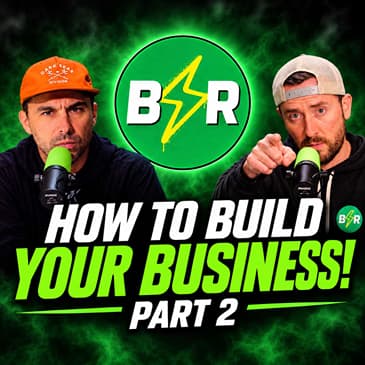
Welcome . to . 215 . Labs . folks. It took 3 years for Sean & Tim to cut their podcasting teeth in a professionally managed studio for them to be ready to build a set of their own and produce Bricks & Risk themselves. And ... what better way to kick off our new studio endeavor than with a 6-part business miniseries titled: How To Start A Business. In Part 2, we go over Getting Started & Formation. Go solo? Partnership? Also, don't forget to get yourself a good accountant from the start; he/she will be worth every penny. Jump right into this small business banger, Bricks & Riskers!
Big shout-out to our sponsor, Property Management Redefined. John Sacks and his management squad love our show and genuinely support our mission of helping business-minded people through podcasting!
Our goal with Bricks & Risk is that you walk away with 1 or 2 valuable nuggets that can help build your own business. Our audience grows through word of mouth, so if you would please take a moment of your time and give us a review on the platform you’re on, that would be fantastic!
Please also help spread the B&R word by sharing your favorite episode with a friend. You can find all B&R episodes on Spotify, Apple Podcasts, YouTube, and anywhere else you get your podcast content. We greatly appreciate your time and trust.
Until next week, keep learning and keep growing!
** Episode Shout-Outs **
→ Panorama Motions: https://www.panoramamotions.com/
→ Episode Sponsor, Property Management Redefined: https://gopmr.com/
📲 Contact Info 📲
→ Sean Mooney, Mooney Insurance Brokers: www.mooneybrokers.com/
→ Tim Garrity, The Tim Garrity Team: www.timgarrityteam.com/
💥 Watch us on YouTube 💥
→ YouTube, Bricks & Risk Podcast, @bricksandrisk: www.youtube.com/@BricksandRisk/?sub_confirmation=1
💥 Follow us on Social Media 💥
→ Instagram, Bricks & Risk Podcast, @bricksandrisk: https://www.instagram.com/bricksandrisk/
→ Instagram, Sean Mooney, @sean.moonee: https://www.instagram.com/sean.moonee/@sean.moonee
→ Instagram, Tim Garrity, @realestateinphl: https://www.instagram.com/realestateinphl/
→ Facebook: https://www.facebook.com/bricksandrisk
→ LinkedIn: https://www.linkedin.com/company/bricksandrisk
The number one thing for me was I don't want to be faced with losing my job again. Because that that's what happened. I actually been fired from an early job, one of my first jobs out of college.
SPEAKER_01Friendlies?
SPEAKER_00Not friendlies.
SPEAKER_01You weren't fired from there?
SPEAKER_00Nope. It was uh it was a beer distributor. Shall remain nameless.
SPEAKER_01Yep.
SPEAKER_00Again, not to talk trash, but we can everyone knows. I would
SPEAKER_01have fired you. Yeah. Honestly.
SPEAKER_00You're like, why why did I hire you? Welcome to the podcast dedicated to real estate, insurance, and building your business. Join us as we take you along our own business building journeys with additional wisdom from our network of local and national experts. Welcome to Bricks and Risk.
SPEAKER_01This episode is brought to you by Property Management Redefined. PMR is not just managing properties, we're creating partnerships that build long-term success for property owners. Sean and his team can be reached at manage at goPMR.com or iPhone 267-753-6005. Tim.
SPEAKER_00Yes, Sean.
SPEAKER_01Who's a good client for PMR?
SPEAKER_00Property management we define is looking for property owners who value three things accountability, reliability, and a results-driven approach. I want to maximize returns, but still provide client and tenant satisfaction.
SPEAKER_01There's a lot of property managers out there. What does PMR do really well?
SPEAKER_00Biggest thing is they're seamless and worry-free. So with that approach in mind, it allows the property owner to put their trust in PMR and know that the results will be there. The other thing I think a property owner is really gonna value because they do it so well is that they have a local expert team who's on the ground, managing your properties and your tenants' expectations every day so that you feel good about your investments.
SPEAKER_01We have millions of listeners out there.
SPEAKER_00Tens of millions.
SPEAKER_01If they want more information, how do they find PMR?
SPEAKER_00Right here, guys, reach out to John Sachs and his team at Property Management Redefine. We'll take good care of you. Hey everyone, welcome to another episode of Bricks and Risk. I'm Timmy G.
SPEAKER_01And I'm Sean Mooney.
SPEAKER_00So you can do the and I'm Sean Mooney because guess what? These are our mics, brother.
SPEAKER_01I could do and
SPEAKER_00you could do WEM BC.
SPEAKER_01Exactly.
SPEAKER_00Exactly. All right. So episode number two, 215 Labs, six-part mini-series titled How to Start a Business.
SPEAKER_01Yes.
SPEAKER_00All right, let's be honest with the folks here. Why are we doing a six-part mini-series?
SPEAKER_01Uh because you demanded it?
SPEAKER_00That's that's one reason. Give me another reason.
SPEAKER_01Tim demanded it?
SPEAKER_00No, it was to buy us time to give us a month and a half of runway at 215 Labs with our homeboy Josh behind the cameras and the Tim Gardy MacBook recording us at 215 Labs. So it gave us a month and a half to kind of figure it out, work out the kinks, and said, look, if we have six weeks of runway, we can there then very confidently start booking guests, and therefore we're off to the races at 215 Labs.
SPEAKER_01So we're renting a dungeon.
SPEAKER_00Yes.
SPEAKER_01Josh is with us in said dungeon.
SPEAKER_00Correct.
SPEAKER_01And that was the birth of 215 Labs.
SPEAKER_00That was the birth of 215 Labs. I really want to pull up the episode. Do you know what we're gonna do? Because we have full control now. I'm gonna send the clip to Josh where 215 Labs was spoken for the first time by one Mr. Sean P. Muniz. Oh, you're going back. Sean P. Muniz.
SPEAKER_01You're going back a ways.
SPEAKER_00And you just dropped it, and I started like laughing because I just thought it was so great. And then you and I like seriously started saying, yo, 215 Labs. We just started like joking about it. And here we are, three years later, at 215 Labs.
SPEAKER_01Yeah. Who to who to thunk it?
SPEAKER_00We did it.
SPEAKER_01All right, let's get into this episode, shall we?
SPEAKER_00What are we getting into today?
SPEAKER_01As part two of our mini-series
SPEAKER_00that I demanded.
SPEAKER_01Tim Demanding. It's going to center around starting your business and ultimately why are you starting your business? And the formation of said business.
SPEAKER_00Like one thing we've talked about so many times. Okay. We've probably been working on this for a little under a year in terms of when we first talked about it. Shout out to Yunk Junk, by the way. Young Junk was absolutely fantastic. It was a great place for us to get off the ground and get running with our show.
SPEAKER_01Yeah. We wouldn't be here.
SPEAKER_00We would not be here without Terry, without Noah, without Dill, without Ethan, without Mike. Shout out to Young Junk. And just kind of like getting that whole thing going. But the point I was making is that what we've been talking about, at least for the last like year or so with 215 Labs, is how this has kind of shifted into less of a real estate insurance and business, let's say, to really just like all around like small business entrepreneurship. You know, you don't have to have a tiny business party of one. It could be a smaller business, uh, group of five, group of twenty-five, group of a hundred.
SPEAKER_01Yeah.
SPEAKER_00It could be whatever. But the reason it's kind of shifted into small business is as we've done 150 episodes, what we realize is a a lot of what we provide are the building blocks of how to start a business. Or like as it's going, like, do you need to pivot? Do you need to double down? Do you need three more marketing ideas? Like, what do you need? So let's start with like the baseline. Again, we did sales and marketing for the first one because without sales and marketing, you don't have any customers, clients, let's call them. But getting started is also gonna tell people like, why are you doing it? So I'm gonna go to you. We've talked about this before, but bring us back why did you start Mooney Insurance Brokers?
SPEAKER_01Um, so I guess the best answer I can give to that is that I wanted ownership. Like that is just the basic answer I can give that kind of covers a lot of interdimensional reasons as to why. But broadly speaking, I wanted to own my business.
SPEAKER_00Give me some reasons why ownership was so important to you. Like, what about ownership? Give me a couple reasons why ownership to you was just like I have to go this way.
SPEAKER_01So the first being is that I looked at the other employers that I worked for, and I knew that I didn't want that, and I didn't want that, and I didn't want that.
SPEAKER_00So you knew what you didn't want.
SPEAKER_01Right. But the only one of the only roads to go forward in not doing that, that, or that was to do it my way, and to do it my way was the ownership way.
SPEAKER_00And also through the independent route.
SPEAKER_01Right. Because
SPEAKER_00again, you could have bought a franchise,
SPEAKER_01yeah. But that's just that's part of like I didn't want that, I didn't want that, I wanted this.
SPEAKER_00Gotcha.
SPEAKER_01But ownership in the end was the ability for me to construct my agency the way I wanted it done.
SPEAKER_00And you had said before, so you started in insurance out of college. So this is maybe what, like 2003? Yeah. Somewhere around then.
SPEAKER_01Yep.
SPEAKER_00So, and you said early on when you started out of college with State Farm, right? That was your first farm. First shop?
SPEAKER_01Yep.
SPEAKER_00With State Farm, you knew very early on that you were going to do something from an ownership standpoint. But over that 10-year period, as you work for State, State Farm, Allstate, and Erie?
SPEAKER_01Yep.
SPEAKER_00Over that 10-year period, you're you're starting to say, Well, you're don't want this, don't want that, don't want that.
SPEAKER_01Yep.
SPEAKER_00Why do you think early on in those early state farm days, was it like something that someone said? Was it a family member? Was it a meeting? Do you remember a moment or moments where you're like, I'm totally gonna do this?
SPEAKER_01Well, I think I, you know, I think you look around the room. So we would do different events, and you know, you'd be in the room with these different agents, and it just was apparent to me. I'm like, wait a minute, that guy owns his own agency?
SPEAKER_00So funny you say that.
SPEAKER_01And I'm like, wait a minute. That gal owns her own agency. Like, I'm I'm like sizing up these people.
SPEAKER_00It's almost like comparison. Like, not in a way that not like in a judging way, but you're like, these people are doing it.
SPEAKER_01Right.
SPEAKER_00Why can't I do it?
SPEAKER_01Like that person's successful, he has his agency, she has her agency. To me, it's like, well, if they can do it, surely I can do it.
SPEAKER_00Yeah.
SPEAKER_01So that was kind of the being in the room with other operators and sizing them up and knowing, like, okay, like I I can definitely do this.
SPEAKER_00And this is very early on.
SPEAKER_01This is in like the first year or two.
SPEAKER_00Okay. I'd say for me, I'm just gonna start with the decision to get my real estate license. Because the decision to get my real estate license to me was ownership. It meant I didn't have to work for a corporation anymore. Even if I went with like a big box uh real estate residential real estate program. Yeah, you're a business within that business. Yeah, so you're a business owner, sole proprietor, let's call it. We'll get into some of this. But for me, when I had when I made the decision to get my real estate license, the number one thing for me was I don't want to be faced with losing my job again. Because that that's what happened. I actually been fired from an early job, one of my first jobs out of college.
SPEAKER_01Friendlies?
SPEAKER_00Not friendlies.
SPEAKER_01You weren't fired from there?
SPEAKER_00Nope. It was uh it was a beer distributor, shall remain nameless.
SPEAKER_01Yep.
SPEAKER_00Again, not to talk trash, but we can everyone knows trash. I would
SPEAKER_01have fired you. Yeah, honestly.
SPEAKER_00You're like, why why why did I hire you? Uh so I worked for them, got fired after like three months, BS, but doesn't matter. It was a good learning lesson. Um then uh got laid off at Pulti Homes. So I think it was like the combination of those two things, again, like jobs growing up and learning things and stuff like that. I always felt like someone had the upper hand on what I was doing and why I was doing it. And I think for me, when I got laid off from Pulti, it was the first opportunity where I one I felt I owned a house, you know, I was finishing my MBA, I'm I'm newly married. Maria has a job. It didn't pay a lot at the time, but at least she had one. You know, I had some unemployment, I had some severance. So it's like, okay, I got a little bit of a security blanket, got Maria, got these things. I know this has pissed me off for a long time working for someone else or having someone have a say, whether what I can and can't do to get ahead. And then for me, I was just like, look, if I'm ever gonna do it, I'm just gonna do it now. And I was 30 years old. So I said, I'm just gonna go get my real estate license. And I think for me, real estate, I've always loved real estate. I think it's in my blood. But when I was doing mortgages, I liked it was in the residential real estate space, but I didn't love the numbers. So I think for me, it was just knowing I liked people and I liked helping people and I liked being of service.
SPEAKER_01And when you say numbers, it's not the pay or anything like that. It was just crunchy numbers. Yeah,
SPEAKER_00mortgages were numbers. Like people call me up, like, what are the numbers? Or, you know, talk about my fees, or what are my points, or what if I did this? What if I did? Every single thing was numbers based. In residential real estate, while price matters and negotiating matters and all this stuff, a lot of it is based more on like, well, what's right for you and why? Like, where are you? Are you single? You have a family, you have kids, like you're retiring, you're downsizing, like you're moving up, you buy a vacation home, all these different things that people do in residential real estate, they're more about like feel and emotion and like making decisions based on life, not on numbers. So I was more or less, I was in the commodity business, and then it became more in like the client service-based business. And I think for me, when I when I got my real estate license and I said, All right, now where do I want to do this? I made the decision to go with a smaller independent because that also gave me a lot more flexibility. Call big fish and a small pond philosophy. But it was just like, look, they did it themselves. Why wouldn't I just like start this way and do it? What am I gonna learn? Uh, no offense, like call O'Backer, Keller Williams, compass, any of these places. What am I gonna learn there? There, I'm gonna learn my place if I go there. If I'm in a smaller independent brokerage, I'm gonna learn a lot about myself. I'm gonna learn about what I want, why I want it, where I'm going, how fast, how slow. So I think for me, like getting my real estate license was like the decision of saying, I want to be in business for myself. Okay. Now we've gone over that, let's talk about formation. Because like you've you've done one thing since owning your
SPEAKER_01life.
SPEAKER_00Well, let's go
SPEAKER_01back a second before we kind of jump into that, is is maybe quickly talk about that person coming to you. Because I think I think the why do you want to be in business or why did you start your business? I think people have to understand, listeners, watchers, as to like if someone were to come to you to say, hey, I'm thinking about starting my own business, what would your um talk pattern be with them? Like, what would you want to know? How would you advise them? Can you give a little bit of a talk about how you might handle that person in that situation?
SPEAKER_00Yeah, I mean, it's definitely gonna be why. So I have to understand. I hate to say, like, you know, what's your why? What's your main why for doing this? Because that sounds kind of corny and cheesy like a book, but I would just say, why are you even having the thought? Why are we sitting down? Why are you talking to me today about starting your own business? And then I'll get a couple nuggets out of that. Uh freedom, money, don't want someone breathing down my neck, want to build something, you know, a marathon, not a sprint, whatever. They give me lots of reasons. Let's say they give me two or three reasons as to why, why they're doing it. It's never just one reason. There's always multiple reasons why people do things like this.
SPEAKER_01Yeah. Or crazy.
SPEAKER_00Crazy being one of them. You gotta be a risk taker. Like you can't get into business for yourself if you if you're not comfortable with risk. If you are not comfortable with risk, please don't get into business for yourself. If you know this about yourself and you're just like, look, I don't like taking big risks or big gambles with my life or my finances, do not get into business for yourself. That's that's number one. So like let's say they give me a couple of reasons, then I'll really start to help them chip away at their options. So if someone says, freedom and want to build something. I don't want someone breathing down my neck basically. I want to do what I want to do when I want to do it. And I want to like get into something now that I can build over time. So then I would say, okay, do you want to do that by yourself? Do you want to do that with a partner or partners? I'd learn about that. Then I'd also say, do you want to kind of do it on your terms, or do you want like a business in a box? Because again, like let's say it's uh, and we've made this example, uh, Tim's Burger Shop. Okay, you can just get a spot, you can make the burgers, you can do it any which way you want, you get the meat wherever you want, get the rolls, the cheese, whatever. You can design it the way you want and market it the way you want, but that's a ton of work. Where am I getting the meat? Where am I getting the bun? Why does it look like this? Where am I starting it? Why am I starting it there? Like, how am I gonna market? You have to figure everything out.
SPEAKER_01Right.
SPEAKER_00Or you can just say, hey, I'll just open a five guys. Five guys is gonna tell you, this is where you get the meat, this is where you get the bun, this is how you market, this is where it can be, because we have them all over the place. So it's whether you want to do something independent or whether you want a business in a box, like a franchise. So I would also get that feeling out of like, what kind of entrepreneur are you? Do you really want to create something? Because again, you can have someone really not breathing down your neck, and you can start building something now for the future with a franchise, with a business in a box. You can totally do it. And guess what? At the end, you probably have a very uh sellable asset because there are other people who want to do this as well, and it's within the system of this other company, the business in a box system. Therefore, it's easier to comp, let's say. If if I build Timmy's burger shop and I got all this business coming in through the door and I've done it my way, and someone else comes in and be
unknownlike,
SPEAKER_00I don't like where you get your beef, or like, I don't like the way you market, I don't like your location. It's too big, it's too small, whatever. There's lots of variables as to like why that would be worth something to someone else.
SPEAKER_01Well, the risk too. So when you buy a franchise, it's already a proven out system. It's a business system.
SPEAKER_00Yeah, you're buying in, you almost want someone to tell you what to do.
SPEAKER_01Well, it's not even that. It's that's a part of it for sure. But um there's less risk. Like there's there's more now, there's a cost to that, right? Because now you have to pay your franchise fees, a certain percentage of sales. There's
SPEAKER_00financial risk.
SPEAKER_01So you know, it it's a it's less of a because when you go on your own, like nobody knows Timmy's burgers is gonna be good.
SPEAKER_00Right.
SPEAKER_01No, like you're out on an island making those decisions, charting your own path, and it could be a total flop.
SPEAKER_00It's funny I said Timmy's burger shop and not Timmy's pizza shop.
SPEAKER_01It's funny. I think you actually were gonna go pizza. I was, but in your head, you didn't want to go pizza, you went the other way.
SPEAKER_00I did. You know me. 150 episodes later.
SPEAKER_01Uh so um less like a hundred when you're it's your business, your way, your burger shop, your name, your everything, it's you know, 100% yours.
SPEAKER_00Yep.
SPEAKER_01But the risk is so much more.
SPEAKER_00So and and the work.
SPEAKER_01The work,
SPEAKER_00the the time, the creative and labor-intensive effort you have to put in for Timmy's burger shop versus five guys is like night and day. Yeah.
SPEAKER_01Because
SPEAKER_00five guys like, okay, fill out the application online, put your deposit down. Here's the university or your training program, this is the timeline.
SPEAKER_01Like, we're sending you the roles, we're sending you the beef. Here's where it
SPEAKER_00could be. Uh, we need, you know, go find the space. But again, you can look here, here, here, here, here. Like, but they're saying you can't go outside of this because here's your circle.
SPEAKER_01It's plug and play.
SPEAKER_00It's plug and play. Very good way to put it. Hey everyone, this is Tim, your favorite bricks and risk co-host. But don't tell Sean. I hope you're enjoying this episode, and I'll get right back to it in a moment. Our audience grows through word of mouth, so if you would please take a moment of your time and give us a review on the platform you're on, that would be fantastic. Please also help spread the B and R word by sharing your favorite episode with a friend. We greatly appreciate your time and trust. Now, back to the show. All right, so let's talk about. All right, we'll put it two ways. One is a way that I have put it is that if you're gonna go solo, you're a little bit more of a lone wolf. You kind of just want to do it your way. You really don't want interference from partners, you don't want the uncertainty from partners, you don't want the um
SPEAKER_01giving up of ownership financially.
SPEAKER_00You don't yeah, you don't want to give up a piece of the pie. Um, you're just like, look, I can do this. So if I can do this, what do I need anyone else for? I can just do it. So that's the lone wolf philosophy.
SPEAKER_01Yep.
SPEAKER_00Then, as Gary Jonas had put it, shout out to Gary Jonas, he appreciated companionship. That was the way he put it. Because we were like, dude, you've been in a partnership for like 25, 30 years.
SPEAKER_01Yeah.
SPEAKER_00What why? Why, why I mean, these guys are like your family.
SPEAKER_01Yeah.
SPEAKER_00That's wonderful, but why? And he was just like, My personal preference is to do it with other people and not do it by myself. I don't mind giving away a piece of the pie. I think listening to them on all of my ideas is gonna help me come up with better ideas. I don't want to spend 100% of my time on the thing, I want to spend a third or half of my time on the thing. So he had reasons as to companionship. So for you, you went lone wolf with Mooney Insurance Brokers.
SPEAKER_01Yeah.
SPEAKER_00Why?
SPEAKER_01I don't know. I at the time, I don't know if that was um I don't know if it was me choosing that road or just all of the other uh variables of my life dictating like that's the way it's gonna be.
SPEAKER_00Well you're 13 years in and you still don't have a partner. So I would also say if it was time of life or the season of your life to just I have to do it this way, like you have three children now, your children are all standing on their own two feet, they're walking the school. Things are moving. I'm not saying you're not busy, of course you're busy, but you could have somewhere along the way maybe founded another agency. Hey, why don't we do it together, make twice as big? Um, you could have brought someone in, hey, you want to come in with me? You want to become a partner, Moon Insurance Brokers? Want to take half my workload, or you want to put in some capital, you want to buy in. Like you could have facilitated all that,
SPEAKER_01yeah,
SPEAKER_00and you haven't done that. So why do you think today
SPEAKER_01you
SPEAKER_00still continue to operate that way?
SPEAKER_01So, number one, when you start, it's just the decision at the time. My decision at the time was do I go look for people to do this with, or do I just do it myself?
SPEAKER_00Yeah. At
SPEAKER_01the time, it was do it by myself. And then over time, like, what are you going to do? Are you going to go like it it almost would necessitate there would need to be something within my business that would force me to like if your business is humming along and you're growing and you're growing every single year, like what would the what would the uh change in direction? Like like how would you get to that point? And for me, it would be either A, someone coming to you saying, Hey, I'd really like I'd really like to get involved with what you have here. Or B, you're at a point where stuff isn't going right, and now you got to go look for someone else.
SPEAKER_00You have a reason to go find someone.
SPEAKER_01Outside of those two scenarios, I really can't think of a reason. Ern, I would give you three. There would be another third. Like, hey, I'm not growing at the rate that I want to grow at.
SPEAKER_00You're going slower than you want.
SPEAKER_01I need to bring someone in to get me to break this plateau and get me to this level.
SPEAKER_00Yep.
SPEAKER_01So that would be the third. And I really haven't been put in a position where someone's come to me. I mean, although I did get the emails every day. Um be there's not a point where I'm like, I really need to change directions with what I'm doing. I need to get someone in here. And I'm not at a point where I'm like, I need to be at 5x where I'm at today, or whatever the number might be. So, short of that, my business is not necessitated for me to go out and bring somebody in.
SPEAKER_00Here's a question, if you don't mind sharing. Has anyone come to you since you started Mooney Insurance Brokers and said, I kind of want in? Or could I get in?
SPEAKER_01No.
SPEAKER_00Okay, so you haven't even had the person that said, Can I get in?
SPEAKER_01I think they look at me and they're like, I don't know, you know.
SPEAKER_00Dark Seas. Listen,
SPEAKER_01I'd really love to get into insurance, but that Mooney guy.
SPEAKER_00You're like golf hoodie, dark seas hat. I just don't know, man.
SPEAKER_01Uh more
SPEAKER_00seems like a stretch.
SPEAKER_01I mean, we get approached every day for acquisition. I mean, five times a day, you know, we get the solicitation for like funding, like, oh, you need you know, $500,000 capital, you know.
SPEAKER_00Has anyone ever come to you and said, Will you acquire me?
SPEAKER_01No,
SPEAKER_00that hasn't happened either.
SPEAKER_01No.
SPEAKER_00Interesting.
SPEAKER_01It's rare. That doesn't happen. Because the market is you have to
SPEAKER_00facilitate that. You'd have to go out there and say, I want to
SPEAKER_01proactively looking. That's how those happen more times than not.
SPEAKER_00Yeah.
SPEAKER_01Or there's a broker involved that they're selling the deal.
SPEAKER_00So it sounds like in the beginning, where you were, you know, you're starting your family, you're starting your business pretty much at the same time.
SPEAKER_01And for me, it's like I was squirreling away money for years.
SPEAKER_00Yeah.
SPEAKER_01So I was at a different financial position where I kind of knew what was going to be coming down the road. So I made sure to like have enough money to pay my bills for a year.
SPEAKER_00So that was a year.
SPEAKER_01Yeah.
SPEAKER_00And it wasn't enough, was it?
SPEAKER_01Wasn't enough. Um should
SPEAKER_00have been like three years.
SPEAKER_01Yeah. Um, that
SPEAKER_00would have been a lot of squirreling.
SPEAKER_01But I think if you remember back on one of the episodes, we talked about it. Would you do it the same or would you do it differently? And I said, looking back, I would probably do it differently.
SPEAKER_00Yeah.
SPEAKER_01If I see, I'm a I'm like a psycho. You know, I work like
SPEAKER_00I'm aware
SPEAKER_01a hundred hours a week or whatever. Um if I could find someone that would be as devoted and and as into growing the business as much as I was, I would I would do that deal in a heartbeat.
SPEAKER_00Yeah.
SPEAKER_01And looking back, I probably would have proactively looked for that more uh when I was starting out.
SPEAKER_00Do you want at this stage, if you could do it with someone else and start all over, would you want them to also have insurance experience or would you prefer they not?
SPEAKER_01So if I were to do it over again, you mean from zero or where I'm at today?
SPEAKER_00Yeah, zero.
SPEAKER_01Um, it wouldn't matter. It me for me, it would be personality. Yeah,
SPEAKER_00it's like who can I partner with? Yeah, maybe they're gonna be maybe they're gonna be my financier. I give them a piece of the pie.
SPEAKER_01No, not even that. I mean, you know, you have a marketing background. Great. Yeah, that'll work well.
SPEAKER_00Handle my marketing.
SPEAKER_01Yeah.
SPEAKER_00Handle this.
SPEAKER_01Like, like you're gonna have some uh attributes that are going to help the business that aren't are complementary to what I do. And so it really wouldn't matter, I don't need an insurance guy to come in to make it work. Like that wouldn't be a deal breaker.
SPEAKER_00Right.
SPEAKER_01Um, anybody with the right mindset and the right, you know, skill set and background or whatever that was like, yo, I wanted to own a business. This is a good model. Like, let's do this together.
SPEAKER_00Gotcha.
SPEAKER_01That that would work for me.
SPEAKER_00It's funny. So for me, like when I got in, you know, getting my license and and kind of saying, like, F everyone, I want to, I wanna do this on my own, my own way. I am more of a companionship kind of guy. That's just how I look at business. So, you know, we we did the episode about like our biggest failures, and one of my biggest failures in business was starting starting a brokerage too early. I don't think I was ready.
SPEAKER_01Yeah.
SPEAKER_00You know, it went fine and I learned a ton, and it was a success while it was humming, but it was definitely a mistake because of how fast I did it, and I did also do it with two partners. Here's the funny thing. It's like now today, the Tim Gardy team, it's pretty much like I run it myself. Now I have a couple agents underneath me that also practice that add volume, but they don't really rely on me for much because they know what they're doing. I put out their fires when they need to, I solve their problems when they have them, that that kind of thing. But they don't really need me for anything. They don't need me for leads, they don't need me for open houses, they don't need me for weekly training or anything like that. So Tim Gary team, it's basically just running on myself. Now, the podcast, Bricks and Risk, I'll be quite honest with you, there's no way I would have done this by myself. And I have mentioned that before.
SPEAKER_01Well, I think that was the conversation, how it all started was you should do your own podcast. And
SPEAKER_00I'm like, no, I would never do that. It's just not my vibe, it's not my thing. Like, I think when when you and I made the decision, I mean, we had the phone call, we're both like, are we really doing this? And then we sat down and we started like running through some stuff where we're like, Are we really doing this? And then we go to Yunk Junk and shout out to Yunk Junk, and we walked in there, we're like, dude, we're doing this. Like, let's go. Oh man, this is gonna be great. I can't wait to get into this. And here we are, three years later, uh, partnership. So this is technically a partnership for you.
SPEAKER_01Yeah,
SPEAKER_00it has turned into a business.
SPEAKER_01Yeah,
SPEAKER_002027 will be our first cash flow positive year as of right now.
SPEAKER_01Right.
SPEAKER_00But we don't know what the expenditures are gonna be like in 2027.
SPEAKER_01Listen, if we jump this up to 8k, it could set us back another year.
SPEAKER_00Could so um companionship for me is probably my natural fit that I do well with that. My development team, partners, podcasts, partners, my title venture, partners, Tim Gary team, kind of solo. So even though I'm doing like multiple things, most of them revolve around partners, which is interesting. All right, so let's hop
unknowninto
SPEAKER_00something else as far as like the actual formation of the business. Now, without getting like too technical with like the legal or anything like that, do you remember like how you formed Mooney Insurance Brokers or like you got any like perspective on like what would be good for someone like starting out?
SPEAKER_01Yeah, so I didn't know. And obviously you go down the road of legal, you go down the road of accounting, and you try to figure out you know what kind of works best for you. And I remember talking to my accountant and he's
unknownlike,
SPEAKER_01Well, what do you where do you see this in like two or three years? Because today it doesn't matter, right? Like today, you're not gonna make any money, like you're
SPEAKER_00losing money, so it doesn't you're not gonna get taxed.
SPEAKER_01Yeah. Six percent on zero is zero.
SPEAKER_00Losing 50 grand, Sean, is not taxable.
SPEAKER_01Yeah. So I kind of gave him the idea. This is this is the way I envision it down the road. And based on that, it was, you know, we landed on an S corporation.
SPEAKER_00Yep.
SPEAKER_01As our our technical legal business filing.
SPEAKER_00Okay. And
SPEAKER_01for whatever reason, number of employees and how I wanted to be paid out of the business and different, you know, things that we kind of came up with as contributing factors. That's that we kind of landed on the
SPEAKER_00So it's an Inc.
SPEAKER_01Yes.
SPEAKER_00It's not an LLC.
SPEAKER_01It is not.
SPEAKER_00Has it ever changed into an LLC?
SPEAKER_01Nope.
SPEAKER_00Wow. Okay. So it's always been just S Corp.
SPEAKER_01Mooney Insurance Brokers Inc.
SPEAKER_00Well, it's funny. So when I got into real estate, I did the same thing. Philly Urban Living Inc is still my that's my business. Yeah, you know, that's my company today. That's how I pay myself from real estate, it's how I collect money from development, title, the whole thing.
SPEAKER_01Yeah.
SPEAKER_00And uh it's funny. So like I remember when I was getting started, I was just like, well, like, who do I talk to about getting started? And that was like, I guess I probably just did some Google searches back then. It wasn't nearly as robust as it is today, but I was just like, getting started as a real estate agent, like what should I do, or whatever was kind of like real estate for dummies approach. And it was like talk to an accountant. So then that's the first thing I did is I was like, at the time, I wasn't working with an accountant at the time because in corporate America I was W 2 and Maria was W2, and it's pretty easy. Yep. Just did her on taxes.
SPEAKER_01Yep.
SPEAKER_00Then uh, or maybe I even went to HR Block at the time, I don't even know. But getting started in real estate, first conversation I had was with an accountant, and it was the accountant that said, You need to go uh file this. And I think I said, Well, can you do that for me? And he was like, Yeah, I can do that. So then my accountant actually filed my S Corp. I did the same thing.
SPEAKER_01Yeah.
SPEAKER_00So it was an ink. That was my first foray into like, okay, now we have two tax returns. You have one tax return for your personal, and you have one tax return for your business. And what I did learn, what people will learn if you're like just getting started in business, you kind of have to go through a couple years of having that ink or that LLC, whatever you have, to understand how much do I pay myself? How do I pay myself? Like, how on top of this do I need to be with my receipts? Like, do I get QuickBooks? Like, these are all like the decisions that you have to make for yourself as you get going to be like, well, how do I keep track? And what I use today, and what I've been using for a long time, is I use QuickBooks. Do you use QuickBooks?
SPEAKER_01Yeah.
SPEAKER_00Yeah, QuickBooks, fantastic. So definitely talk to an accountant, definitely talk to a business attorney to talk about formation. And as you get going, get QuickBooks.
SPEAKER_01And be sure to uh not do it under your name. Like, I don't care what business you're doing or how big or how small the business is. Because we run into that a lot with people that are like, oh, I need insurance. And I'm like, okay, what's your EIN number? What's your uh what's your business?
SPEAKER_00Like Tim Garrety.
SPEAKER_01And uh I just I'm like, listen, you may want to go look at this and and get this done for a variety of reasons. One being, you know, a
SPEAKER_00liability.
SPEAKER_01Liability issue. Um, so that's uh that's my recommendation anytime anyone comes to me.
SPEAKER_00Okay. And then for the last, like, let's call it last point tip, actionable advice, whatever you want to call it, I have here, be realistic. And it's funny, I don't I don't even have my laptop right now because my laptop is part of the recording studio for 215 labs.
SPEAKER_01Yeah.
SPEAKER_00And we're putting quarters in our piggy bank, ladies and gentlemen, so that we can afford a nice computer for the lab itself.
SPEAKER_01You're are you soliciting donations for Mac Studios? So
SPEAKER_00if anyone feels sorry for us right now, we will take donations via Venmo. Just text me and I'll give you my handle. Um so be realistic is is the advice. And I think if I could start off on this, here's my here's my piece of advice if you're gonna be realistic. You should like what you're doing.
SPEAKER_01That's a good place to start.
SPEAKER_00Because again, if I here's a great example. If I pivoted from Pulti Homes Pulti Mortgage into starting my own mortgage business, I wouldn't have liked that. I would have known exactly what I was doing.
SPEAKER_01Yeah.
SPEAKER_00Because I'm like, I understand mortgages backwards and forwards. I can do this in my sleep. Like and I still I haven't even been doing it for like 16 years, and I still understand it backwards and forwards for the most part, besides a little nuances. But if I started my own mortgage company, I would not have been happy because it it wasn't what I really liked. I didn't I didn't dislike it per se, but it's not I wouldn't start my own entity based on mortgages. And then for me it was like, but I'm already in the real the residential real estate space. So if I'm already in the residential real estate space, what can I do to go work for myself, do something I like, utilize my skills, you know, bring forth all my knowledge, parlay it as I've called it. What can I do? And being a realtor, like being a licensed salesperson in Pennsylvania was just the light bulb like I can do whatever I want with this. I can be real small, I can be real big, I can be real lean, I could, you know, have a massive marketing budget, I could do it myself, I could do it with 20 people.
SPEAKER_01Yeah.
SPEAKER_00And I think for me, just knowing that I liked it, I already knew enough about it. I wasn't representing clients yet, but I I knew that that's what I liked, and that's what I was gonna like moving forward. What about you? Be realistic.
SPEAKER_01Um I would squirrel
SPEAKER_00three years of finances.
SPEAKER_01Yeah, I mean, some of that. Obviously, um be pretty darn sure that you want to do it. Um except that you know failure is is definitely an option because starting a business is is not easy and the failure rate is pretty high.
SPEAKER_00Yep.
SPEAKER_01Um, but make sure you have the ability to invest your time as much as needed to make sure that that business gets off the ground. If you if you can kind of get your head around those ideas, um then you're gonna set yourself up at least to to start in a good footing uh to get you going.
SPEAKER_00Awesome. Let's go ahead and shut this one down.
SPEAKER_01Folks, if you want to email the show, get in contact with us, bricksandrisk at gmail.com. Social media, you can find us there. Instagram, Facebook, a great LinkedIn community that we love. We're just at about a thousand people that are in that community, and it's it's awesome to see how much goes on there. And you can watch all the episodes on YouTube, subscribe, leave us a link, and that'll do it.
SPEAKER_00We're on our way to a thousand subscribers on YouTube. We're only about five hundred and eighty-eight or eighty-nine off. I
SPEAKER_01think we're 4'11.
SPEAKER_00We're at 411, so about 589 more, and we're gonna be at a thousand. So if you could help us out, not only Venmo us your donations so we could get a nice laptop,
SPEAKER_01get that,
SPEAKER_00but if you could also subscribe on YouTube so that we can start making 15 cents a month from YouTube, that would be fantastic as well.
SPEAKER_01Very well stated.
SPEAKER_00That's all we have for this one, folks. Thank you for tuning in again to another episode of Bricks and Risk. See you next week. Thank you for joining us on another episode of Bricks and Risk. Our goal is that you walk away with one or two valuable nuggets, and we greatly appreciate you sharing your time with us today. You can find all BR episodes on Spotify, Apple Music, YouTube, and anywhere else you get your podcast content. Until next time, keep learning and keep growing.