Table of Contents
Introduction
The Culture of Comparison in Real Estate
Why Most Agents Become Realtors
Production Pressure: Volume as a Status Symbol
The Social Media Trap for Realtors
Passive Income, Syndication, and Diversification
Real Estate vs. Insurance: Different Industry Cultures
Old-School vs. New-School Brokerages
The "Big Building" Analogy: Build vs. Tear Down
Tim’s Top 3 Tips to Avoid the Realtor Jones Trap
Find Your Why
Set Realistic Expectations
Plan Relentlessly
Real Estate Career Success Rates: A Statistical Look
Conclusion: Redefining Success on Your Terms
Frequently Asked Questions (FAQ)
Introduction
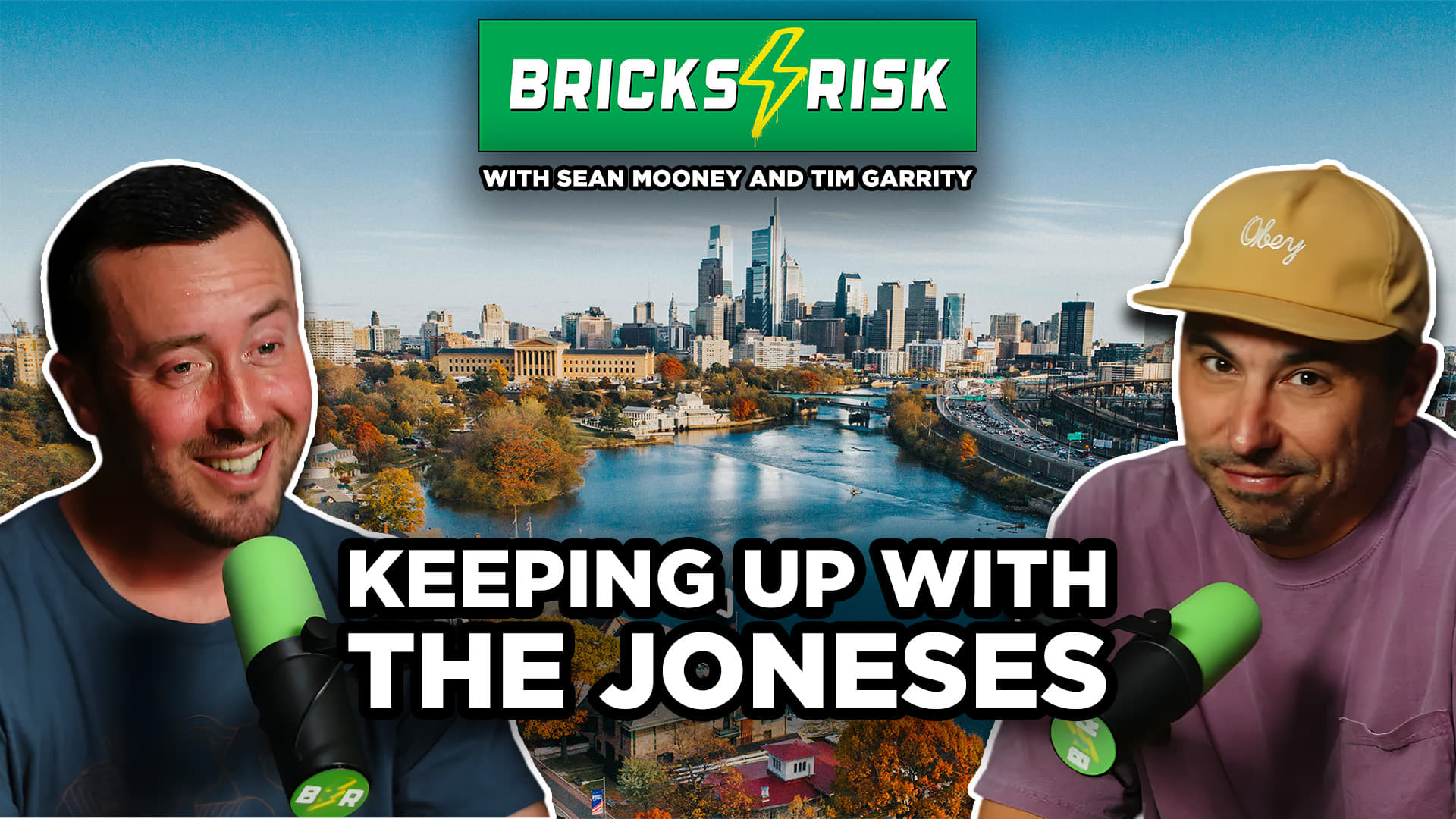
In this episode of the Bricks and Risk Podcast, hosts Tim Garrity and Sean Mooney dive into a unique phenomenon they call “Keeping Up with the Realtor Joneses.” Much like keeping up with the neighbors in everyday life, real estate professionals often feel pressured to match or outdo their peers—whether it’s in sales volume, social media activity, or investment strategies. While competition can be healthy, it can also lead to burnout, frustration, and misaligned priorities.
This blog unpacks the top lessons from the episode, offering an educational roadmap for agents who want to build sustainable, successful careers in real estate—without falling into the trap of constant comparison.
The Culture of Comparison in Real Estate
Real estate is an industry built on visibility, reputation, and results. Because agents constantly interact with peers, it’s easy to fall into a culture of measurement:
Who closed the biggest deal?
Who has the most social media followers?
Who’s investing in the hottest syndication?
This environment can be motivating, but more often, it creates unnecessary stress. Instead of focusing on what truly matters—serving clients and building lasting businesses—agents may chase external benchmarks that don’t align with their personal goals.
Why Most Agents Become Realtors
In states like Pennsylvania, most agents become Realtors through local or state associations. Why?
Access to paperwork: Realtor associations provide standardized, legally vetted documents like agreements of sale and disclosures, which are essential for transactions.
Ethics: Realtors pledge to a code of ethics that promotes honesty and integrity.
Low cost, high value: Membership fees are relatively minimal compared to the networking, training, and resources offered.
In short, joining a Realtor association is often less about prestige and more about practicality.
Production Pressure: Volume as a Status Symbol
One of the biggest ways agents compare themselves is through production volume. The conversation often sounds like: “You did $5M? You should be at $10M like Sally.”
But here’s the reality: the vast majority of Realtors operate in the $0–$2M range, with 80% falling below $15M annually. These numbers show that chasing volume for the sake of bragging rights may not be the right goal for everyone.
Agents should ask themselves:
Do I actually want to double my volume?
Am I prepared for the time and resources it takes?
Does this align with my personal and family goals?
The Social Media Trap for Realtors
Social media is another major comparison point. Agents often ask each other:
“How many deals are you getting from Instagram?”
“How many reels do you post each week?”
This can turn into an endless cycle of chasing likes and followers rather than meaningful client connections. While social media is powerful for visibility, it shouldn’t become a vanity metric. The key is to balance online presence with real-world service.
For perspective, check out this Forbes article on why social media alone isn’t a silver bullet for sales success: Why Social Media Won’t Save Your Business.
Passive Income, Syndication, and Diversification
Agents are also pressured to diversify—whether by investing in syndications, buying rentals, or flipping properties. While smart diversification builds long-term wealth, many use it as another measuring stick: “You’re not in syndication? You must be behind.”
The truth: not every strategy is right for every agent. Some prefer hands-on development, while others favor platforms like Fundrise for passive exposure. The key is choosing investments that align with your financial goals and risk tolerance.
Real Estate vs. Insurance: Different Industry Cultures
Sean Mooney shared how the insurance world differs. In insurance, there’s far less emphasis on bragging rights or keeping pace with competitors. Agents focus more on servicing their existing book of business than on constantly projecting growth online. This cultural difference highlights how real estate, with its high visibility, naturally lends itself to ego-driven competition.
Old-School vs. New-School Brokerages
Old-School Brokerages: Competitive, leaderboard-driven, focused on volume and rankings. Often built on scarcity mindsets.
New-School Brokerages: Collaborative, culture-driven, focused on helping each other succeed. Operate from abundance mindsets.
This shift shows how real estate culture is evolving. Collaboration is increasingly replacing competition as the foundation for long-term success.
The "Big Building" Analogy: Build vs. Tear Down
Borrowing from Gary Vaynerchuk, there are two approaches to success:
Build the tallest building in town.
Tear down everyone else’s building so yours looks tallest.
Unfortunately, many agents choose the latter—criticizing peers to make themselves look stronger. But long-term, the agents who build authentically create sustainable success.
Tim’s Top 3 Tips to Avoid the Realtor Jones Trap
1. Find Your Why
Understanding why you’re in real estate is crucial. Do you want independence? A flexible schedule? Unlimited income potential? Agents who know their “why” are better able to resist the distractions of peer comparison.
2. Set Realistic Expectations
Real estate success takes time. On average, it takes 7–10 years to build a fully developed business model. The first two years are often financially difficult, years three to five are for building consistency, and years six to ten are when scaling decisions happen.
3. Plan Relentlessly
Just as “location, location, location” drives property value, “planning, planning, planning” drives career value. Annual goals, marketing strategies, and progress tracking are essential to staying on course.
Real Estate Career Success Rates: A Statistical Look
One of the stark realities of real estate is its high attrition rate. According to NAR:
Career Stage | Percentage of Agents Remaining |
|---|---|
Year 1–2 | ~50% drop out |
By Year 5 | 87% have left the industry |
By Year 10 | 13% remain long-term |
This data underscores why setting expectations and long-term planning are critical. Most agents don’t fail because they lack ability—they fail because they lack runway and strategy.
(Source: NAR Member Profile)
Conclusion: Redefining Success on Your Terms
“Keeping Up with the Realtor Joneses” is a trap that can distract agents from what truly matters. By focusing on your personal goals, building realistic timelines, and planning strategically, you can create a fulfilling and profitable real estate career without burning out or chasing vanity metrics.
The path to success isn’t about volume, social media followers, or syndication deals—it’s about building a career that aligns with your values and lifestyle.
Frequently Asked Questions (FAQ)
Q1: What does “Keeping Up with the Realtor Joneses” mean?
It refers to the pressure real estate agents feel to match or exceed their peers in sales, social media, or investments, often at the expense of their own goals.
Q2: How long does it take to build a successful real estate career?
On average, it takes 7–10 years to fully establish a stable and scalable business.
Q3: Do I need to use social media heavily to succeed as a Realtor?
Not necessarily. Social media is a tool, but sustainable success comes from client relationships, planning, and consistency.
Q4: Should every Realtor invest in syndication or passive income streams?
No. While diversification is smart, the right investment strategy depends on your personal goals, finances, and risk tolerance.
Q5: What’s the main difference between old-school and new-school brokerages?
Old-school brokerages focus on competition and leaderboards, while new-school brokerages prioritize collaboration, culture, and mutual success.
Final Thought: Success in real estate isn’t about keeping pace with others—it’s about building a business that works for yo
📲 Want more inspiration, insights, and expert advice at the intersection of real estate, insurance, and entrepreneurship?
Connect with Bricks and Risk here:
🌐 Web: https://bricksandrisk.com/
🔗 YouTube: https://www.youtube.com/@BricksandRisk
📸 Instagram: https://www.instagram.com/bricksandrisk/
📘 Facebook: https://www.facebook.com/bricksandrisk
💼 LinkedIn: https://www.linkedin.com/company/bricksandrisk