
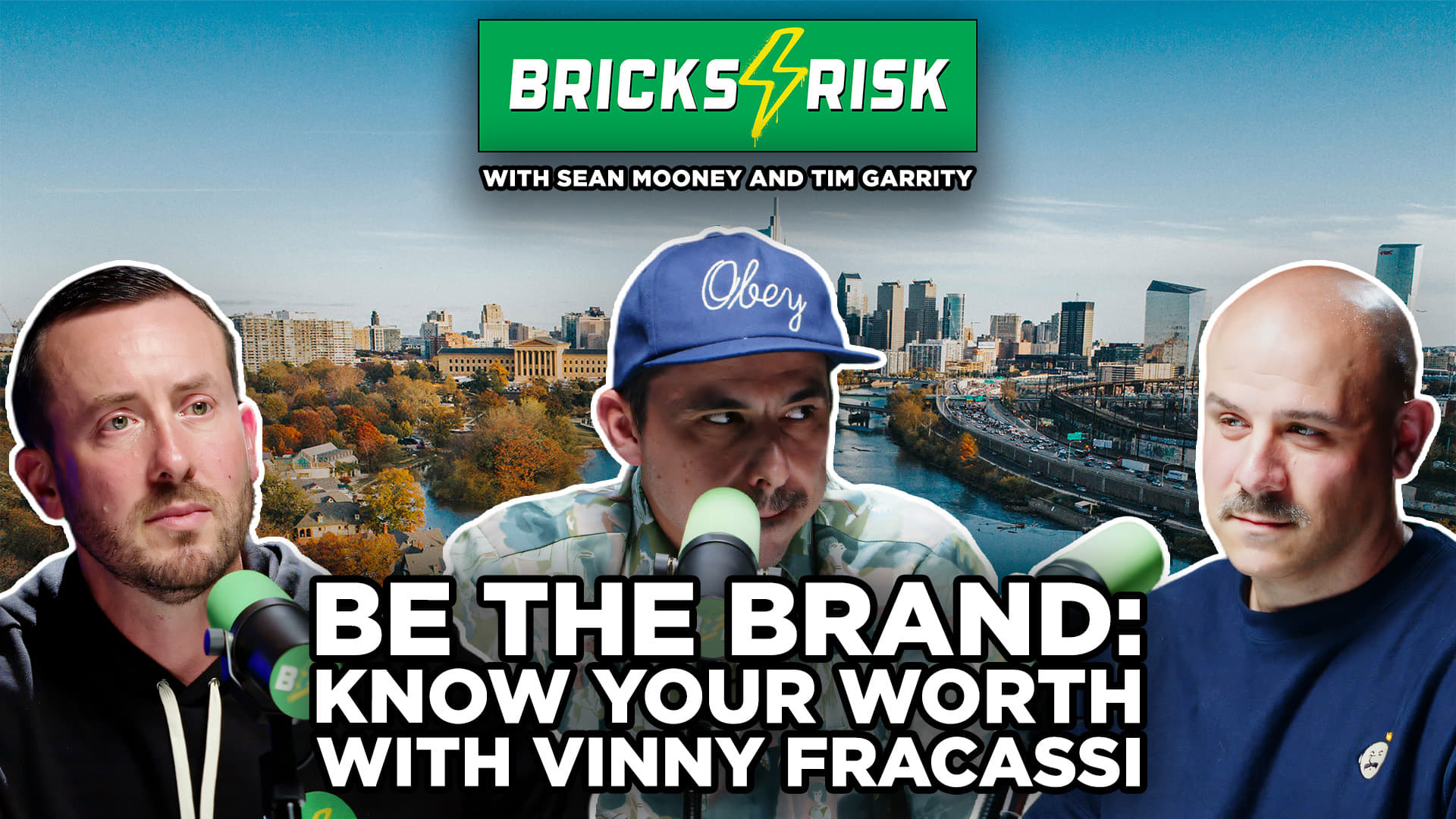
Vinny Fracassi’s journey from Niagara Falls to South Philly shows how someone with zero local network can build a thriving real estate career through authenticity, consistency, and community. After losing his job during the pandemic, he doubled down on content-driven marketing, personal branding, and team-based learning to gain traction in one of the country’s most competitive markets. His “South Philly Vinny” identity—born from a joke—became the foundation of a relationship-first business model that proves success comes from showing up, telling your story, and staying top-of-mind.
Table of contents
Introduction: why Vinny's story matters
From Niagara Falls to Chicago to South Philly — an unexpected path
The pandemic pivot: when “side hustle” became everything
Starting with nothing: building a business without a built-in sphere
Joining a team, getting reps, surviving 2021’s chaos
The accidental brand: how “South Philly Vinny” was born
Content over cold calls: the marketing choice that made the difference
The one moment that changed his playbook (and why it should change yours)
Scaling the human approach: client events, newsletters, and community
Practical takeaways: how new agents should act today (checklist)
Two outside perspectives that back this up
FAQ — common reader questions answered
Final thoughts: start small, be consistent, build a brand that’s real
1. Introduction: why Vinny's story matters
There are career stories that feel inevitable and career stories that feel like hacks. Vinny Fracassi’s story is the latter: messy, accidental, full of wrong turns, and yet instructive. He didn’t follow a textbook path into real estate. He arrived in Philadelphia by circumstance, passed his license exam almost as a lark, and was forced to bet on himself when the pandemic wiped out his day job. Five years later, he’s not only a working agent — he’s South Philly Vinny, a brand people remember. That evolution — from zero network to a recognizable local personality — is the exact kind of playbook a new agent, a career pivot-er, or any local small business owner wants to study.
2. From Niagara Falls to Chicago to South Philly — an unexpected path
Vinny's early life reads like an itinerary of adaptation. Raised in Niagara Falls, he moved to South Jersey for work and then to Chicago to manage a band with a longtime friend. Music management taught him promotion, logistics, people skills, and a tolerance for chaos — all soft skills that would become concrete advantages later. When his wife Pam’s career transferred them to Philadelphia, he initially resisted. Chicago had been home. But South Philly’s neighborhoods, restaurants, and community energy gradually pulled him in. Those early moves matter because they explain a core truth of this story: Vinny didn’t come from a local network, he built one.
3. The pandemic pivot: when “side hustle” became everything
In late winter 2020, Vinny and Pam passed their real estate exams and celebrated in Mexico. Within weeks, the world had changed. When his full-time job ended in May 2020, the “side hustle” was no longer optional. He committed to real estate in September 2020 with no safety net.
The pandemic didn’t just create uncertainty — it reshaped the housing market and accelerated adoption of remote work, virtual tours, and new agent models. Industry coverage from Inman and other outlets shows how agents who adapted to the new realities (digital marketing, virtual showings, and aggressive outreach) were positioned to capture outsized opportunity during the surge that followed. That broader context helps explain why a pivot like Vinny's could lead to rapid early traction: the industry itself was in flux, and nimble players won.
4. Starting with nothing: building a business without a built-in sphere
Most rookie agents rely on preexisting relationships: family, high school friends, former coworkers. Vinny had none of that. He was in his mid-30s, new to the city, and starting from literal zero. That forced him to experiment with strategies that were not relationship-dependent: team leads, content creation, open houses, and consistent local presence.
This is a critically underrated career model: when you don’t have a sphere, you must manufacture consistent touchpoints that turn strangers into contacts. For Vinny, that meant showing up to neighborhood events, engaging on local topics, and creating shareable content that spoke to Philadelphia culture — not just market stats.
5. Joining a team, getting reps, surviving 2021’s chaos
Rather than try to reinvent the sales engine, Vinny joined a team that provided leads. He describes the team model he joined as primarily “feeding fish” rather than “teaching to fish” — but that was the right move for a brand-new agent working without a local network. The team gave him immediate opportunities and, crucially, mentorship. His first team lead turned into two deals, and the rapid learning curve of 2021 (bidding wars, waived inspections, rapid closings) compressed years of experience into months.
This supports a practical lesson: a team can accelerate competence by letting you practice, iterate, and fail in a lower-risk environment. If you’re starting without a sphere, consider a team that gives you leads plus mentorship rather than a pure lead farm with no coaching.
6. The accidental brand: how “South Philly Vinny” was born
The brand started as a joke: a name tossed around on a Zoom call and a logo made by a friend “as a goof.” But the name stuck. There’s something important to notice here: authenticity beat polish. The authenticity of a nickname, a style, and a vibe made him memorable in a market filled with sameness. He leaned into local quirks — the delis, neighborhood names, concerts he liked — and turned those cultural signals into identity.
The lesson for anyone building a local brand is simple but powerful: identity starts with truth. If you personalize and humanize the brand (rather than trying to be a corporate avatar), you will create recognition and trust faster. Forbes has repeatedly highlighted the role of personal branding in professional success, arguing that authenticity and consistency are the foundations of a brand that generates leads over time. Forbes
7. Content over cold calls: the marketing choice that made the difference
Vinny tried the standard playbook — he cold called, door knocked, and hustled — but quickly realized those tactics didn’t fit his personality. Instead, he found a rhythm in content: a monthly newsletter, blog posts, and social posts about concerts, restaurants, and local festivals. He used storytelling rather than hard sells.
This strategy paid off because content becomes a persistent asset: a newsletter or blog post keeps working in the background — creating recall, building credibility, and nudging people toward action months or years later. Marketing research supports this: email and content channels still drive meaningful conversions when used consistently and with personalization. HubSpot and other marketing platforms document that email remains one of the highest-ROI channels for conversion and retention. For a local agent, a well-crafted newsletter that reflects your personality is a low-cost, high-impact way to remain top of mind. HubSpot Blog
8. The one moment that changed his playbook (and why it should change yours)
Vinny's pivotal anecdote is a small but brutal memory: he ran into a former rental client on the street and the person didn’t remember his name just a few months after he had helped them. That moment made him change his approach. He realized that being good at your job is not enough — you must stay present.
This is the heart of modern client acquisition: sustained presence. It’s not one campaign or one open house; it’s multiple touchpoints over time. Newsletters, client appreciation events, social posts, merch, and even simple branded napkins at a meetup build familiarity. That cumulative exposure is what turns occasional clients into lifetime referrers.
9. Scaling the human approach: client events, newsletters, and community
Vinny is now intentionally scaling the relationship side of his business. He plans client appreciation events, partners with lenders and vendors, and uses experiential tactics (raffles, name-tag icebreakers, shared food) to deepen bonds. That’s an advanced version of the same playbook he started with: people do business with people they know and like.
If you want to replicate this, start small: a quarterly client event, a curated list of past clients to invite, and a simple follow-up cadence. As you experiment, measure results: who shows up, who refers business, and which touchpoints lead to transactions. Harvard Business Review and industry marketing pieces emphasize that integrated approaches — combining email, events, and personalized outreach — outperform single-channel efforts. Harvard Business Review
10. Practical takeaways: how new agents should act today (checklist)
If you don’t have a sphere, create repeatable touchpoints: newsletter, local content, events.
Consider joining a mentorship-oriented team to accelerate your learning curve.
Build an authentic personal brand — small, quirky details that people can remember matter more than a sterile logo.
Track your outreach and measure which touchpoints actually generate meetings and referrals. Use basic KPIs like open rate, reply rate, event attendance, and referral requests. Harvard Business School’s marketing guidance on KPIs is a useful place to start. Harvard Business School Online
Know your worth: be selective with time; don’t waste energy on serial “maybes.”
11. Two outside perspectives that back this up
First, industry reporting during and after the pandemic shows the market itself changed in ways that favored adaptable, digitally savvy agents. Inman’s coverage of the pandemic’s effect on real estate helps explain why agents who moved fast and embraced new tactics found outsized opportunity. Inman
Second, personal branding guidance from major outlets like Forbes underscores what Vinnie discovered intuitively: authenticity and consistent output are core drivers of professional visibility. A strong, human brand acts as “lead generation while you sleep” — and creates the long game that durable businesses need. Forbes
(If you want to read those pieces in full, we link to the Inman analysis and the Forbes branding guidance above because they mirror many of the lessons Vinny lived through.)
12. FAQ — common reader questions answered
Q: Can you build a real estate business without a local network?
A: Yes, but it requires consistency and the creation of repeat touchpoints. Vinny built his business with a newsletter, local content, team leads, and events — not by relying on old contacts.
Q: Should new agents join a team or go solo?
A: If you have no sphere, a mentorship-oriented team that provides leads and coaching is often the fastest way to gain competency and close deals. Vinny's first deals came from team leads that gave him credibility and experience.
Q: Do newsletters actually work for real estate?
A: Yes. Email remains one of the highest-ROI channels when done correctly. A consistent, personality-driven newsletter keeps you top of mind and can convert passive readers into clients over months or years. See HubSpot’s marketing data for recent benchmarks. HubSpot Blog
Q: How do you stand out in a crowded market?
A: Build a distinct human story. Small, local cultural cues (favorite delis, neighborhood tips, event picks) create memorable identity. South Philly Vinny succeeded because his brand was an authentic expression of place and personality.
Q: What’s the single biggest behavioral change for long-term success?
A: Stop chasing every lead. Know your worth, and invest time where it compounds: content, community, and select client relationships.
13. Final thoughts: start small, be consistent, build a brand that’s real
Vinny's story is deceptively simple. It seems like luck, a catchy name, or a few good breaks — but the underlying engine of his success is consistent presence and authentic voice. He started without a sphere, learned rapidly by doing, and intentionally doubled down on the things that fit his personality: content, community, and culture. That combination converted strangers into clients and then into advocates.
If you’re starting from scratch, don’t wait for perfect timing or a giant network. Create one small habit today — a monthly newsletter, a community event, or a local meetup — and do it again next month. The compounding effect of consistent, human marketing is real. As Forbes, Inman, and marketing research all suggest, the market rewards those who build trust over time.
📲 Want more inspiration, insights, and expert advice at the intersection of real estate, insurance, and entrepreneurship?
Connect with Bricks and Risk here:
🌐 Web: https://bricksandrisk.com/
🔗 YouTube: https://www.youtube.com/@BricksandRisk
📸 Instagram: https://www.instagram.com/bricksandrisk/
📘 Facebook: https://www.facebook.com/bricksandrisk
💼 LinkedIn: https://www.linkedin.com/company/bricksandrisk